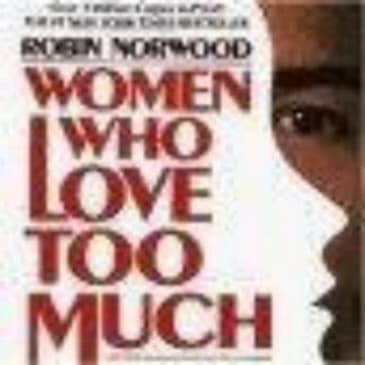
"Woman Who Love Too Much" by Robin Norwood is a self-help book that explores the dynamics of love addiction in women. The book delves into the patterns and behaviors of women who are constantly seeking love and validation from others, often at the expense of their own well-being.
Norwood describes how women who love too much often find themselves in relationships with emotionally unavailable or abusive partners, as they seek to fill a void within themselves through external sources of love and affirmation. The book provides insights into the root causes of love addiction, and offers practical advice and strategies for breaking free from destructive relationship patterns.
Overall, "Women Who Love Too Much" serves as a guide for women to recognize and overcome unhealthy patterns of behavior in love and relationships, and to cultivate self-love and self-acceptance.
Chapter 2:the meaning of Women Who Love Too Much Book"Women Who Love Too Much" is a self-help book written by Robin Norwood, originally published in 1985. The book delves into the concept of love addiction and explores why some women find themselves in unhealthy and codependent relationships. Norwood argues that women who love too much often prioritize their partner's needs and desires above their own, leading to a pattern of destructive relationships. Through case studies, practical advice, and exercises, the book offers guidance on how to break free from destructive relationship patterns and develop healthy self-love and boundaries. The book has been praised for its insight and compassionate approach to helping women break free from unhealthy relationship patterns.
Chapter 3:Women Who Love Too Much Book chapters- Introduction: In this chapter, Norwood introduces the concept of women who love too much and the destructive patterns that can emerge in relationships when women prioritize their partner's needs over their own.
- The Disease of Loving Too Much: Norwood explores the root causes of loving too much, including childhood experiences and societal expectations. She also highlights the negative effects of this behavior on women's mental and emotional well-being.
- The High Cost of Loving Too Much: This chapter delves into the consequences of loving too much, such as enabling destructive behavior in partners and sacrificing one's own happiness for the sake of a relationship.
- Why Women Love Too Much: Norwood explains the psychological and emotional reasons why some women are predisposed to loving too much, including low self-esteem and a fear of abandonment.
- The Man Who Seems Perfect: Here, Norwood discusses the common pattern of women falling for partners who initially appear to be ideal, only to reveal themselves as emotionally unavailable or abusive.
- Relationships with Men Who Don't Want to Be Lovers: This chapter explores the dynamic of women who pursue relationships with men who are not fully committed or emotionally available, and the toll it takes on their self-worth.
- You Can't Change Him: Norwood emphasizes the futility of trying to change a partner and the importance of recognizing and accepting reality in relationships.
- When Enough Is Enough: In this chapter, Norwood encourages women to set boundaries and prioritize their own well-being, even if it means ending a toxic relationship.
- Finding the Way Out: Norwood provides practical advice and strategies for breaking free from destructive relationship patterns and moving towards self-empowerment and self-love.
- The Women Who Recover: Finally, Norwood shares stories of women who have successfully overcome their patterns of loving too much and found happiness and fulfillment in healthier relationships.
Overall, Women Who Love Too Much offers insight, validation, and guidance for women struggling with codependency and destructive relationship patterns, empowering them to prioritize their own well-being and find healthier, more fulfilling connections.
Chapter 4: Quotes From Women Who Love Too Much Book- "We fear rejection, and so we always wait for the other person to make the first move."
- "We give ourselves to men who cannot or will not meet our emotional needs, hoping that this time, things will be different."
- "We fall into the trap of believing that if we just love him enough, he will change and become the man we want him to be."
- "We confuse love with pity, and try to rescue men who are not capable of being saved."
- "We sacrifice our own well-being in order to keep the peace and avoid confrontation."
- "We ignore our own intuition and gut instincts, choosing to believe what we want to be true rather than facing the reality of the situation."
- "We become addicted to the drama and chaos of dysfunctional relationships, unable to break free even when we know we should."
- "We prioritize the needs and wants of others above our own, sacrificing our own happiness in the process."
- "We are afraid to be alone, so we cling to unhealthy relationships out of fear of being abandoned."
- "We need to learn to love ourselves first, before we can truly love another person in a healthy and balanced way."
[00:00:00] Hi, welcome to Bookey. Today we will unlock the book women who love too much by Robin Norwood.
[00:00:06] Samantha sat alone in her quiet living room, surrounded by stacks of self-help books that
[00:00:11] promised to provide her with the answers she desperately sought. For as long as she could
[00:00:16] remember, Samantha had been drawn to relationships that were filled with chaos, drama and constant
[00:00:22] turmoil. She couldn't understand why she always seemed to end up with men who were emotionally
[00:00:27] unavailable, unreliable and ultimately caused her pain. One evening, while flipping through yet
[00:00:33] another self-help book, Samantha's eyes landed on the title that would change her life forever,
[00:00:38] Women Who Love Too Much by Robin Norwood. Intrigued, she grabbed the book and settled into
[00:00:44] her favorite armchair. Little did she know that within the pages of this book lay the
[00:00:49] insights, strategies and understanding she needed to break free from her self-destructive
[00:00:54] patterns. As Samantha dove into the book, she found herself captivated by Norwood's compassionate
[00:01:00] and knowledgeable voice. The authors shared real-life stories that Samantha could easily relate to,
[00:01:06] stories of women who, just like her, had an insatiable need to fix, rescue,
[00:01:11] and save their partners, despite the cost to their own well-being.
[00:01:15] One particular story struck a nerve with Samantha. It was the tale of Emily,
[00:01:20] a successful businesswoman who seemed to have it all together on the surface.
[00:01:24] But behind closed doors, Emily was trapped in a toxic relationship with a man who constantly
[00:01:30] belittled her, cheated on her and made her feel unworthy of love. Yet, despite the pain
[00:01:36] and humiliation, Emily couldn't find the strength to leave. She was convinced that if she just
[00:01:42] loved him enough, he would change. Samantha could see herself in Emily's story. She, too,
[00:01:48] had clung desperately to the hope that her love could somehow transform her partners into
[00:01:53] the Prince Charming she so desperately longed for. Tears welled up in Samantha's eyes as she
[00:01:59] realized the futility of her efforts and the toll it had taken on her own sense of self.
[00:02:04] In Women Who Love Too Much, Norwood expertly and compassionately unraveled the complex web
[00:02:10] of emotions that kept women like Samantha and Emily trapped in unhealthy relationships,
[00:02:15] she offered practical advice on how to break free from the patterns of codependency,
[00:02:20] set healthy boundaries and find the love and respect they truly deserved.
[00:02:25] With each turn of the page, Samantha felt a growing sense of hope and empowerment. She saw
[00:02:30] herself reflected in the stories of other women and, more importantly, she saw the
[00:02:35] possibility of a brighter future. Norwood's powerful insights and examples provided Samantha
[00:02:40] with the tools she needed to embark on a journey of self-discovery, healing, and ultimately,
[00:02:46] self-love. As Samantha closed the book, she knew that it held the key to her own transformation.
[00:02:52] She was ready to let go of the past, release her harmful patterns, and embrace a new way of loving,
[00:02:59] one that honored her worth and prioritized her happiness. The journey ahead would not be easy,
[00:03:04] but armed with the wisdom and guidance of women who love too much,
[00:03:08] Samantha was determined to rewrite her own love story.
[00:03:12] Note, this is a fictional opening section designed to entice the reader.
[00:03:16] The book, Women Who Love Too Much, by Robin Norwood does contain real-life stories and
[00:03:21] practical advice on codependent relationships, but the specific details and examples in this
[00:03:26] opening section are fictional. In the upcoming text, we will explore the top three crucial
[00:03:32] concepts discussed in this book. 1. Women who constantly seek love and validation from
[00:03:38] unavailable or unhealthy partners are often driven by deep-seated issues of low self-esteem
[00:03:44] and codependency. 2. By recognizing their own patterns, setting boundaries, and prioritizing
[00:03:50] self-love and self-care. Women can break free from destructive relationship patterns
[00:03:55] and find genuine happiness and fulfillment. 3. True love starts with loving oneself first,
[00:04:02] and healing from past traumas and negative patterns is a crucial step towards creating
[00:04:06] healthy, balanced relationships. This codependent behavior stems from a deep-seated fear of abandonment
[00:04:13] and a desire to feel needed and indispensable. These women find themselves trapped in a cycle
[00:04:18] where they constantly put their partner's needs above their own, which only serves to
[00:04:23] reinforce their negative self-image and feelings of unworthiness. Moreover,
[00:04:28] societal and cultural expectations play a significant role in perpetuating this pattern.
[00:04:33] From a young age, women are often taught that their value is tied to their ability to be in a
[00:04:38] relationship and take care of others. They are conditioned to believe that their worth is determined
[00:04:43] by their ability to be selfless and make sacrifices for their partner. This toxic
[00:04:48] belief system leads women to believe that their happiness lies solely in making their
[00:04:52] partner happy, regardless of the consequences to their own well-being. In the book, Norwood
[00:04:57] explores the different forms of unavailable and unhealthy partners that these women
[00:05:02] often find themselves attracted to. Some may be emotionally detached, unable to form
[00:05:07] deep emotional connections or express love and affection openly. Others may be physically
[00:05:13] or emotionally abusive, constantly tearing down their partner's self-esteem to maintain
[00:05:18] power and control over them. These partners feed off the vulnerability and low self-esteem of these
[00:05:24] women, exploiting their insecurities for their own gain. The author emphasizes that
[00:05:29] breaking free from this pattern requires a deep introspection and a commitment to self-care.
[00:05:34] Women who love too much must learn to value and prioritize themselves,
[00:05:38] recognizing their own worth independent of their partner's validation. They must challenge their
[00:05:43] negative beliefs about themselves and develop a healthy sense of self-esteem that is not
[00:05:48] reliant on external factors. Additionally, setting boundaries and learning to say no
[00:05:54] becomes crucial in breaking free from the cycle of codependency. These women must learn to
[00:05:59] identify what they truly need and want in a relationship and establish clear boundaries to
[00:06:04] protect their own well-being. This may involve seeking therapy or support groups to navigate
[00:06:09] through the complex emotions and challenges that come with breaking free from these patterns.
[00:06:14] Ultimately, the key takeaway from women who love too much is that healing and self-discovery
[00:06:19] are possible for these women. However, it requires a deep commitment to oneself and
[00:06:24] a willingness to confront and challenge deeply ingrained beliefs and behaviors.
[00:06:29] By addressing the root causes of low self-esteem and codependency,
[00:06:33] these women can pave the way for healthier, more fulfilling relationships and a greater sense of
[00:06:38] self-worth.