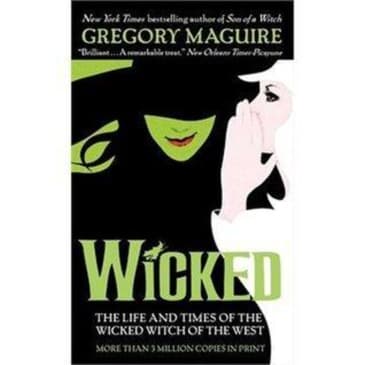
"Wicked" by Gregory Maguire reimagines the classic tale of "The Wizard of Oz" by presenting the backstory of the Wicked Witch of the West, Elphaba. The novel explores themes of morality, friendship, and the complexities of good and evil through Elphaba's journey from an ostracized young girl with green skin to a powerful figure opposing the oppressive regime of the Wizard of Oz. It delves into her relationships, particularly with Glinda, the Good Witch, and examines societal prejudices, personal choices, and the nature of power, ultimately challenging the reader's perceptions of heroism and villainy.
2 Key Concepts of WickedIn "Wicked," the theme of the struggle for identity and the consequences of societal norms, introduced in Chapter 1, resonates throughout several chapters. Notably, Chapters 4 and 12 delve into Elphaba’s quest for self-acceptance as she grapples with her Wizard-given identity and societal rejection. Moreover, Chapter 14 highlights her increasing conflict with the oppressive structures of Oz, further emphasizing the tensions between individuality and societal expectations. These chapters collectively illustrate how personal identity is influenced by external perceptions and the broader implications of conformity and rebellion.
3 In-Depth Chapter Analysis of Wicked by Gregory Maguire"Wicked" by Gregory Maguire explores themes of power, morality, and the complexities of good and evil through its richly woven narrative. The chapters are structured around Elphaba's journey from a misunderstood young girl in the Emerald City to the infamous Wicked Witch of the West. For instance, in Chapter 5, "The Wicked Witch of the West," Elphaba's first encounter with the Wizard highlights her struggle against oppression and her awakening to the corrupt politics of Oz. This chapter underscores the theme of moral ambiguity as Elphaba begins to see the divide between her ideals and the harsh realities of the world, revealing her depth as a character who defies conventional definitions of good and evil.
As the story progresses, particularly in Chapter 11, "The Death of the Innocent," Elphaba grapples with the consequences of her choices, emphasizing the theme of sacrifice. This chapter illustrates her transformation and isolation as she navigates her role in a society that fears and demonizes her. Elphaba's conflict embodies the struggle between her desire for justice and the repercussions of her actions, thus complicating the reader's understanding of villainy. Throughout these chapters, Maguire effectively challenges notions of morality and the narratives that define individuals, ultimately painting a nuanced portrait of Elphaba as both a victim and a villain in the tale of Oz.
Book Summary Audio Bookey https://www.bookey.app/audiobook/wicked
Youtube https://www.youtube.com/watch?v=KOQYKvFsJXM
Amazon https://www.amazon.com/Wicked-Life-Times-Witch-Years/dp/0061350966
Goodreads https://www.goodreads.com/book/show/37442.Wicked
[00:00:00] Wicked, An Engaging Audio Summary of the Untold Story Behind the Wizard 1 What's Wicked? Wicked by Gregory Maguire reimagines the classic tale of The Wizard of Oz from the perspective of Elphaba, the Wicked Witch of the West. The novel explores themes of good and evil, challenging the conventional notions of morality by portraying Elphaba as a misunderstood figure fighting against an oppressive regime.
[00:00:23] Through her complex character, the story delves into issues of identity, friendship, and the consequences of choices, ultimately revealing the societal flaws that lead to the labeling of individuals as wicked. The narrative intricately weaves together Elphaba's life, her relationships with other characters, and the political dynamics of Oz, offering a rich and thought-provoking exploration of how perceptions are shaped and the nature of power. Two Key Concepts of Wicked
[00:00:51] In Gregory Maguire's Wicked, Chapter 1 introduces the theme of societal perception and the complexity of morality, particularly through the character of Elphaba, the future Wicked Witch of the West. Subsequent chapters, particularly Chapter 2, delve deeper into Elphaba's upbringing and the prejudices she faces due to her green skin, illuminating how societal expectations shape individual identity.
[00:01:15] Chapter 5 continues this exploration, showcasing the contrast between Elphaba's ideals and the corrupt structures of the society around her. Overall, these early chapters establish the critical interplay between personal identity and external perception, setting the stage for Elphaba's struggle against the label of wicked. Three in-depth chapter analysis of wicked by Gregory Maguire.
[00:01:39] Wicked by Gregory Maguire is structured into several chapters that intricately explore themes of identity, morality, and societal perceptions. For instance, in Chapter 3, titled The Colors of the Emerald City, Elphaba's struggle with her identity as the misunderstood wicked which begins to unfold. Here, Maguire uses the stark contrast between the vibrant emerald city and Elphaba's green skin to symbolize societal prejudice and the superficial judgments people make based on appearances.
[00:02:09] This chapter powerfully illustrates how societal norms can distort one's self-identity as Elphaba grapples with the perception that her differences make her inherently evil, thus setting the stage for her transformation throughout the narrative. In Chapter 17, The Grimmyry, Elphaba's quest for knowledge and power highlights the theme of moral ambiguity. As she learns about the Grimmyry, a powerful book of magic, her intentions become conflicted.
[00:02:36] While initially motivated by a desire to protect the oppressed animals, her journey leads her to increasingly darker choices. Maguire complicates the concept of good and evil by depicting Elphaba's moral struggles and the choices she faces, reinforcing the idea that in a world rife with oppression, the lines between hero and villain are often blurred. This chapter embodies the overarching theme that individuals are shaped by their experiences and the societal expectations that define them,
[00:03:04] inviting readers to reconsider the nature of wickedness and virtue.