The Chrysanthemum and the Sword is a book written by anthropologist Ruth Benedict and published in 1946. The book provides an in-depth analysis of Japanese culture and society, focusing primarily on the underlying values, behaviors, and patterns of thought that shape the Japanese people.
Benedict's approach is an ethnographic one, combining her own research with existing literature and interviews conducted with Japanese individuals, both in Japan and in the United States. The book is divided into several chapters, each addressing a different aspect of Japanese culture.
One of the key themes explored in the book is the idea of shame versus guilt. Benedict explains how shame plays a central role in Japanese society, as individuals are concerned with maintaining their social standing and avoiding situations that might bring shame upon themselves or their families. In contrast, guilt, as understood in Western cultures, is less significant in the Japanese context.
Another important concept discussed in the book is the notion of the "group" versus the "individual." Benedict explains that Japanese society places a strong emphasis on collective identity and the well-being of the group, while individual desires and ambitions are often subordinated to the needs of the community. This collectivist mindset is also reflected in Japanese social hierarchies and the importance placed on maintaining harmony and avoiding conflict.
Benedict also delves into the role of religion in Japanese society, particularly the influence of Shinto and Buddhism. She explains how these religious beliefs and practices have shaped the Japanese worldview and influenced various aspects of their culture, including their relationship with nature, their attitudes toward death, and the importance of rituals and ceremonies.
Overall, The Chrysanthemum and the Sword provides a rich and nuanced exploration of Japanese culture, giving readers a deeper understanding of the underlying values and cultural patterns that govern Japanese society. Benedict's analysis offers valuable insights into the ways in which Japanese individuals think, behave, and relate to one another, providing a comprehensive portrait of this complex and unique culture.
Chapter 2:the meaning of The Chrysanthemum And The Sword book"The Chrysanthemum and the Sword" is a book written by Ruth Benedict, published in 1946. It is an anthropological study that focuses on understanding Japanese culture and its underlying values and beliefs, particularly during World War II.
The book explores the unique cultural aspects of Japan, delving into its traditional customs, social structures, historical development, and psychological traits. Ruth Benedict aims to provide an understanding of the Japanese mindset, which was crucial during the post-war era when the United States needed to reconstruct and establish a peaceful relationship with Japan.
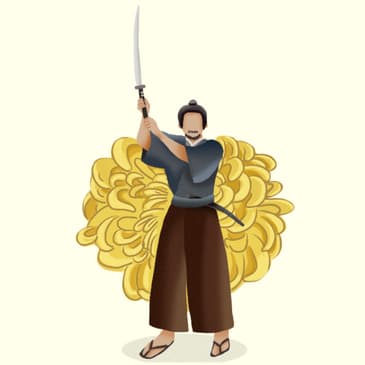
The title of the book, "The Chrysanthemum and the Sword," represents two symbols that reflect different aspects of Japanese culture. The chrysanthemum signifies the aesthetic and artistic side of Japanese society, symbolizing beauty, elegance, and gentleness. It represents the traditional and refined aspects of Japanese culture.
On the other hand, the sword represents the more aggressive and militaristic side of Japanese culture. It symbolizes the warrior spirit, discipline, and the readiness for combat. This aspect of Japanese culture was significant during World War II and emphasizes the honor and loyalty associated with Japanese warrior traditions.
Overall, Ruth Benedict's book aims to provide a nuanced understanding of Japan's cultural and psychological foundations to facilitate better communication and cooperation between the United States and Japan. It provides valuable insights into the complexities of Japanese culture and helps dispel stereotypes and misunderstandings.
Chapter 3:The Chrysanthemum And The Sword book chaptersChapter 1: Introduction
In the introduction, Benedict explains her motivations for writing the book and provides an overview of her research methods. She expresses her belief that understanding the psychology and culture of Japan is crucial for interpreting their behavior during the war.
Chapter 2: Basic Personality of the Japanese
This chapter delves into the fundamental personality traits that Benedict believes are prevalent in the Japanese population. She argues that the Japanese are highly collective, valuing group harmony and fitting in with societal norms. She also discusses their tendency to emphasize social roles, hierarchy, and the importance of duty and honor.
Chapter 3: The Japanese Art of Fighting
In this chapter, Benedict explores the historical and cultural roots of the Japanese warrior tradition and its influence on Japanese military behavior. She examines the importance of the samurai code of conduct (bushido) and its connection to concepts such as loyalty, self-sacrifice, and honor.
Chapter 4: Behind the Mask
Benedict explores the concept of "saving face" or maintaining social dignity in Japanese culture in this chapter. She discusses the importance of proper social etiquette and the pressures faced by individuals in maintaining a harmonious public image.
Chapter 5: Shame and the "Disgrace of the West"
This chapter examines the concept of shame in Japanese society and its impact on behavior. Benedict argues that shame is a potent motivator for the Japanese, leading to a strong desire to avoid embarrassment or disgrace. She compares the Western concept of guilt to the Japanese concept of shame.
Chapter 6: Guilt and Responsibility
In this chapter, Benedict discusses concepts of guilt and responsibility in Japanese culture. She explores differences between individualistic societies (such as the West) and collective societies (such as Japan), focusing on the unique Japanese understanding of guilt and responsibility within the group.
Chapter 7: The Group and the United States
Benedict contrasts Japanese collectivism with American individualism in this chapter. She discusses the implications of these cultural differences for war and diplomacy, highlighting the challenges faced by both nations in understanding each other and finding common ground.
Chapter 8: The Japanese at War
In this chapter, Benedict analyzes the behavior of the Japanese military during World War II. She examines their tactics, strategies, and motivations, arguing that their approach to warfare was heavily influenced by their cultural beliefs and values.
Chapter 9: The Recovery of Independence
The final chapter explores the post-war period in Japan, with an emphasis on the country's ability to rebuild and recover. Benedict reflects on the resilience of the Japanese people and their capacity for adapting to change.
Overall, "The Chrysanthemum and the Sword" offers a detailed and nuanced understanding of Japanese culture and its impact on wartime behavior. Benedict's analysis sheds light on the complexities of cross-cultural interactions and highlights the importance of cultural context in interpreting human behavior.
Chapter 4: Quotes of The Chrysanthemum And The Sword book- "The key to understanding the culture of Japan lies in its emphasis on harmony and duty."
- "The Japanese value the collective over the individual, and see their role in society as integral to the greater whole."
- "In Japanese culture, there is a deep respect for hierarchy and authority, with an emphasis on loyalty and obedience."
- "The idea of 'face' is crucial in Japanese society, as maintaining one's social reputation is considered of utmost importance."
- "The concept of 'shame' plays a significant role in Japanese culture, as individuals strive to avoid bringing dishonor upon themselves or their families."
- "The Japanese believe in the importance of indirect communication, often relying on non-verbal cues and subtle gestures to convey their intentions."
- "Traditional Japanese aesthetics, such as the appreciation for simplicity and nature, are deeply ingrained in their cultural values."
- "The samurai code of honor, known as bushido, emphasizes virtues such as courage, loyalty, and self-discipline, which still resonate in modern Japanese society."
- "Japanese society places a strong emphasis on group cohesion and consensus, valuing harmony and cooperation over individual ambition."
- "The Chrysanthemum and the Sword serves as a study of Japanese culture, shedding light on their unique values, practices, and mindset."
[00:00:00] Hi, welcome to Bookey. To unlock more world class bestseller, please download our app. Just search for BOOKEiY at Apple Store or Google Play. You will get 7 days free trail with more features. Today we will unlock the book that croissanthemum and the sword. When we hear Japan mention, we perhaps think of cars, animation, electronics, cicura blossom's shrines and Japanese service. Indeed, Japanese products are like different to the
[00:00:04] dollar, please download our app. Just search for B-O-O-K-E-Y at Apple Store or Google Play.
[00:00:11] You will get 7 days free trail with more features. Today we will unlock the book that
[00:00:16] croissanthemum and the sword.
[00:00:19] When we hear Japan mention, we perhaps think of cars, animation, electronics, Sakura
[00:00:25] Blossom Strimes and Japanese service. Indeed, Japanese products and services can be found
[00:00:31] across the world. They are accepted and used globally and are generally praised for
[00:00:36] their high quality.
[00:00:39] After World War II, in order to satisfy Japan's need for economic development, Japan
[00:00:44] started to export their products to many countries around the world. Japan also encouraged
[00:00:49] Japanese enterprises to step out of Japan and hate part in international acquisitions.
[00:00:55] For example, in 2018, Takeda-Pharma Suttacle Company acquired Ireland's Shire Pharmaceutical
[00:01:02] Company for 7 trillion Japanese yen. Japan's Soft Bank Corporation acquired 51 projects worldwide
[00:01:09] at a total cost of 9 trillion Japanese yen. According to statistics, in 2018, Japanese
[00:01:15] corporations made 32 overseas acquisitions worth over 10 trillion yen. This was an increase
[00:01:22] of 70% compared to the previous year, the number and cost of global acquisitions reached
[00:01:27] a historical high. Japan's expansion will not stop, and it is very likely that some of
[00:01:33] our future colleagues, partners and neighbors or new friends will be Japanese. Thus, learning
[00:01:39] more about the culture, characteristics, and values of Japanese people as practical and
[00:01:45] meaningful for our international exchanges and cooperation. Historians tell us that
[00:01:50] all behavioral patterns are based on cultural backgrounds. Therefore, we should begin by learning
[00:01:56] about the origin of Japanese culture to understand the behavioral patterns of Japanese
[00:02:01] people. This book The Chrysanthemum and the Sword is a classic, that analyzes the origins
[00:02:07] of Japanese culture and studies the character of Japanese people.
[00:02:12] The author of this book Ruth Benedict is an American cultural anthropologist who specializes
[00:02:17] in cultural anthropology, and is involved in long-term studies on different national cultures.
[00:02:23] She wrote The Chrysanthemum and the Sword in the later period of World War II. At that
[00:02:28] time Germany was already destined to lose the war, and the United States was in desperate
[00:02:33] need of a post-war policy for Japan. However, due to the culture differences between
[00:02:39] the western and eastern societies, and the lack of a deep understanding of Japanese culture,
[00:02:44] the US remained undecided on its policy towards the country, would the Japanese government
[00:02:49] surrender or not? And if Japan surrendered, should the American government utilize the
[00:02:55] Japanese government and keep the emperor? In order to make the right call, the American
[00:03:00] government decided to encourage experts of various fields to study Japan, resulting
[00:03:05] in the publication of The Chrysanthemum and the Sword. It became known as a groundbreaking
[00:03:10] work of modern Japanese music and spread widely, and during over a long period of time.
[00:03:16] Next, we will discuss Japanese culture together by answering four questions.
[00:03:23] Question 1. How should we understand Japan's strict hierarchical concept of taking one's
[00:03:28] proper station? Question 2. How can we understand Japanese culture's
[00:03:33] attachment to Gim bone Gary? Question 3. What is the contradiction in Japanese
[00:03:39] Japanese people's attitude towards sensory pleasure? Question 4. What moral dilemmas exist
[00:03:45] in Japanese culture? If somebody desires to get to know Japanese people,
[00:03:51] he or she must first understand their dependence on hierarchy. We can compare the importance
[00:03:56] of Japanese peoples' dependency.
[00:03:58] independence on hierarchy to American people's belief in liberty and equality.
[00:04:03] Japanese people's belief in hierarchy not only determines their relationship with political
[00:04:07] power and how they relate to one another, but also influences how they handle international
[00:04:12] relations.
[00:04:15] So how do we understand hierarchy in Japan?
[00:04:18] The answer can essentially be summarized in four words, taking one's proper station.
[00:04:23] This means that people of each class need to act in accordance with the orders of that
[00:04:27] class.
[00:04:29] It can be seen in family and social interactions when family members adopt different
[00:04:33] behavioral norms according to their generation, age and sexuality.
[00:04:39] From the perspective of social interaction, children must observe and learn etiquette, and
[00:04:43] cultivate a sense of hierarchy from an early age.
[00:04:47] Those of you who have been to Japan may have experienced the complexity of Japanese
[00:04:51] etiquette.
[00:04:52] In social interactions, the rules of etiquette differ based on the identity and social
[00:04:57] status of the person one is faced with.
[00:05:00] There are specific rules and requirements for using language and gestures.
[00:05:05] Let us take Japan's most common greeting, bowing as an example.
[00:05:09] One not only needs to know who they should bow to, but also the angle and duration of
[00:05:13] their bowing.
[00:05:14] A quietances need to bow for two to three seconds, and the duration is even longer for
[00:05:19] intimate friends.
[00:05:21] When one runs into someone of higher social status or one's elder, one can only lift
[00:05:26] his or her head up after the other party has done so.
[00:05:30] Sometimes it is even necessary to bow several times.
[00:05:33] It is also necessary to use respectful language when interacting with elders or people
[00:05:38] of a higher social status.
[00:05:41] This respectful language requires people to address and treat someone differently on
[00:05:45] different occasions.
[00:05:47] For example, the word to as many different versions for different occasions.
[00:05:52] Now let us look at the familial perspective.
[00:05:55] Hierarchy based on generation, gender, and birth order forms the core of family life.
[00:06:01] There is a set order for the young and old, and a different set of rules for men and
[00:06:05] women.
[00:06:07] Each individual has a specific place in their family.
[00:06:10] The younger generation must obey their elders.
[00:06:13] The family property is inherited by the eldest son, women's status is lower than men's,
[00:06:18] and a wife must obey her husband.
[00:06:21] Unlike in China, Japan's filial piety is limited to close family members, which includes
[00:06:27] fathers, grandfathers, uncles, grand uncles, and their offspring.
[00:06:32] They inspine spirit tablets which are similar to tombstones for their ancestors.
[00:06:37] If the words on the great grandfather's spirit tablet can no longer be read, they will
[00:06:41] not be re-engraved.
[00:06:43] The graveyards of ancestors who live three generations ago are soon forgotten.
[00:06:48] The father or eldest brother is responsible for all family members in the reputation of
[00:06:53] the family.
[00:06:55] When significant issues are met, family meetings are held to discuss and make decisions
[00:06:59] on the issue.
[00:07:01] From a political perspective, social classes back in feudal society were clearly divided
[00:07:07] in hereditary.
[00:07:08] Take the Tokugawa Showguns for example, the Tokugawa is required that each household
[00:07:13] post a symbol identifying their social status and heredity on their door.
[00:07:18] Their clothing, food, and house should all comply with the rules of their inherited identity.
[00:07:24] There were four classifications for hereditoria identities under the imperial family and in
[00:07:29] the court nobles, warriors, farmers, artisans, and merchants in order of high social status
[00:07:35] to low social status.
[00:07:37] This formed a strict hierarchy.
[00:07:40] Many Thème were people considered outcasts, they participated in filthy and basic jobs,
[00:07:45] such as grave digging and stripping animal skins.
[00:07:49] They were called untouchables and were not even seen as human.
[00:07:52] The outcasts were under heavy pressure and controlled by strict laws.
[00:07:56] cruel punishments were inevitable if they broke rules or dared to revolt.
[00:08:01] The Japanese concept of hierarchy extended into World War II.
[00:08:06] The belief driving their war efforts was the desire to establish hierarchy.
[00:08:11] The goal was to establish every country's position in an international hierarchy, with Japan ruling at the top.
[00:08:18] This was apparent in Japan, Italy and Germany's Tripartite Pact, in whose forward Japan wrote,
[00:08:25] "The governments of Japan, Germany, and Italy consider it as a conditioned precedent to any lasting peace that all nations of the world be each given its proper station"
[00:08:35] The statement that the Japanese ambassador handed to the United States Secretary of State on the day of the attack on Pearl Harbor also mentioned,
[00:08:43] "It is the immutable policy of the Japanese government to enable each nation to find its proper place in the world."
[00:08:50] The Japanese government cannot tolerate the continuation of the present situation, since it runs directly counter to Japan's fundamental policy to enable each nation to enjoy its proper station in the world.
[00:09:02] "The so-called proper station in the world meant to establish a hierarchical position in status for each country.
[00:09:09] When seeing this evidence, it is apparent that the risks Japan took during World War II were guided by this mindset.
[00:09:16] What's more, Japan even said taking one's proper station as it's basic national policy at the time.
[00:09:23] In Japan's hierarchy, the emperor is no doubt at the top.
[00:09:27] A lot of Americans think that through history, the emperor has never had any real power, it was the Shogunate that was really powerful,
[00:09:35] and that the emperor simply represented and outdated an ignorant feudal concept.
[00:09:40] Benedict however points out that this is an American misunderstanding of the Japanese emperor.
[00:09:46] She emphasized that Japanese people's adoration for the emperor was entirely different from German's adoration of Hitler.
[00:09:53] Hitler was just an ordinary guy to the Germans.
[00:09:56] He did not represent the spirit of Germany, because he was only an elected official.
[00:10:02] For Japanese people, the emperor was an essential part of Japan, he was the symbol of Japan, and without him, Japan would cease to exist.
[00:10:10] The emperor had become a mere public figure, and lived in his palestriped of political power since around 1,192, the Kamakura period.
[00:10:21] Despite this, Japanese people's respect for and faith in him never ceased, and he was always enthusiastically celebrated.
[00:10:28] Before World War II, Japanese people even believe that the emperor was no ordinary human being, but the offspring of God's.
[00:10:36] Their attitude towards the emperor reflected the stability and authority of the Japanese hierarchy.
[00:10:43] Japan fits better in an orderly world than any other sovereign state.
[00:10:48] The Japanese people have learned to equate hierarchy with safety and stability.
[00:10:53] According to this belief, as long as they stay within the predetermined boundaries and fulfill their duties, the world will remain stable, and nothing will go wrong.
[00:11:02] That concludes the first part of this bookie, the strict concept of taking one's proper station is an important aspect of Japanese culture.
[00:11:12] The hierarchy of Japanese society is reflected in the different perspectives of their familial and social life, and influences their handling of international relations.
[00:11:22] The Japanese emperor is at the top of the hierarchy in Japan, and Japanese people regard him as being above all else.
[00:11:30] Understanding hierarchy in Japan is the first step to understanding Japanese people's values and Japan's national psychology.
[00:11:39] Today we are just sharing limited bookie.
[00:11:41] To unlock more key insights of world class bestseller, please download our app.
[00:11:47] Just search for B-O-O-K-E-Y at Apple Store or Google Play.
[00:11:52] You will get 7 days free trail with more features.