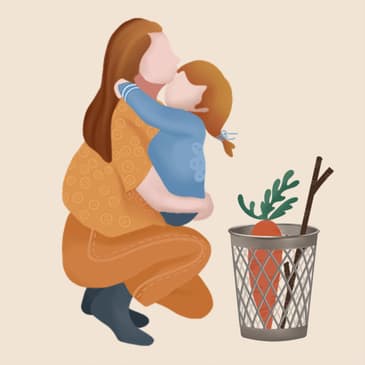
"Unconditional Parenting" by Alfie Kohn is a book that challenges traditional parenting techniques and proposes an alternative approach to raising children. Kohn argues against the use of punishments, rewards, and other forms of control, emphasizing the importance of developing a strong parent-child relationship based on mutual respect and understanding. The book advocates for unconditional love and support as the foundation for a child's well-being and argues that this approach leads to happier, more resilient children. Throughout the book, Kohn presents research-based evidence and practical strategies for implementing unconditional parenting principles in everyday life.
Chapter 2 Is Unconditional Parenting Book recommended for reading?This is subjective and can vary from person to person. However, "Unconditional Parenting" by Alfie Kohn has received positive reviews and is highly recommended by many readers. The book challenges traditional parenting methods and offers alternative approaches to raise children. If you are interested in exploring a different perspective on parenting, this book may be worth reading.
Chapter 3 Unconditional Parenting Book Summary"Unconditional Parenting: Moving from Rewards and Punishments to Love and Reason" is a book by Alfie Kohn that challenges traditional parenting techniques that rely on rewards and punishments as a way to control children's behavior. Kohn argues that such methods are not only ineffective but also harmful to children's development.
The book emphasizes the importance of unconditional love and respect in parenting. Kohn suggests that parents need to shift their focus from trying to control their children's behavior to building a strong and trusting relationship with them. He believes that trust and connection are more effective in fostering positive child development and cooperation.
Kohn also critiques common parenting strategies such as time-outs, consequences, and praise. He argues that these techniques undermine a child's sense of autonomy and self-motivation. Instead, Kohn encourages parents to engage their children in discussions and problem-solving, allowing them to have a say in decisions that affect their lives. He believes that this approach not only teaches children critical thinking and decision-making skills but also empowers them to take responsibility for their actions.
The book also delves into the impact of praise on a child's self-esteem and motivation. Kohn challenges the idea that praising children for their achievements and abilities is beneficial, suggesting that it can actually create a dependency on external validation and lead to a fear of failure.
Overall, "Unconditional Parenting" challenges conventional parenting wisdom, offering a new perspective on how to raise confident, responsible, and independent children. Kohn encourages parents to foster a more cooperative and equitable relationship with their children, based on trust, respect, and open communication.
Chapter 4 Meet the Writer of Unconditional Parenting BookThe author of the book "Unconditional Parenting" is Alfie Kohn. The book was first published in 2005. Kohn is an American author and lecturer on education, parenting, and human behavior. He has written numerous other books covering a wide range of topics.
Some notable books by Alfie Kohn include:
- "Punished by Rewards: The Trouble with Gold Stars, Incentive Plans, A's, Praise, and Other Bribes" (1993)
- "No Contest: The Case Against Competition" (1986)
- "The Myth of the Spoiled Child: Challenging the Conventional Wisdom about Children and Parenting" (2014)
- "Beyond Discipline: From Compliance to Community" (1996)
- "The Schools Our Children Deserve: Moving Beyond Traditional Classrooms and "Tougher Standards" (1999)
In terms of editions, the best edition of "Unconditional Parenting" would be the most recent one, which is the 10th-anniversary edition published in 2015. This edition includes updated content and additional resources.
Chapter 5 Unconditional Parenting Book Meaning & Theme Unconditional Parenting Book Meaning"Unconditional Parenting" is a book written by Alfie Kohn, which challenges conventional wisdom and offers a new approach to raising children. The book emphasizes the importance of unconditional love and support in parenting, rather than relying on punishments, rewards, or conditional approval.
Kohn argues that society's traditional methods of parenting, which often involve using punishment or rewards to control children's behavior, ultimately hinder their development and hinder their desire to act ethically and independently. He proposes that parents should strive to create a nurturing and supportive environment that values children's individuality, autonomy, and intrinsic motivation.
The underlying message of the book is that children should not be viewed as passive objects to be controlled or manipulated, but rather as active participants in their own development. Kohn encourages parents to engage in open communication, empathetic listening, and problem-solving with their children in order to build strong and trusting relationships.
Overall, "Unconditional Parenting" aims to challenge parents to reevaluate their approach and to adopt a more compassionate and understanding parenting style that prioritizes emotional well-being, self-esteem, and authentic self-expression.
Unconditional Parenting Book ThemeThe theme of "Unconditional Parenting" by Alfie Kohn is the idea that traditional parenting methods based on control, rewards, and punishments are harmful and ineffective. Kohn argues that children should be respected as individuals with their own thoughts, feelings, and needs, and that parents should focus on developing a mutually respectful and cooperative relationship with their children. The book promotes a parenting style that is based on empathy, understanding, and problem-solving rather than authoritarianism and coercion.
Chapter 6 Various Alternate Resources- Amazon: The book "Unconditional Parenting" by Alfie Kohn is available for purchase in both physical and digital formats on Amazon.
- Goodreads: Goodreads is a popular platform for book recommendations and discussions. You can find reviews, ratings, and discussions related to "Unconditional Parenting" on this website.
- YouTube: Alfie Kohn has given several interviews and talks on YouTube discussing his book and the concept of unconditional parenting. You can find videos of these interviews and talks on the platform.
- Podcasts: There are multiple podcasts that have featured Alfie Kohn as a guest where he discusses the ideas presented in "Unconditional Parenting." Some popular podcasts that have covered this book include "The Psychology Podcast" and "The Unschooling Life Podcast."
- Social Media: Alfie Kohn has a presence on various social media platforms, including Twitter, Facebook, and Instagram. He regularly shares articles, interviews, and updates related to his book and the concept of unconditional parenting.
- Newspaper and Online Articles: Numerous newspapers and online media outlets have reviewed or covered "Unconditional Parenting." Searching for articles related to the book on platforms like The New York Times, The Guardian, or Psychology Today can provide additional information and perspectives.
- Online Forums and Communities: Parenting forums and online communities such as Reddit have discussions and threads dedicated to "Unconditional Parenting" by Alfie Kohn. These platforms offer a space for individuals to share their experiences, ask questions, and engage in discussions about the book.
- Local Libraries: Many public libraries have copies of "Unconditional Parenting" available for loan. Checking with your local library or utilizing their online catalog can provide access to the book without purchasing it.
- Education and Parenting Conferences: Alfie Kohn often speaks at conferences and seminars on topics related to his book. Keeping an eye on education and parenting conference schedules can provide opportunities to hear him speak and learn more about "Unconditional Parenting."
- Academic Journals: Scholars and researchers in the fields of education, psychology, and parenting often reference and discuss "Unconditional Parenting" in their academic papers and articles. Searching in online databases such as JSTOR or Google Scholar can provide access to these scholarly resources.
Unconditional Parenting Book quotes as follows:
- "When we offer a child our love, approval, or acceptance only when he behaves in certain ways that we've determined are appropriate, we're not offering him love at all. We're offering conditional positive regard."
- "When we emphasize obedience over understanding, we undermine our children's trust in us as guides and mentors."
- "Children don't need to be controlled; they need to be connected."
- "Punishment doesn't teach the skills kids need to do better; it just teaches them to avoid getting caught."
- "Focusing on behavior alone is like treating a symptom without addressing the underlying cause. We need to ask ourselves why a child is behaving in a certain way and address those needs."
- "Discipline should be about teaching and not punishing."
- "The more children are controlled and manipulated by external rewards and punishments, the less they learn to self-regulate and make responsible choices."
- "When we approach parenting with the belief that children are inherently good and capable, we create an environment where they can thrive and develop a strong sense of self."
- "Children deserve to be treated with respect and empathy, just like adults do. We must listen to their thoughts and feelings and involve them in decision-making processes."
- "Unconditional parenting is not permissive or laissez-faire; it's about setting clear boundaries and expectations while also prioritizing the child's well-being and emotional development."
- "Parenting from the Inside Out" by Daniel J. Siegel and Mary Hartzell - This insightful book explores the connection between a parent's own emotional well-being and their ability to raise resilient, compassionate children. It offers practical exercises and strategies to help parents develop a deeper understanding of themselves and their children.
- "How to Talk So Kids Will Listen & Listen So Kids Will Talk" by Adele Faber and Elaine Mazlish - This classic parenting guide provides effective communication techniques that can strengthen relationships between parents and children. It offers practical tips on resolving conflicts, encouraging cooperation, and nurturing positive behavior.
- "The Whole-Brain Child" by Daniel J. Siegel and Tina Payne Bryson - Drawing on neuroscience research, this book offers insights into how a child’s brain develops and provides strategies to help parents support healthy emotional and intellectual growth. It provides techniques to foster connection, promote emotional regulation, and handle tantrums or meltdowns effectively.
- "No-Drama Discipline" by Daniel J. Siegel and Tina Payne Bryson - Building on the ideas presented in "The Whole-Brain Child," this book explores how to discipline children in a way that is respectful, empathetic, and effective. It offers practical tools and techniques to teach children self-control, problem-solving skills, and empathy.
- "Simplicity Parenting" by Kim John Payne and Lisa M. Ross - In today's fast-paced world, this book offers a refreshing approach that encourages parents to simplify their family's daily routines, environment, and activities. It emphasizes the importance of creating a calm and nurturing atmosphere for children to thrive and provides strategies to reduce overwhelm and promote family connection.
[00:00:00] Hi, welcome to Bookey, which unlocked big ideas from world best sellers in audio, text and mind map. Please download Bookey at Apple Store or Google Play with more features.
[00:00:12] Hit your free mind snack now. Today we will be exploring a book unconditional parenting, moving from rewards and punishments to love and reason.
[00:00:23] We often hear parents lament about how difficult it is to raise a child. It is true, there is no child who is born well behaved. Every child has their own personality.
[00:00:34] The process of raising a child brings endless challenges for parents. Therefore, parents do the best they can in reliance so-called effective ways to deal with children that are often spread by other parents.
[00:00:47] However, those effective ways may only be effective in the short term and consume become useless, which means that the screaming and yelling continue.
[00:00:57] Thus, the questions arise, how can we raise an outstanding child? What kind of parenting methods are truly effective?
[00:01:05] To answer those questions, Alphicone, a famous childhood education expert in the US who is also a father of two children wrote the book Unconditional Parenting, moving from rewards and punishments to love and reason.
[00:01:19] His theories are based on lots of scientific research and his critiques are in size of while also maintaining a sense of humor and providing easy to understand material.
[00:01:29] He offers very clear explanations of the concepts of unconditional parenting. This book has been strongly recommended by many national and international education experts. It is a must readbook for parents.
[00:01:44] Alphicone, the leader of the progressive educational movement in America published nine profound books about early childhood education before this one, including the schools our children deserve, moving beyond traditional classrooms and tougher standards,
[00:01:59] and punished by reward, the trouble with gold stars, incentive plans, A's, praise and other bribes which we have talked about before.
[00:02:08] Most of his critiques concern the fields of education, parenting and human behavior. Some readers may think his opinions are too extreme, but some of his parenting beliefs have been supported by many educators and have worldwide influence in the field of childhood education.
[00:02:25] He won the National Council of Teachers of English George Orwell Award for Distinguished Contribution in 2000, the National Louis University Ferguson Award for Distinguished Contribution to Early Childhood Education in 2002, and the Public Education Advocacy Award from the Canadian Teachers Federation in 2007.
[00:02:46] In this book, Cone questioned and overturned some common educational concepts such as using rewards and punishments to educate children.
[00:02:55] He employed significant research data and authoritative theories as well as many real research cases to prove that traditional parenting methods which are deeply rooted in parents' minds have hurt their children.
[00:03:07] Instead, Cone recommended unconditional parenting improved it could bring positive impacts to children and help them to become thoughtful, independent, confident and responsible.
[00:03:19] This kind of parenting method can help parents to understand their children's needs and reflect on the way they educate their children.
[00:03:27] Parents can also recall their own childhoods, understand the relationship between their children and themselves, and from that new perspective raise children in a better way.
[00:03:37] Cone suggested that parents should give their children love with no strings attached, encourage them to speak for themselves and be independent, and let children make their own decision.
[00:03:48] Parents also have to respect their children's needs and consider the world from their perspective.
[00:03:54] This kind of open parenting may be challenging, but it is worth making every effort.
[00:03:59] In this book we will learn about Cone's new parenting method in three parts.
[00:04:05] Part 1. What is conditional parenting?
[00:04:08] Part 2. What is unconditional parenting?
[00:04:12] Part 3. How should unconditional parenting be practiced?
[00:04:17] Before explaining unconditional parenting, Cone first introduces conditional parenting.
[00:04:23] He wants parents to reflect on themselves to see if they have already engaged in conditional parenting.
[00:04:29] So, what is conditional parenting?
[00:04:33] The first characteristic of conditional parenting is that it aims to foster children's obedience and ignore their actual feelings.
[00:04:40] In daily life, one of the most common ways we praise children is to say you are a good child.
[00:04:46] Thus, we must ask, what kind of child can be classified as a good child?
[00:04:51] If we think about it, we will realize that quiet, well-behaved, obedient, and trouble-free
[00:04:57] of the standard expectations for a good child.
[00:05:01] So how does one foster a good child that complies with these standard? Generally speaking,
[00:05:07] we do so by finding ways to make children tame and an obedient, behaving according to adults' expectations.
[00:05:15] However, Cone thinks that those standards of what counts as a good child ignore children's
[00:05:19] actual feelings, which can negatively impact their growth. Through his research, Cone found that
[00:05:25] there are two primary consequences in adulthood for people who were required to be obedient in childhood.
[00:05:32] First, they lose their individuality and become extremely obedient.
[00:05:37] Or second, they become extremely rebellious since their will, judgment,
[00:05:42] and needs that were suppressing childhood gain-free reign.
[00:05:45] Therefore, the well-behaved child who used to have manners suddenly becomes an aggressive demon.
[00:05:51] Many parents are puzzled about why their child has become extremely rebellious,
[00:05:56] seemingly changed into a totally different person as soon as adolescent starts.
[00:06:01] This changes the result of children's rebellion against their parents control.
[00:06:07] Because of these consequences, parents should think about whether or not making
[00:06:11] children obedient is truly what they want their children to be. Do we only love the child
[00:06:16] who never makes any trouble and become furious with the child who challenges our authority and patience?
[00:06:22] If the answer is yes, then this is conditional love, which means that we only focus on our own
[00:06:28] convenience rather than what our children need. The second characteristic of conditional parenting
[00:06:34] is that it is based on rewards and punishments, which may turn the parent-child relationship into
[00:06:40] a kind of economic exchange. Many parents like to propose requirements and assign rewards
[00:06:46] at punishments accordingly. This can be a highly effective way of controlling children's behavior,
[00:06:52] so many parents consider it to be a useful parenting method. In addition, the rewards and punishments
[00:06:58] are not only about giving into priving at the material level, but also about how parents speak
[00:07:04] to their children as well as their facial expressions and actions. Everyone has heard parents say
[00:07:10] things like, I am so proud of you. You won the championship, or you are awesome for cleaning up your
[00:07:16] toys so well, or I will never bring you to the supermarket again if you don't calm down or baby,
[00:07:22] if you stop crying, I will buy you an ice cream. We could go on and on with similar examples,
[00:07:28] and most people think these are normal and understandable. However, Kohn pointed out that both
[00:07:34] rewarding and punishing strategies can make children feel like they're being controlled. Although
[00:07:39] children may not be able to express this feeling in the immediate moment, they gradually come to
[00:07:44] realize that they will only be loved and accepted by their parents if they follow orders. Over time,
[00:07:51] children may begin to wonder, what will I get if I follow my parents' orders? How will they
[00:07:56] treat me if I don't? Kohn even mentions a behaviorist parenting expert who said,
[00:08:02] if I am going to take my children out for a ride or give them a hug and kiss, I must first
[00:08:07] make sure that they have earned this kind of reward. In other words, conditional parenting is a method
[00:08:13] that forces children to work really hard just to get a little affection or a reward from their
[00:08:18] parents. For children, the condition of being loved requires being well-behaved, high achieving,
[00:08:25] or both. Ultimately, conditional parenting reflects the tendency of parent-child interactions
[00:08:31] to turn into a kind of economic exchange. Researchers from the University of Denver found that
[00:08:37] teenagers who feel they have to meet certain standards to be accepted by their parents
[00:08:42] will eventually dislike themselfish and have lower self-worth in adulthood.
[00:08:47] We have discussed the first two characteristics of conditional parenting. Now,
[00:08:52] we will explore the third characteristic which is emphasizing that children must be disciplined
[00:08:58] and obey certain principles. This may hinder children from becoming independent thinkers.
[00:09:04] For example, we often see children happily running around and asking questions in public places.
[00:09:10] Adults tend to denounce and dismiss these kinds of behaviors because we have already accepted
[00:09:16] the rules and social codes. Hence, we habitually stop children from breaking the rules.
[00:09:22] But this may stifle children's curiosity and ability to think independently and make them
[00:09:27] become cowardly and blindly obedient to others. Kona offered two examples in the book. The first
[00:09:35] is about an excited boy screaming and jumping off the swing in a playground. His mother stops
[00:09:40] him immediately, yelling stop that foolishness right now. The second example is about a mother
[00:09:47] trying to restrain her son's movement in a children's museum by lying to him and telling him
[00:09:52] that what he's doing is prohibited by the museum. When he asks why, she replies, it just does.
[00:10:00] While it is commonly believed that everyone should follow the rules and be disciplined,
[00:10:04] the Journal of Child Development found that preschool-aged children of controlling parents
[00:10:09] tended to be quiet, well-behaved, non-resistant. In addition, they also didn't interact much with
[00:10:16] their peers and seemed a lack curiosity and originality. It is widely accepted that following rules
[00:10:23] can help children become self-disciplined. However, Kona pointed out that discipline doesn't always
[00:10:29] help kids to become self-disciplined. This is because there is a huge difference between being
[00:10:35] self-disciplined by choice or by force. Parents who believe in conditional parenting usually
[00:10:42] ask their children to follow the rules without giving any reason or explanation. This
[00:10:47] indicates that these parents do not appreciate their child's behavior. They stifle their child's
[00:10:53] curiosity and do not consider their child as a person with unique ideas. These kinds of behaviors
[00:10:59] can hinder children from becoming people who can think independently.
[00:11:04] This is all for part 1 What is conditional parenting? Let's review. The first characteristic of
[00:11:11] conditional parenting is that it aims to foster children's obedience and ignore their actual
[00:11:16] feelings, which can have a negative impact on children's mental development. The second characteristic
[00:11:22] is that it is based on rewards and punishments. This may turn the parent-child relationship into
[00:11:28] a kind of economic exchange and make children feel as if they are being controlled by their parents.
[00:11:34] The third characteristic is the emphasis on discipline and principles, which can stifle children's
[00:11:39] curiosity and hinder them from becoming independent thinkers.
[00:11:44] Today we are just sharing limited content. To unlock more key insights of world-class bestseller
[00:11:51] please download our app. Just search for B-O-O-K-E-Y at Apple Store or Google Play. Hit your free mind snack now.