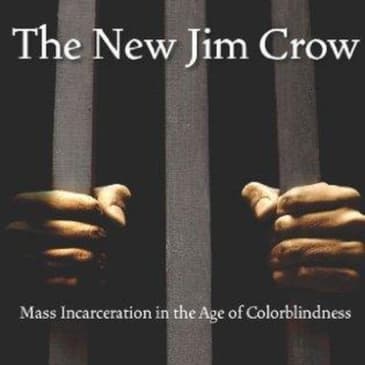
"The New Jim Crow: Mass Incarceration in the Age of Colorblindness" by Michelle Alexander argues that the U.S. criminal justice system functions as a contemporary system of racial control, akin to the Jim Crow laws of the past. Alexander contends that mass incarceration disproportionately affects African American communities and perpetuates systemic racism through policies that criminalize poverty and enforce social stigmas. The book highlights how discriminatory practices in policing, sentencing, and parole maintain a racial caste system, ultimately limiting opportunities for millions of individuals while fostering a social narrative that dismisses the realities of systemic inequality.
2 Key Concepts of The New Jim CrowIn "The New Jim Crow," Chapter 1 introduces the theme of mass incarceration as a contemporary system of racial control that perpetuates racial and social hierarchies. Subsequent chapters, particularly Chapter 2 ("The Lockdown") and Chapter 3 ("The Color of Justice"), further develop this theme by examining the systemic injustices within the criminal justice system, such as discriminatory policing practices and biased legal proceedings that disproportionately target African Americans. Chapter 4 ("The Cruel Hand") highlights the consequences of a felony record, which effectively disenfranchises and marginalizes individuals, creating barriers to employment, housing, and voting. Together, these chapters illustrate how mass incarceration functions similarly to the old Jim Crow laws, sustaining racial inequality and oppression in society.
3 In-Depth Chapter Analysis of The New Jim Crow by Michelle AlexanderIn "The New Jim Crow," Michelle Alexander meticulously explores the intersection of race and the criminal justice system across several compelling chapters, each underscoring the systematic racial discrimination that persists in contemporary America. Chapter 1 introduces the notion of mass incarceration as a pivotal mechanism of social control, drawing parallels to the historical Jim Crow laws. Alexander highlights how the war on drugs disproportionately targets Black communities, using statistics to illustrate that, despite similar rates of drug use, African Americans are far more likely to be arrested and imprisoned. This lays the foundation for the book's central argument that racism has evolved into a new form, manifesting through legal structures rather than overtly discriminatory laws.
In subsequent chapters, Alexander delves deeper into the implications of a racially biased criminal justice system. Chapter 2 focuses on the processes that lead to such disparities, including police practices and sentencing policies that are often racially motivated. The author recounts personal narratives and case studies that reveal how individuals, once labeled felons, face disenfranchisement and social stigma, resulting in a cycle of poverty and marginalization. This chapter emphasizes the theme of systemic oppression, illustrating how the criminal justice system perpetuates inequality, mirroring the effects of Jim Crow laws by stripping individuals of their rights and relegating them to a second-class status. Together, these chapters illuminate how mass incarceration serves as a contemporary racial caste system, inflicted upon those most vulnerable in society.
Book Summary Audio Bookey https://www.bookey.app/audiobook/the-new-jim-crow
Quotes https://www.bookey.app/book/the-new-jim-crow/quote
Youtube https://www.youtube.com/watch?v=Gln1JwDUI64
Amazon https://www.amazon.com/New-Jim-Crow-Incarceration-Colorblindness/dp/1595586431
Goodreads https://www.goodreads.com/book/show/6792458-the-new-jim-crow
[00:00:00] The New Jim Crow, an Engaging Audio Summary of Racial Injustice in America One What's The New Jim Crow? The New Jim Crow, Mass Incarceration in the Age of Colorblindness by Michelle Alexander argues that the U.S. criminal justice system functions as a contemporary mechanism of racial control, analogous to the Jim Crow laws that enforced racial segregation.
[00:00:22] The book outlines how systemic discrimination and mass incarceration disproportionately affect African Americans and other marginalized racial groups, creating a racial caste system that perpetuates inequality. Alexander examines various factors, including drug policy, policing practices, and legal frameworks, to illustrate how societal narratives of colorblindness mask the pervasive racism embedded in the criminal justice system.
[00:00:49] Ultimately, she calls for a reexamination of social justice strategies to dismantle this new caste system. Two Key Concepts of The New Jim Crow In The New Jim Crow, Chapter 1 introduces the theme of the racial caste system in America, particularly focusing on how mass incarceration serves as a modern mechanism of oppression for African Americans.
[00:01:11] This theme resonates throughout several chapters, particularly Chapter 2, which delves into the rise of the war on drugs and its disproportionate impact on communities of color, and Chapter 3, which discusses the societal and legal frameworks that perpetuate racial discrimination.
[00:01:28] Additionally, Chapter 4, which discusses the consequences of the consequences of incarceration on the lives of individuals and their families, reinforcing the idea that the criminal justice system serves to maintain a racial hierarchy similar to that of Jim Crow laws. Together, these chapters illustrate the systemic nature of racism and the ongoing struggle for civil rights in the face of contemporary injustices. Three in-depth chapter analysis of The New Jim Crow by Michelle Alexander
[00:01:55] In The New Jim Crow, Michelle Alexander meticulously examines the systemic racism inherent within the U.S. criminal justice system, structured across several chapters that collectively illuminate the enduring legacy of racial caste. In Chapter 1, The Rebirth of Caste, Alexander introduces the idea that mass incarceration, particularly of African Americans, functions as a contemporary racial caste system akin to Jim Crow laws, which once enforced racial segregation.
[00:02:25] She underscores this connection through statistics showing that one in three black males is likely to be incarcerated at some point in their lives, fundamentally challenging the myth of a post-racial society and highlighting the disproportionate impact of drug laws, primarily affecting black communities despite similar rates of drug use across racial lines. As the book progresses, Chapter 3, The Color of Justice, further deepens this theme by unpacking the biases entrenched within law enforcement practices and judicial proceedings.
[00:02:55] Here, Alexander provides specific instances of racial profiling, such as stop-and-frisk policies disproportionately targeting black individuals, thereby illustrating how the justice system enforces racial hierarchies. The chapter effectively connects this injustice to the broader societal narrative of black criminality perpetuated by media and political rhetoric, highlighting the interconnectedness of mass incarceration, racial prejudice, and social inequality.
[00:03:22] By weaving personal stories with empirical evidence, Alexander skillfully argues that the cycle of disenfranchisement and the stigmatization of those within the criminal justice system echo historical injustices, ultimately reinforcing a modern-day caste system challenging to dismantle.