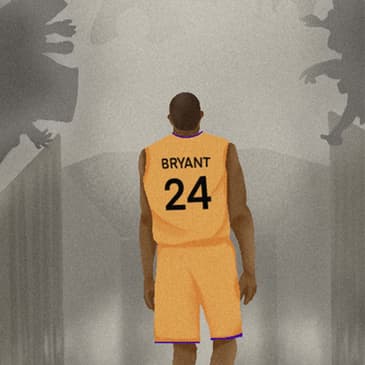
"The Mamba Mentality: How I Play" is a book written by Kobe Bryant, the late NBA basketball player. It was published in 2018 and provides insights into Bryant's mindset, work ethic, and approach to the game of basketball. The book delves into his competitive nature, training methods, and the relentless pursuit of excellence that fueled his success throughout his career. It also includes personal anecdotes, photographs, and insights from his teammates and coaches.
Chapter 2 Is The Mamba Mentality Book recommended for reading?The Mamba Mentality by Kobe Bryant is considered a good book by many readers. It offers insights into his mindset, work ethic, and approach to basketball and life. The book includes anecdotes, personal stories, and perspectives that can inspire and motivate readers, not only in the context of sports but also in various aspects of life. However, it is important to note that book preferences are subjective, so what may be a good book for one person may not be the same for another. It is always advisable to read reviews, summaries, or sample chapters to determine if a book aligns with your interests and expectations.
Chapter 3 The Mamba Mentality Book Summary"The Mamba Mentality: How I Play" is a book written by the late basketball legend Kobe Bryant. It offers an in-depth look into his mindset and approach to the game of basketball, as well as his values and work ethic.
The book is divided into different sections, each focusing on a specific aspect of Bryant's mentality. He discusses topics such as obsession, hard work, leadership, and mental toughness. Bryant emphasizes the importance of constantly striving to improve, pushing oneself to the limit, and never settling for mediocrity.
Throughout the book, Bryant shares personal anecdotes from his playing career and highlights key moments that helped shape his mindset. He also provides insights into his training routine, preparation methods, and game strategies.
"The Mamba Mentality" offers valuable lessons and advice not only for aspiring basketball players but also for anyone looking to pursue excellence in their respective fields. Bryant's dedication, discipline, and unwavering commitment to greatness serve as an inspiration to readers.
Overall, the book captures the essence of Kobe Bryant's relentless drive and his relentless pursuit of greatness, illustrating the mindset that earned him five NBA championships, two Olympic gold medals, and a legendary status in the basketball world.
Chapter 4 Meet the Writer of The Mamba Mentality BookThe author of "The Mamba Mentality: How I Play" is Kobe Bryant, with a foreword by Phil Jackson. The book was released on October 23, 2018. Unfortunately, as of my last training data update in September 2021, Kobe Bryant did not release any other books individually. However, he co-authored a few books during his lifetime.
One notable co-authored book is "Legacy and the Queen," published in 2019. It is a young adult fantasy novel co-written by Kobe Bryant and Annie Matthew. While "The Mamba Mentality" is widely regarded as a top choice among Kobe Bryant's publications, determining the best edition explicitly depends on personal preference and the specific edition's features. It is recommended to check reviews, ratings, and editions offered by various publishers before making a decision.
Chapter 5 The Mamba Mentality Book Meaning & Theme The Mamba Mentality Book Meaning"The Mamba Mentality" is a book by Kobe Bryant, the late professional basketball player. The book dives into the mindset and approach that helped him become one of the greatest basketball players of all time.
The central theme of the book is the "Mamba Mentality," which refers to Kobe's relentless pursuit of greatness and his ability to maintain a strong work ethic and focus on his goals.
Through personal anecdotes and insights, Kobe shares the mindset, preparation, and dedication required to excel in any field. He emphasizes the importance of setting ambitious goals, working hard to achieve them, and constantly striving for improvement.
The book highlights the importance of mental toughness, discipline, and sacrifice in order to reach one's full potential. It explores how Kobe's unwavering belief in his abilities and commitment to continuous growth set him apart from others in his pursuit of greatness.
Overall, "The Mamba Mentality" serves as an inspirational guide, imparting the values and mindset necessary for success in sports, business, and life. It emphasizes the importance of pushing one's limits, maintaining focus, and never settling for mediocrity.
The Mamba Mentality Book ThemeThe main theme of "The Mamba Mentality" book by Kobe Bryant is the unwavering dedication to achieving greatness. Bryant coined the term "Mamba Mentality" to describe his relentless pursuit of perfection in his basketball career and life. The book explores the mindset, work ethic, and discipline that drove Bryant to excel on the court and become one of the greatest basketball players of all time. It delves into his approach to training, preparation, focus, and competitiveness, highlighting the sacrifices and relentless determination required to reach the pinnacle of success. The book also emphasizes the importance of learning from failures and setbacks, as well as the value of pushing oneself beyond comfort zones to constantly improve and evolve. Overall, the theme of "The Mamba Mentality" centers on the mindset and philosophy that allowed Kobe Bryant to achieve greatness and serves as an inspiration for readers to adopt a similar mindset in pursuing their own goals and aspirations in life.
Chapter 6 Various Alternate Resources- "Remembering Kobe Bryant: ‘The Mamba Mentality’ book and his enduring legacy" - CNN
- "Kobe Bryant's 'The Mamba Mentality' book debuts at No. 1 on New York Times' best-seller list" - USA Today
- "Inside Kobe Bryant's New Book ‘The Mamba Mentality’" - Forbes
- "Kobe Bryant's book 'The Mamba Mentality' eliminates competition" - Los Angeles Times
- "Kobe Bryant's 'The Mamba Mentality' is the perfect blend of memoir and motivation" - NBC News
- "How Kobe Bryant's 'Mamba Mentality' helped him dominate on and off the court" - ESPN
- "Kobe Bryant's 'The Mamba Mentality' teaches powerful life lessons" - ABC News
- "From basketball to business: Kobe Bryant's 'The Mamba Mentality' book offers advice for success" - CNBC
- "Kobe Bryant's 'The Mamba Mentality' inspires athletes worldwide" - Fox Sports
- "Exploring Kobe Bryant's 'The Mamba Mentality' with deep insight and analysis" - The Washington Post
The Mamba Mentality Book quotes as follows:
- "I can't relate to lazy people. We don't speak the same language. I don't understand you. I don't want to understand you." - Kobe Bryant
- "I'll do whatever it takes to win games, whether it's sitting on a bench waving a towel, handing a cup of water to a teammate, or hitting the game-winning shot." - Kobe Bryant
- "I have self-doubt. I have insecurity. I have fear of failure. I have nights when I show up at the arena and I'm like, 'My back hurts, my feet hurt, my knees hurt.' I don't have it every night. But I have it." - Kobe Bryant
- "I'm not here to be average. I'm here to be the best." - Kobe Bryant
- "I have nothing in common with lazy people who blame others for their lack of success." - Kobe Bryant
- "The moment you give up, is the moment you let someone else win." - Kobe Bryant
- "I can't relate to lazy people. I don't understand you. I don't want to understand you." - Kobe Bryant
- "I'd rather be perceived as a winner than a good teammate. I wish they both went hand in hand all the time, but that's just not reality." - Kobe Bryant
- "I always wanted to be more than just a basketball player. I wanted to be remembered." - Kobe Bryant
- "If you're afraid to fail, then you're probably going to fail." - Kobe Bryant
- "Relentless: From Good to Great to Unstoppable" by Tim S. Grover
This book is written by Michael Jordan's former personal trainer and highlights the mindset and dedication required to excel in sports and life. It offers valuable insights into how to become relentless in pursuing your goals.
- "Mindset: The New Psychology of Success" by Carol S. Dweck
In this thought-provoking book, Dweck explores the concept of growth mindset versus fixed mindset and how it impacts our ability to learn, grow, and achieve success. It offers practical strategies to cultivate a growth mindset and overcome obstacles.
- "The Champions Mind: How Great Athletes Think, Train, and Thrive" by Jim Afremow
Written by a sports psychologist, this book delves into the mental toughness and mindset required to perform at your best. It provides practical advice and exercises to develop mental strength, focus, and resilience.
- "Extreme Ownership: How U.S. Navy SEALs Lead and Win" by Jocko Willink and Leif Babin
This book draws powerful leadership lessons from their experiences as Navy SEAL commanders. It emphasizes taking extreme ownership and accountability for every aspect of life, and offers practical guidance on how to lead effectively.
- "The Power of Now: A Guide to Spiritual Enlightenment" by Eckhart Tolle
This spiritual classic focuses on the importance of living in the present moment and cultivating mindfulness. It teaches readers how to let go of past regrets and future worries, and find true joy and fulfillment in the present.
[00:00:00] Hi, welcome to Bookie, which unlock big ideas from world bestsellers and audio, text, and mind map.
[00:00:07] Please download Bookie at Apple Store or Google Play with more features.
[00:00:11] Get your free mind snack now. Today, we will unlock Kobe Bryant's autobiography, The Mamba
[00:00:17] Mentality, How I Play. Kobe was an NBA legend and a basketball superstar. In 1996, he took part in the NBA draft,
[00:00:26] and in 2016, he announced his retirement.
[00:00:30] He had played for the Lakers for his entire career.
[00:00:33] Over the course of this 20-year-long career,
[00:00:36] he won a total of five NBA championships
[00:00:38] and was a two-time Olympic gold medalist.
[00:00:41] He was voted most valuable player multiple times
[00:00:44] in the regular season and in the NBA finals and all-star games. His achievements have
[00:00:50] made him an idol in the hearts of countless basketball fans. How did Kobe
[00:00:54] achieve such success? What is the story behind his tremendous basketball career?
[00:00:59] This bookie will reveal the answers to these questions. During his short life,
[00:01:04] Kobe produced only this autobiography to provide a definitive
[00:01:08] and comprehensive summary of his basketball career.
[00:01:11] In a text that lays bare the secrets behind the athlete's tremendous success,
[00:01:16] the book encapsulates Kobe's many experiences throughout his life in sport and his approach
[00:01:21] to inner growth. The book contains many texts in Kobe's personal handwriting.
[00:01:26] From these we can discern just how much his career meant to Kobe.
[00:01:30] Kobe mentions that in this autobiography, he shares everything he knew about basketball,
[00:01:36] all the experience he had gained from playing and how he played.
[00:01:40] Kobe was a strong advocate of the mamba mentality, which the book explores in detail.
[00:01:45] So just what is this Mamba mentality? Let us first pause and take a moment to understand Kobe's
[00:01:51] nickname, Black Mamba. The Black Mamba is a snake native to parts of Sub-Saharan Africa,
[00:01:57] one of the world's swiftest moving snakes. When Kobe adopted the moniker, he hoped that,
[00:02:02] like the characteristics of his namesake,
[00:02:05] his performance on the basketball court would be equally fast and accurate.
[00:02:10] Kobe never gave up in seeking excellence and pursuing the spirit.
[00:02:13] This was how his attitude was christened the mamba mentality.
[00:02:17] Kobe said, the mindset of mamba mentality isn't about seeking a result.
[00:02:23] It's more about the process of getting to that result.
[00:02:26] It's about the journey and the approach.
[00:02:28] This book looks at the components of the mamba mentality,
[00:02:31] dissecting its influence on Kobe's basketball career
[00:02:34] with surgical precision.
[00:02:36] Kobe shared all of his experiences and the lessons
[00:02:39] he learned over the course of his 20 year long career
[00:02:42] in the hopes that others can gain strength from his journey
[00:02:45] and that his indomitable spirit encourages them to find the courage to go forward in their own.
[00:02:50] Respective journeys. Hence, Kobe said that this is not merely a basketball story.
[00:02:56] Above all, it is a book to spur others on with the mamba mentality.
[00:03:00] This was Kobe's primary motivation for putting pen to paper.
[00:03:04] Now, we will interpret this book for you through three separate parts
[00:03:08] so that we can enter Kobe's spiritual world together.
[00:03:11] Part 1. Hard work and eagerness to learn.
[00:03:15] Part 2. Never giving up.
[00:03:17] Part 3. Fully focused on the game.
[00:03:20] Some people are destined to succeed, not because they have natural talent,
[00:03:24] but because they are passionate and determined enough to transform every ounce of their potential into a positive strength.
[00:03:31] Kobe Bryant was one such person.
[00:03:33] Kobe's father was a former NBA professional basketball player.
[00:03:37] Under his father's influence from a tender age, Kobe developed an obsessive interest in basketball. Every single day he exercised his obsession, learning new skills and techniques.
[00:03:49] Perhaps it was thanks to jeans that he inherited a particular gift for basketball and was able
[00:03:54] to pick up the game more quickly than other kids.
[00:03:57] Despite his youth, this allowed him to develop a solid repertoire of fundamental basketball
[00:04:02] skills.
[00:04:04] From the day he entered the league,
[00:04:05] when he was just a fledgling player,
[00:04:07] Kobe resolved to become a great basketball player
[00:04:10] who would go down in the history of the game.
[00:04:13] He was driven.
[00:04:14] He wanted to be someone who would dominate the basketball courts.
[00:04:18] Due to his strong desire to win,
[00:04:20] Kobe excelled without the aid of external forces or others' persuasion.
[00:04:24] His personal goals were higher than the highest expectations that anybody else could have for him.
[00:04:30] From the age of 17, Kobe acquired the habit of weight training.
[00:04:34] This sort of rigorous training was particularly effective in enhancing performance.
[00:04:39] Kobe stuck unwaveringly to his weight training routine every week
[00:04:43] and sustained it throughout the course of his 20-year-long career without a day's deviation.
[00:04:49] For a basketball professional, building strength, maintaining fitness and shooting practice
[00:04:54] are crucial aspects of training.
[00:04:56] It is a relentless routine.
[00:04:58] However, Kobe did not adhere strictly to the same procedures as every other team member.
[00:05:04] He varied the way
[00:05:05] he organized his training all the time. He was continuously reflective and engaged in
[00:05:10] simulations during his exercise regime. To achieve optimal results, he adjusted his fitness
[00:05:16] plans, adapting them to his physical state and level of agility. This sort of mindfulness-driven
[00:05:22] training methodology allowed Kobe to achieve
[00:05:25] maximum effect with less effort. There was a saying that used to go the rounds at the
[00:05:29] NBA, Have you ever seen Los Angeles at 4 AM? This saying originated from none other than
[00:05:35] Kobe. In order to balance family and career, he chose to sacrifice his sleep and use the
[00:05:41] nighttime to train instead. He would make the best of every waking hour.
[00:05:46] Kobe did not waste any time or slacken off throughout his training.
[00:05:50] Should he feel weary or tired, he would take a short power nap in the locker room or in
[00:05:55] his car.
[00:05:56] If anybody from the Lakers team arrived early at the arena, they would often see Kobe there
[00:06:01] already, taking a quick nap.
[00:06:03] Although the long hours of grueling training were tough on Kobe, they made him resilient,
[00:06:09] better and stronger.
[00:06:11] Kobe, who immensely loved both his family and his basketball, could only maintain his
[00:06:16] high levels of competitiveness over the years through strenuous effort.
[00:06:20] His application was such that the average person would find it difficult to imagine.
[00:06:25] Beyond simple hard graft, another key factor that enabled Kobe to rapidly gain strength and improve his skills was his extraordinary attention to detail.
[00:06:35] Paugasol, an ex-teammate of Kobe, recalled how Kobe's meticulous attention to detail left him with a profound impression.
[00:06:43] Even if it were very late at night, Kobe would
[00:06:45] eagerly invite him to study filmed recordings of past games. The habit of replaying the
[00:06:50] games on film was another procedure Kobe had acquired from a young age. All his life,
[00:06:55] he was deeply immersed in the process of researching styles of play by watching film records.
[00:07:00] He used this process not only to observe the player's movements and techniques, but also
[00:07:05] to try to predict how a game was likely to unfold.
[00:07:09] And from there, imagine what alternative actions could be taken to counter those deviations.
[00:07:15] This habit enabled Kobe to be better prepared and hence a lot more effective in the live
[00:07:19] arena.
[00:07:20] Apart from his study of the recordings of previous tournaments, Kobe also made a point
[00:07:25] to read the referee's handbook.
[00:07:27] In the handbook, Kobe discovered a loophole in the rules that he could exploit.
[00:07:32] Each referee had a designated zone in the court where he was supposed to be.
[00:07:36] A referee would always have certain blind spots or dead zones where the ball and player's
[00:07:41] actions could not be observed.
[00:07:43] Within these dead zones, specific minor violations go unnoticed.
[00:07:48] The action on the basketball court is often highly volatile.
[00:07:51] Opportunities can slip through a player's fingers very easily.
[00:07:55] Yet, by making clever use of these dead zones,
[00:07:58] Kobe could create discreet, inconspicuous opportunities,
[00:08:02] giving himself an edge while avoiding the referee's
[00:08:05] dreaded penalty whistle.
[00:08:08] Although this was essentially a type of rule-breaking behavior, it reflected Kobe's almost obsessive
[00:08:13] attention to every detail.
[00:08:15] This particular trait was further reflected in the high demands he placed on signature
[00:08:20] trainers.
[00:08:21] Unlike many other sports personalities who cared more about the aesthetics of their footwear, Kobe placed utmost emphasis on how his signature
[00:08:28] trainers performed. In order to ensure that his shoes would not slip and would
[00:08:33] offer his ankle's ultimate protection, Kobe practically demanded absolute
[00:08:37] perfection in every detail, be it the shoes weight distribution, material or
[00:08:42] cut. Every thread and every stitch had to meet his exceptional standards.
[00:08:48] Inspired by football boots, he developed a range of low-cut basketball shoes.
[00:08:53] They were designed to offer more torque to players' ankles and lower legs than regular sports footwear.
[00:08:59] In Kobe's mind, basketball shoes should be capable of providing a significant boost to players on the court.
[00:09:06] It was not enough for them to simply look good or be comfortable. Because of his perseverance
[00:09:11] and hard work, his sponsors finally launched the revolutionary Kobe 4 trainers, which paved the way
[00:09:17] for a new trend in basketball shoes. Aside from his conscientious and meticulous attitude,
[00:09:23] Kobe's curiosity and eagerness for self-improvement were further beneficial strengths.
[00:09:29] He was forever humble and sought the guidance of his predecessors,
[00:09:33] thereby gleaning new knowledge from their experiences.
[00:09:36] Within the NBA, some gifted young players let their fame and natural talent go to their heads.
[00:09:42] It caused them to be arrogant, dismissive of everything and everyone.
[00:09:47] By contrast,
[00:09:48] Kobe was not too self-important to humble himself
[00:09:51] before others in order to learn from them.
[00:09:53] It was worth it in terms of what he valued the most.
[00:09:56] For Kobe,
[00:09:57] the noble honor of becoming a champion was above all else.
[00:10:01] To become a great player,
[00:10:03] he would not pass up any chance to better himself.
[00:10:06] When he first met his famous Lakers predecessor Jerry West,
[00:10:10] Kobe was tireless in seeking the older player's guidance.
[00:10:14] Kobe quizzed West on his legendary moments
[00:10:16] on the basketball court, looking for the stories
[00:10:19] behind the myths.
[00:10:21] And when Kobe became acquainted with Irvin Magic, Johnson,
[00:10:24] he asked the star player
[00:10:26] about his experiences in the game and interrogated the older player's signature way of passing the
[00:10:31] ball. The spin moved off the dribble, which had become Johnson's most notable claim to fame.
[00:10:37] Kareem Abdul-Jabbar, the all-time leading scorer in NBA history, was also among those whom Kobe
[00:10:43] learned from.
[00:10:45] From this exceptional center who made it to the Naismith Memorial Basketball Hall of Fame,
[00:10:50] Kobe learned how to play in the post, a move involving reversing past the opposition's
[00:10:55] defense.
[00:10:56] Kobe also picked up some training strategies from Abdul Jabbar, and these insights set
[00:11:01] the foundation for his expansive offensive skills in the later stage of his career.
[00:11:06] From the glove, Gary Payton, an all-star player who made a name for himself playing defense,
[00:11:12] he learned the means to break through screens and counter-pick-aneral tactics.
[00:11:16] Even the king of boxing Muhammad Ali helped Kobe immensely,
[00:11:20] despite the fact that he was not even playing a similar sport.
[00:11:24] This sport's personality was near flawless in his use of psychological strategies in the ring.
[00:11:29] Kobe greatly admired Ollie and often mimicked the psychological tricks he had developed
[00:11:34] and applied them in basketball tournaments.
[00:11:36] Those approaches reaped great rewards.
[00:11:39] Upon entering the NBA, Kobe's play took off, rapidly improving in leaps and bounds.
[00:11:46] He transformed himself from a green newbie, blossoming into a formidable basketball star.
[00:11:52] The factors we have mentioned propelled his success, a foundation of tough well-disciplined
[00:11:57] training, close attention to detail, and his eagerness to learn from others' prowess,
[00:12:03] together drove relentless improvement in Kobe's performance.
[00:12:06] Today, we are just sharing limited content.
[00:12:09] To unlock more key insights of world-class bestseller,
[00:12:12] please download our app.
[00:12:14] Just search for be OOKEY at Apple Store or Google Play.
[00:12:18] Get your free mind snack now.