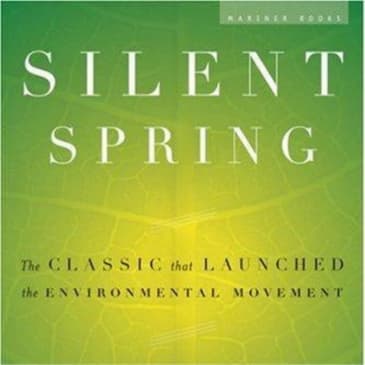
"Silent Spring" is a groundbreaking environmental science book written by Rachel Carson and first published in 1962. Carson was a marine biologist and nature writer, acclaimed for her earlier works on ocean life. With a deep connection to the natural world and a background in both biology and writing, she was uniquely positioned to communicate intricate scientific ideas to the general public. Born on May 27, 1907, in Springdale, Pennsylvania, she graduated from Pennsylvania College for Women (now Chatham University) and later earned a master’s degree in zoology from Johns Hopkins University in 1932.
Before "Silent Spring," Carson enjoyed a significant career with the U.S. Fish and Wildlife Service and had already published three well-received books about marine biology that reflected her respect for the natural world as well as her scientific understanding — these were "Under the Sea Wind," "The Sea Around Us," and "The Edge of the Sea."
"Silent Spring," however, marked a significant turning point not only in Carson’s career but also in public awareness of environmental issues. The book focuses on the harmful effects of pesticides on the environment, particularly those of DDT, a then-popular chemical that was widely used without regard for its environmental and health impacts. Carson meticulously described how DDT entered the food chain and accumulated in the fatty tissues of animals, including humans, and how it caused cancer and genetic damage. A notable feature of the book is its challenge to the chemical industry and the way these corporations promoted pesticide use while downplaying the chemicals' effects on all forms of life, including humans.
The context of "Silient Spring" is set in the post-World War II era, a time characterized by technological optimism and rapid industrial growth, including in the chemical industry. Pesticides like DDT were initially celebrated for their effectiveness in controlling mosquito populations and reducing instances of malaria and other diseases. The chemical industry was booming, and pesticides were being used in unprecedented quantities without much public understanding of their potential environmental and health impacts.
Carson's book brought these issues to the fore, leading to a major shift in public perception. Despite facing significant criticism and pushback, including accusations of being alarmist and even lawsuits from chemical companies, Carson’s work ultimately led to a national reevaluation of pesticide use and environmental policy in general. Her writing played a crucial role in the eventual nationwide ban on DDT in 1972 and spurred an environmental movement that resulted in the creation of the U.S. Environmental Protection Agency (EPA).
"Silent Spring" is often heralded as a foundational text in the environmental movement, credited with awakening the public and lawmakers to the necessity of questioning and regulating chemical practices that risk human and environmental health. Carson’s ability to synthesize scientific studies and present them in a way that was engaging and accessible to ordinary readers made her work one of the most influential writings in modern environmentalism.
Chapter 2 Analysis of Main Characters and Plot"Silent Spring," written by Rachel Carson and published in 1962, is a groundbreaking environmental science book rather than a novel with characters and a narrative plot. Instead of characters, the book focuses on examining the detrimental environmental effects caused by indiscriminate use of chemical pesticides, particularly DDT.
Key Themes and Clues to Understanding "Silent Spring":
- The Power of Chemical Pesticides: Carson opens with a fictional account of a town, which suffers a series of plagues due to pesticide overuse. This "Fable for Tomorrow" serves as a cautionary tale setting the tone for real-life examples and scientific evidence presented later.
- Ecological Connections: Carson explains how all elements of an ecosystem are interconnected. She emphasizes that pesticides can kill insects and harm birds, fish, and other wildlife, showing that the impact of pesticides is not limited to intended targets.
- Bioaccumulation and Biomagnification: The book discusses how pesticides accumulate in the environment and in the bodies of animals over time, becoming more concentrated as they move up the food chain, which leads to severe ecological and health consequences.
- Human Health Implications: Carson argues that pesticides can cause cancers and other illnesses in humans. She critically appraises the then-current practices of pest control, particularly those that do not account for human exposure and long-term effects.
- Alternative Approaches to Pest Control: Carson advocates for biological and natural methods of pest control as alternatives to chemical pesticides. She encourages more research and adoption of biologically based methods that do not harm the environment or human health.
- Response to Critics: Throughout the book, Carson addresses the criticisms from chemical companies and some sectors of the public, reinforcing her arguments with scientific data to support the need for regulations and awareness.
Understanding "Silent Spring" requires recognizing its role in launching the modern environmental movement. It brought environmental concerns, particularly about chemical pollution, to the public eye, leading to policy changes and a shift towards more sustainable practices. Through detailed description and a well-substantiated critique of pesticides, Carson effectively altered public perception and policy regarding environmental protection and public health.
Chapter 3 Theme Exploration and Analysis"Silent Spring," published in 1962 by Rachel Carson, is often credited with launching the global environmental movement. The book delves into the harmful effects of pesticides on the environment, with a particular focus on birds. Here's a deeper exploration of the main themes and topics of the book:
- The Impact of Pesticides: Central to "Silalike "DDT"nt its unchecked use as an agricultural pesticide is systematically contaminating water, soil, and air, and accumulating in the food chain. Carson meticulously details how these chemicals, intended to control pests, are in turn killing birds, fish, and beneficial insect species, and harming human health.
- Ecological Balance: Carson emphasizes the interconnectedness of all living organisms and the environments in which they exist. She points out how the mass killing of insects leads to unintended consequences, including the disruption of natural balances and the elimination of beneficial organisms that maintain the health of ecosystems.
- The Problem of Bioaccumulation: Carson was among the first to explain the environmental concept of bioaccumulation to a wide audience. She describes how pesticides absorbed by organisms at a lower level in the food chain are concentrated as predators consume prey, eventually reaching toxic levels in the apex species, including humans.
- Critique of Chemical Industry Practices: Carson is critical of the chemical industry's role in promoting pesticide use without fully understanding or disclosing the chemicals' harmful effects on the environment and public health. She accuses the industry of spreading disinformation and discouraging independent scientific research that might reveal the adverse effects of their products.
- Human Hubris and Nature: Carson argues against the hubristic attitude that humans have the right to control nature through chemical means, suggesting that this mindset leads to reckless behavior and disregard for the natural world. She advocates for a more humble and respectful approach to environmental management.
- The Power and Limitations of Science: While she champions scientific research and methodical observation, Carson also criticizes the scientific community for its partiality toward solutions that are profitable over those that might be more in harmony with natural processes. She promotes the precautionary principle, arguing that chemicals should be thoroughly evaluated for environmental and health impacts before they are widely used.
- Alternative Approaches to Pest Control: Instead of chemical pesticides, Carson advocates for biological pest control methods, such as using other living organisms to control pest populations, and developing pest-resistant crop varieties. She supports the use of more sustainable, eco-friendly agricultural practices.
- The Role of the Public and Government: Carson aimed to inform not just the scientific community but also the wider public about the dangers of pesticide overuse. She believed informed citizens could advocate for better regulations. Her work led to the eventual ban of DDT in the United States and spurred changes in laws regulating chemicals, including the establishment of the Environmental Protection Agency.
"Silent Spring" is not only a critique of mid-20th-century practices but also a visionary book that calls for a fundamental shift in how humanity interacts with the natural world. Its messages about the dangers of chemical pollutants and the interconnectedness of all life remain highly relevant in today's global environmental context.
Book https://www.bookey.app/book/silent-spring-by-rachel-carson
Quotes https://www.bookey.app/quote-book/silent-spring
YouTube https://www.youtube.com/watch?v=Z2iouxXeXjQ
Amazom https://www.amazon.com/Silent-Spring-Rachel-Carson/dp/0618249060
Goodreads https://www.goodreads.com/book/show/27333.Silent_Spring
[00:00:00] Echoes of Nature The Impact of Silent Spring by Rachel Carson Chapter 1 Summary of the Book Silent Spring Silent Spring by Rachel Carson is a landmark environmental book that examines the harmful effects of pesticides on the environment, specifically DDT. Carson argues that the
[00:00:18] widespread use of these chemicals is causing a decline in bird populations and disrupting ecosystems. She highlights the dangers of pesticide use on human health, wildlife, and the environment. Carson also criticizes the chemical industry and government agencies for their role in promoting
[00:00:35] these harmful chemicals without considering the long-term consequences. The book sparked widespread public concern and ultimately led to the establishment of the Environmental Protection Agency and stricter regulations on pesticide use. Silent Spring remains a powerful call to action for environmental protection and conservation.
[00:00:55] Chapter 2 The Meaning of the Book Silent Spring Silent Spring is a groundbreaking book written by Rachel Carson in 1962 that brought attention to the devastating effects of pesticides, particularly DDT, on the environment and wildlife. The book documented how these chemicals were poisoning birds, insects, and other wildlife,
[00:01:15] leading to a decline in biodiversity and ecosystem health. Carson's work helped to spark the environmental movement and led to the eventual banning of DDT in the United States and other countries. Silent Spring is considered a seminal work in the field of environmental
[00:01:31] science and is credited with raising awareness about the importance of protecting our natural world. Chapter 3 The Book Silent Spring Chapters Chapter 1 A Fable for Tomorrow In this chapter, Carson introduces the concept of a Silent Spring, a world where all living creatures are affected by pesticides and chemicals
[00:01:52] and nature is unable to thrive. She describes a small town where people begin to notice changes in their environment and animals start to disappear. This sets the stage for the rest of the book. Chapter 2 The Obligation to Endure
[00:02:06] Carson discusses the harmful effects of pesticides on the environment and human health, citing examples of pesticide use leading to birth defects, illnesses, and death. She argues that we have a moral obligation to protect the earth and all its inhabitants from
[00:02:21] the dangers of chemicals. Chapter 3 Elixirs of Death This chapter delves into the history of chemical pesticides and their widespread use in agriculture. Carson explains how these chemicals have been marketed as miracle cures for pests, but in reality they have caused more harm
[00:02:39] than good. Chapter 4 Surface Waters and Underground Seas Carson explores the impact of pesticides on water sources such as rivers, lakes, and underground aquifers. She describes how chemicals can leech into the water supply, contaminating it,
[00:02:55] and posing a threat to both humans and wildlife. Chapter 5 Realms of the Soil In this chapter, Carson discusses the effects of pesticides on soil health and fertility. She explains how these chemicals can disrupt the delicate balance of organisms in the soil,
[00:03:11] leading to long-term damage and decreased productivity. Chapter 6 Earth's Green Mantle Carson examines the impact of pesticides on plant life, including crops, forests, and wildflowers. She explains how these chemicals can harm beneficial plants and disrupt ecosystems, ultimately affecting the entire food chain. Chapter 7 Needless Havoc
[00:03:34] This chapter focuses on the indiscriminate use of pesticides and the unintended consequences that result. Carson argues that we must reconsider our approach to pest control and prioritize the long-term health of the environment over short-term gains. Chapter 8 And No Bird Sing Carson highlights the decline of bird populations due
[00:03:55] to pesticide exposure and habitat destruction. She warns that these losses have far-reaching implications for ecosystems and human well-being. Chapter 9 Rivers of Death Carson discusses the contamination of waterways with pesticides and the devastating effects on aquatic life. She emphasizes the interconnectedness of all living creatures
[00:04:16] and the urgent need to protect our natural resources. Chapter 10 Indiscriminately from the Skies In the final chapter, Carson addresses the aerial spraying of pesticides and the dangers it poses to humans, wildlife, and the environment. She calls for a more
[00:04:33] thoughtful and sustainable approach to pest management that prioritizes safety and conservation. Chapter 4 Ten Quotes From The Book Silent Spring 1. Only within the moment of time represented by the present century has one species, man, acquired significant power to alter the nature of his world. 2. For mankind as a whole,
[00:04:55] a possession indispensable for their existence, pesticides, have become almost universal, and the balance of the biological world has been disturbed. 3. The human race may be the only intelligent beings in the universe, and if we are, we have a responsibility to protect
[00:05:13] the planet from ourselves. 4. The balance of nature is not a status quo, it is fluid, ever-shifting in a constant state of adjustment. Man too, is part of this balance. 5. The problem of controlling pests, like the problem of controlling disease, is part of the price
[00:05:33] of our intimate association with all forms of life. 6. As crude a weapon as the cave man's club, the chemical arsenal has been hurled against the fabric of life. A fabric on the one hand delicate and destructible, on the other miraculously tough and resilient, and capable of striking
[00:05:51] back in unexpected ways. 7. Chemicals are slow to break down in the environment. Some persist for many years, building up in the soil, air, and water, and eventually finding their way into the bodies of organisms far removed from the original source. 8. We stand now where two roads diverge,
[00:06:11] but unlike the roads in Robert Frost's familiar poem, they are not equally fair. The road we have long been traveling is deceptively easy, a smooth superhighway on which we progress with great speed, but at its end lies disaster. The other fork of the road, the one less
[00:06:29] traveled by, offers our last, our only chance to reach a destination that assures the preservation of our earth. 9. The history of life on earth has been a history of interaction between living things and their surroundings. To a large extent,
[00:06:45] the physical form and the habits of the earth's vegetation and its animal life have been molded by the environment. 10. The control of nature is a phrase conceived in arrogance, born of the Neanderthal age of biology and philosophy, when it was supposed that nature exists for
[00:07:02] the convenience of man.