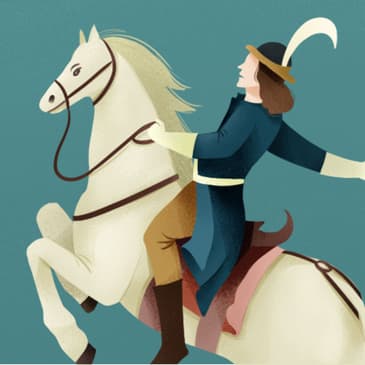
A Distant Mirror: The Calamitous 14th Century is a historical book written by Barbara Wertheim Tuchman. Published in 1978, it explores the European society and politics of the 14th century, focusing primarily on France.
The book begins by setting the stage for the tumultuous period in Europe. The 14th century was filled with various disasters, including the Black Death, the 100 Years' War between England and France, and the Great Western Schism in the Catholic Church. Tuchman uses the life and experiences of Enguerrand de Coucy, a French nobleman and knight, to illustrate the events of the time.
Tuchman delves into the details of the political, social, religious, and cultural aspects of 14th-century France. She examines the feudal system, the power struggles between the nobility and monarchy, the role of the Church, and the effects of the Black Death on society. Tuchman also explores the daily lives of different social classes, from the wealthy nobility to the common peasants.
Throughout the book, Tuchman highlights the challenges faced by Enguerrand de Coucy and other individuals of the time. She focuses on themes such as chivalry, courtly love, and the concept of honor. Tuchman also describes the military tactics employed during the 100 Years' War and the impact of technological advancements in warfare.
In addition to France, Tuchman also provides a broader context by discussing events in other parts of Europe, such as England, Italy, and the Holy Roman Empire. She examines the power struggles, alliances, and rivalries between different states and rulers during this period.
Tuchman's writing style is engaging and narrative-driven, making the historical events and characters come alive. She combines historical research with storytelling to provide readers with a comprehensive understanding of the 14th century.
Overall, A Distant Mirror is a detailed and insightful account of the calamitous 14th century in Europe. Tuchman's comprehensive research, combined with her engaging writing style, allows readers to grasp the complexities and challenges of this tumultuous period in history.
Chapter 2:the meaning of A Distant Mirror book"A Distant Mirror: The Calamitous 14th Century" is a historical analysis written by Barbara Wertheim Tuchman. The book examines the 14th century in Europe, specifically focusing on the events surrounding the Hundred Years' War and the Black Death.
The title "A Distant Mirror" reflects Tuchman's intent to draw parallels between the 14th century and the modern world. She suggests that by understanding the past and the lessons it offers, we can gain insights into our own time.
Through meticulous research and narrative storytelling, Tuchman explores various aspects of this tumultuous century, including political power struggles, social upheavals, religious conflicts, economic disparities, and the devastating impact of the bubonic plague. She offers a vivid representation of the medieval world, presenting its complexities, contradictions, and universal themes.
The central motif is the mirror, which serves as a metaphor for how events from the past reflect contemporary times. By examining the 14th century, Tuchman provides readers with a broader perspective on the challenges, contradictions, and patterns of human history. She highlights the cyclical nature of history and emphasizes the importance of understanding the past to navigate the present and future.
Ultimately, "A Distant Mirror" presents a comprehensive, engaging, and thought-provoking exploration of an era that shaped the modern world. Tuchman's work not only offers historical insights but also encourages readers to critically reflect on the human experience and the lessons that history provides.
Chapter 3:A Distant Mirror book chaptersChapter 1: Introduction
The author sets the stage by discussing the origins of the 14th century and its significance in history. She explains her intention to explore the lives and events of key figures during this period and draw parallels to the 20th century.
Chapter 2: A very Minor Lord
This chapter describes the life of Enguerrand VII, Lord of Coucy, a powerful nobleman who lived through the tumultuous events of the century. His life serves as a backdrop to the major events that unfolded during this period.
Chapter 3: “To Live out our Lives as Best We Can”
Tuchman explores the realities of medieval life, looking at the political, social, and religious aspects of the 14th century. She highlights the struggles of peasants, the role of the Church, and the impact of war.
Chapter 4: A World in Motion
This chapter discusses the global reach of the 14th century, exploring the connections and interactions between Europe, Asia, and the Middle East. The Mongol Empire, the Byzantine Empire, and the Ottoman Empire are all discussed in detail.
Chapter 5: Behind Walls
The author examines the structure of cities during the 14th century and delves into the contrasting experiences of urban and rural life. She discusses the impact of the Black Death, the rise of guilds, and the role of the wealthy merchant class.
Chapter 6: Disasters and Standards
Tuchman focuses on the infamous Black Death pandemic that swept across Europe during the 14th century. She describes the devastation it caused, the social and psychological effects, and how it reshaped Europe in its aftermath.
Chapter 7: The King’s Minions
This chapter portrays the French monarchy and its various figures during the century, particularly focusing on the reigns of Philip VI, John II, and Charles V. The challenges faced by the monarchy and the conflicts with England are discussed.
Chapter 8: The Hundred Years’ War
The author dives into the details of the Hundred Years' War, the long-standing conflict between the French and English crowns. She explores the military tactics, key battles, and political developments that shaped the war.
Chapter 9: “The Carnage Was . . . Pitiable to Hear Of”
Tuchman writes about the devastating Battle of Nicopolis in 1396, where the Ottoman Empire defeated European crusaders. She analyzes the motivations, strategy, and consequences of the battle, as well as the larger context of Christian-Muslim relations.
Chapter 10: “The Bullheaded City”
This chapter focuses on the city of Ghent in Flanders. Tuchman examines the political and economic powers at play, the tensions between the ruling class and the working class, and the impact of the city's rebellions and alliances.
Chapter 11: The Jacquerie
Tuchman discusses the French peasant uprising called the Jacquerie, examining its causes, participants, and the brutal repression by the nobility. She also explores its long-term consequences and the broader peasant rebellions in Europe during the 14th century.
Chapter 12: “Une Époque Formidable”
In the final chapter, Tuchman analyzes the overall effects of the calamitous 14th century. She reflects on the lessons to be learned from this period and how it serves as a distant mirror to the uncertainties and challenges of the modern world.
Chapter 4: Quotes of A Distant Mirror book- "The closer one looks at the fourteenth century, the more one finds human beings at their worst."
- "The fourteenth century was a stage of costumes and disguises, when everyday life was lived among grotesque and elusive imaginations."
- "A vacuum in the heart cannot be filled with artifice."
- "Death was everywhere; death with the grin of terror."
- "Sometimes a loved object of devotion, sometimes a dispenser of spirit, the Church was ever a power to be reckoned with, and that, in a world looking more than ever to religion for answers, was an awesome thing."
- "The life of the common people was dominated by the economy, by the need simply to stay alive, even to the point of starving."
- "So severe a war on property, the hitherto stable and secure background of life, had not been seen before."
- "The Black Death was by far the most effective agent of depopulation in all history."
- "The humors of the body were the humors of society, the one reflected in the other."
- "The fourteenth century was a stage for tragedy where heroism and villainy were a matter of survival."
[00:00:00] Hi, welcome to Bookie, which unlock big ideas from world bestsellers and audio,
[00:00:04] text, and mind map. Please download Bookie at Apple Store or Google Play with more features,
[00:00:10] get your free mind snack now. Today we will unlock the book A Distant Mirror, the Calamitous 14th
[00:00:16] Century. Speaking of Europe in the 14th Century, people often think of the plague,
[00:00:21] interactions, schism in the church, and other negative' War, the corruption of the papacy, and the rise of the Ottoman Turks. We'll learn about the Sire de Cusi's legendary life story through the following three parts. Part 1. Cusi's background, a prominent European noble family.
[00:01:41] Part 2.
[00:01:42] The Rise of Cusi.
[00:01:43] How Turbulent Times Shaped Him. I am the Lord of Cusi. So, how powerful were the Cusis in fact? The Castle of Cusi, built in the name of the great-engaran to Cusi III, set on a hilltop in Pickety. It was a magnificent structure with a central citadel, corner towers, fortification walls, and an underground network. The central citadel was higher than the royal tower of the Louvre, and was of Cusi would even coin their own money, thus demonstrating their power. One important way for the Cusis to accumulate such wealth and power was through marriage. In medieval Europe, marriage was always a diplomatic affair. Nobles used it to establish international relations, build alliances, expand their territory and gain sovereignty.
[00:04:23] The Cusi VII was a man born with a silver spoon in his mouth. As his heirs died one after another, the title should have been passed down to his grandson, Edward III. But France certainly didn't agree to handing the crown over to England, so they bestowed it upon Philip IV's nephew, Philip VI. At the time, France was the most powerful kingdom in Europe, and England was barely comparable.
[00:07:00] In terms of population alone, France had over 20 million people, while England had just
[00:07:04] over 4 million. of the European population. Bodies were everywhere on the road, in the fields, and in the house. There were reports everywhere that people died so fast and in such large numbers that there was not enough time to bury them. Death's side sliced through all of Europe indiscriminately. Therefore, Cusse became an orphan. Still, he was raised into a young man with chivalry.
[00:08:23] In the Middle Ages, chivalry was an important theme in every noble boy's upbringing.
[00:09:23] also manifestations of this characteristic. In addition to the influence of the social environment
[00:09:25] at the time, Catherine had also invested
[00:09:27] a considerable amount in Cusse's education,
[00:09:30] wishing him to excel in art, writing in science.
[00:09:33] She often reminded him not to forget his ancestors'
[00:09:36] virtues and honorable reputation.
[00:09:39] So thanks to the social environment
[00:09:41] and the influence of his family,
[00:09:42] Cusse became a chivalrous young nobleman.
[00:09:45] That concludes the first part.