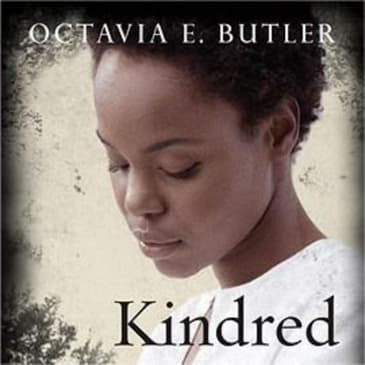
"Kindred" is a critically acclaimed novel by Octavia E. Butler, first published in 1979. As an African-American woman, Butler's work is often classified within the science fiction genre, but she successfully transcends strict genre boundaries by incorporating elements of historical fiction, fantasy, and social commentary into her writing.
Born on June 22, 1947, in Pasadena, California, Octavia Estelle Butler was raised primarily by her mother after her father's death. She grew up in a racially mixed neighborhood, where she experienced both the support of her multiethnic community and the harsh realities of racial prejudice and economic hardship. These early experiences informed much of her writing, which often explores themes of marginalization, social hierarchy, and otherness.
"Kindred" centers on a young African-American writer named Dana who finds herself repeatedly transported from her home in 1976 Los Angeles to early nineteenth-century Maryland. Dana is drawn back in time whenever her ancestor, a white slave owner named Rufus, finds himself in life-threatening danger. Throughout the novel, Dana faces the brutal realities of slavery and must navigate the perilous complexities of her relationship with Rufus, who is both her ancestor and a product of the oppressive, racist society of his time.
The book is notable for its nuanced exploration of the impact of slavery not just on the enslaved but also on the complex interdependence between slaves and slaveholders. Through Dana's interactions with her predecessors, Butler explores themes of survival, complicity, and resistance, raising questions about the impact of history on contemporary identity. Her incorporation of the time travel element allows readers to grapple with the continuity between the past and the present, emphasizing the idea that history's legacies are long-lasting and personal.
The context of the novel's publication in 1979 America also contributes to its themes. During this period, the Civil Rights Movement had brought significant changes, and yet racial inequalities and tensions persisted. Butler's engagement with the themes of slavery and racial identity offered a way to confront the historical roots of these ongoing issues.
"Kindred" remains a significant work for its visionary melding of historical analysis with speculative fiction, creating a profound narrative that critically examines the intricacies of power, race, and identity in American history. It underscores Octavia E. Butler's importance as a thinker and writer who used the genre of science fiction to explore fundamental human issues with extraordinary insight and compassion.
Chapter 2 Analysis of Main Characters and Plot"Kindred" by Octavia E. Butler is a compelling science fiction novel that explores themes of slavery and racial identity through time travel. Here are the key characters and main plot elements:
Dana Franklin: Dana, a young African-American writer in 1976, is the protagonist. She is unexpectedly pulled back in time to the early 1800s to save Rufus, a white ancestor, each time his life is in danger. Each trip increases in danger and duration, challenging Dana’s physical and psychological limits.
Rufuce Weylin: Rufus is a white ancestor of Dana living in antebellum Maryland. Despite growing close as children during Dana's time travels, Rufus grows into a complicated adult, embodying the cruel contradictions of slavery-era white society. His relationship with Dana grows increasingly complex and fraught as he becomes more dependent on her for survival.
Kevin Franklin: Kevin is Dana’s white husband in 1976. He is supportive and progressive, but his understanding of Dana’s experiences as a black woman, particularly under slavery, is limited. During one of Dana's time travels, Kevin is accidentally pulled back with her, and his experiences in the past further impact their relationship.
Alice Greenwood: Alice is a free black woman and a key figure linking Dana and Rufus. Her relationship with Rufus and her eventual fate are central to Dana's repeated returns to the past.
Tom Weylin: Tom Weylin is Rufus’s father and a typical plantation owner of his time. His harsh treatment of slaves, including Dana, showcases the brutal reality of slavery.
The story unfolds with Dana’s repeated trips to the past, each prompted by a life-threatening incident involving Rufus. Throughout these journeys, Dana is forced to navigate the dangerous dynamics of slavery and face the contradictions in her own ancestry. She grapples with maintaining her identity and survival while influencing Rufus and protecting Alice, ultimately exploring how deeply entwined her life is with her ancestors' legacies.
The novel is powerful in its portrayal of the enduring impact of slavery and the ongoing struggle for racial justice.
Chapter 3 Theme Exploration and Analysis"Kindred," written by Octavia E. Butler and first published in 1979, is a pivotal work that intertwines the themes of slavery, power dynamics, and survival through the genre-blurring combination of science fiction and historical narrative. Here’s a deeper exploration into some of the core themes and topics explored within the novel:
- Time travel and historical confrontation
"Kindred" uses the science fiction trope of time travel to place a modern character, Dana, a Black woman from 1976, directly into antebellum Maryland. This allows for a direct and personal confrontation with the brutal realities of slavery. The juxtaposition of the past and present serves as a tool to explore historical injustices and their continuing impacts. Time travel in "Kindred" is not just a plot device but a mechanism to bridge historical divides and force a dialogue between history and modernity.
- Slavery and dehumanization
The novel provides a graphic depiction of the physical and psychological abuses endured by slaves. This dehumanization is central, showing how slavery strips individuals of their identity and agency. Dana’s experiences on the plantation highlight that her education and modern attitudes do little to shield her from the reality of her ancestors' suffering. It emphasizes a continuous struggle for dignity amidst oppressive systems that seek to objectify human beings.
- Racial and gender identity
Dana’s dual identity as a woman and as an African American intersect throughout the story, shaping her experiences both in the past and how she perceives them through the lens of her 20th-century upbringing. "Kindred" explores these aspects of identity and the ways they influence interactions with others in a society stratified by race and gender. The book challenges the protagonist and the reader to consider the weight of these identities in different societal contexts.
- Survival and moral compromise
Dana often finds herself making difficult choices to ensure her survival. This theme of survival is intricately tied to moral compromise, where Dana, and her white husband Kevin, who intermittently travels back in time with her, must sometimes act against their moral beliefs to fit into the past society to stay alive. These compromises highlight the ethical dilemmas posed by extreme circumstances and critique the ease with which moral lines can be blurred or crossed when survival is at stake.
- Power dynamics and systemic oppression
"Kindred" examines the power dynamics between slaves and masters and the ingrained systemic oppression that governs behavior and fate. Through Kevin’s character, the novel also delves into the complexities of having an ally in a person who, by virtue of race and gender, is inherently part of the oppressive system. It prompts reflections on the roles individuals play within oppressive systems and how they can contribute to or challenge these systems.
- Impact of history on the present
One of the critical messages of "Kindred" is how historical slavery has shaped, and continues to influence, American society. Dana’s forced journeys to the past symbolize a confrontation with history that many would rather forget but is essential for understanding contemporary racial issues. It points to the lingering effects of slavery, such as systemic racism and cultural trauma, underscoring the importance of remembering history to address its legacies.
- Connection and complicity
Lastly, the interconnectedness of people across time and the idea of complicity are vital to "Kindred." Dana’s ancestral link to Rufus, a white slave owner, and her efforts to ensure her own birth through his survival complicate the narrative. This connection underscores themes of moral ambiguity and complicity in systems of oppression, as Dana finds herself preserving a system she detests to exist.
Through these themes, "Kindred" challenges readers to confront uncomfortable truths about history and evaluate the ongoing impact of those truths in our present day. Butler’s use of the sci-fi vehicle of time travel deeply enriches the historical exploration, making the novel a profound piece on the human condition amid oppressive systems.
Book https://www.bookey.app/book/kindred
YouTube https://www.youtube.com/watch?v=4cgG2m6FixI
Amazom https://www.amazon.com/Kindred-Octavia-Butler/dp/0807083690
Goodreads https://www.goodreads.com/book/show/60931.Kindred
[00:00:00] Time Traveling Tales Exploring History and Identity in Kindred by Octavia E. Butler Chapter 1 Summary of Kindred Kindred by Octavia E. Butler is a science fiction novel that follows the story of Dana, a 20th century African-American woman who was transported back in time to the antebellum
[00:00:18] south. Dana finds herself inexplicably drawn back to the plantation where her ancestors were enslaved, and she must navigate the brutal reality of slavery while trying to protect her own life. As Dana continues to travel back and forth in time, she forms a complex and dangerous relationship
[00:00:36] with Rufus, the son of a plantation owner who she discovers is her ancestor. Through her experiences in the past, Dana grapples with the harsh realities of slavery, the complexities of power dynamics, and the impact of race on American history. Throughout the novel, Butler explores themes of
[00:00:55] power, race, and identity, challenging readers to confront the legacy of slavery in America and the enduring effects of systemic inequality. Kindred is a powerful and thought-provoking novel that offers a unique perspective on the lasting effects of slavery and the
[00:01:10] importance of confronting the past to create a more just and equitable future. Chapter 2 The Meaning of Kindred Kindred is a novel by Octavia E. Butler that explores themes of gender, race, power, and identity. The story follows a modern African-American woman named Dana who
[00:01:29] is repeatedly and mysteriously transported back in time to the antebellum south, where she must confront the brutal realities of slavery. Through the protagonist's experiences and interactions with her ancestors, Butler examines the legacy of slavery in America and its enduring impact on society. Kindred raises important questions about identity,
[00:01:49] agency, and the complexities of African-American history. Overall, Kindred is a powerful and thought-provoking novel that challenges readers to confront the darkest chapters of American history and consider the ongoing struggles for justice and equality. Chapter 3 Kindred Chapters Kindred by Octavia E. Butler is a science fiction novel that
[00:02:11] explores themes of slavery, race, and identity. The novel follows the story of Dana, a young black woman living in 1970s California who is mysteriously transported back in time to the antebellum south. Chapter 1 Dana is suddenly transported back in time to the antebellum
[00:02:29] south where she saves a young white boy named Rufus from drowning. She learns that Rufus is her ancestor and that her trips back in time are triggered whenever Rufus's life is in danger. Chapter 2 Dana realizes that she has been transported back to a Maryland plantation where
[00:02:45] Rufus's father, Tom Whalen, is a cruel slave owner. She meets Rufus's mother, Margaret, and begins to understand the brutal reality of life for the enslaved people on the plantation. Chapter 3 Dana befriends a young enslaved woman named Alice who reveals that she is
[00:03:03] planning to run away with her husband, Isaac. Dana foils their escape attempt to protect them from the inevitable consequences of such a risky endeavor. Chapter 4 Dana's husband, Kevin, is unexpectedly transported back in time with her. They navigate the challenges of survival
[00:03:20] and oppression in the antebellum south together, grappling with their complex relationship and the systemic violence of slavery. Chapter 5 Dana's relationship with Rufus becomes increasingly complicated as he grows into a ruthless and entitled young man.
[00:03:36] She struggles to maintain her sense of self and agency in a world that seeks to dehumanize and oppress her. Chapter 6 Dana is forced to make difficult choices to survive in the antebellum south, confronting the brutal realities of slavery and her own complicity in perpetuating the
[00:03:53] system through her relationship with Rufus. Chapter 7 As Dana's trips back in time become more frequent and uncontrollable, she grapples with the ethical implications of her actions and the profound impact of slavery on her own identity and sense of self. Overall, Kindred by
[00:04:10] Octavia E. U. Butler is a powerful and thought-provoking novel that delves into the complexities of race, power, and history. Through Dana's journey, Butler challenges readers to confront the legacy of slavery and its ongoing repercussions in contemporary society.