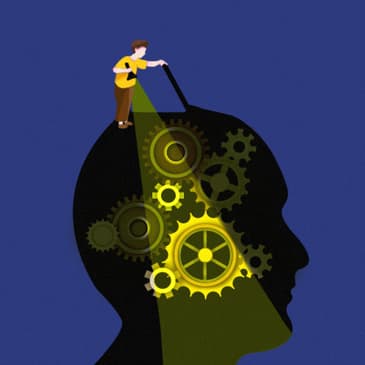
"How the Mind Works" is a book written by cognitive psychologist and linguist Steven Pinker, published in 1997. The book explores various aspects of the human mind, including perception, language, emotions, and social interactions. Pinker draws on research from cognitive science, neuroscience, evolutionary biology, and psychology to provide an understanding of the inner workings of the human mind. He takes a computational approach, arguing that the mind can be understood as an information-processing system. Pinker aims to unravel the mysteries of the mind and shed light on topics such as consciousness, mental disorders, and the nature vs. nurture debate.
Chapter 2 Is How the Mind Works Book recommended for reading?How the Mind Works by Steven Pinker is generally considered to be a good book by readers and critics alike. The book explores various aspects of the human mind, including perception, emotion, language, and reasoning, and offers insights into how these cognitive processes evolved and function. Pinker's writing is often praised for its clarity and accessibility, allowing both experts and laypeople to comprehend complex ideas. However, it is important to note that individual opinions may vary, so it is advisable to read reviews or summaries of the book to determine if it aligns with your interests and expectations.
Chapter 3 How the Mind Works Book Summary"How the Mind Works" is a book written by cognitive scientist and psychologist Steven Pinker. In this book, Pinker explores and discusses various aspects of human thought, consciousness, and behavior, aiming to provide an understanding of the mind and its workings.
The book begins by analyzing the evolution of human beings and the structure of the mind, addressing questions such as why we have certain instincts, how we perceive the world, and why we have emotions. Pinker argues that the mind is a product of evolutionary processes, shaped by natural selection over millions of years.
Pinker also dives into topics such as language acquisition, reasoning, problem-solving, and decision-making. He explores how the brain processes information, how language systems develop in children, and how reasoning abilities have evolved.
Another important aspect discussed in the book is the nature vs. nurture debate. Pinker argues that both genetics and environment play crucial roles in shaping human behavior and intelligence, dismissing the idea of a blank slate and supporting the importance of genetic predispositions.
Additionally, Pinker tackles controversial subjects such as gender differences and the concept of consciousness. He examines the role of genetics and culture in creating these differences and explores different theories regarding consciousness, offering potential explanations for its existence.
Throughout the book, Pinker presents research findings, studies, and theories from various disciplines, including psychology, neuroscience, biology, and anthropology. He emphasizes the interdisciplinary nature of understanding the mind and asserts that a complete understanding of the human mind requires insights from multiple fields.
In summary, "How the Mind Works" is a comprehensive exploration of the human mind, covering topics such as evolution, perception, language, reasoning, genetics, and consciousness. Pinker's aim is to shed light on the nature of the mind, its origins, and its mechanisms, drawing upon research and theories from diverse fields to present a coherent and multifaceted understanding of how the mind functions.
Chapter 4 Meet the Writer of How the Mind Works BookThe book "How the Mind Works" was written by Steven Pinker, a renowned cognitive scientist, psychologist, and linguist. He released the book in 1997.
Steven Pinker has written several other books, including:
- "The Language Instinct" (1994): This book explores the nature of language and its underlying mechanisms, challenging common linguistic myths and providing insights into how language is acquired and used.
- "The Blank Slate: The Modern Denial of Human Nature" (2002): Pinker explores the concept of human nature and challenges the idea that all human behavior is solely a product of socialization and culture.
- "The Better Angels of Our Nature: Why Violence Has Declined" (2011): This book analyzes historical data to argue that violence and human cruelty have significantly decreased over time, suggesting a more peaceful world.
- "Enlightenment Now: The Case for Reason, Science, Humanism, and Progress" (2018): Pinker presents an optimistic view of human progress by emphasizing the importance of reason, science, and humanism in shaping a better future.
Regarding the best edition of these books, it is subjective and depends on individual preferences and needs. However, each book has its own significance, and readers may find different editions valuable based on updated information, revised content, or additional chapters.
Chapter 5 How the Mind Works Book Meaning & Theme How the Mind Works Book MeaningThe book "How the Mind Works" by Steven Pinker aims to explain and explore the mysteries of human cognition. Pinker delves into various aspects of the human mind, from perception and memory to language and emotions, in an effort to understand how these functions evolved and how they contribute to our everyday experience.
The central theme of the book is to challenge traditional beliefs and theories about the mind and propose a new perspective based on evolutionary psychology and cognitive science. Pinker argues that the mind is not a blank slate but rather a product of natural selection, shaped by evolutionary forces over millions of years.
By investigating different cognitive processes, Pinker lays out his theory of how the mind works, explaining phenomena such as visual perception, the encoding and retrieval of memories, decision-making, and the mechanics of language. He also explores common cognitive biases and errors, shedding light on why our minds sometimes fail us.
Overall, the book delves into the intricate workings of the human mind and presents a comprehensive exploration of the evolutionary basis and mechanisms that underpin our cognitive processes. Steven Pinker aims to provide readers with a deeper understanding of the complexities of the mind and how it functions in its various aspects.
How the Mind Works Book ThemeThe main theme of "How the Mind Works" by Steven Pinker is the exploration of the human mind and its underlying processes. Pinker delves into various aspects of cognitive science, evolutionary psychology, and neuroscience to understand how our minds evolved and how they function.
One of the central ideas in the book is that the mind is a product of natural selection. Pinker argues that our cognitive abilities, such as perception, reasoning, and language, have evolved through a process of adaptation to solve specific problems faced by our ancestors.
Pinker also explores the relationship between nature and nurture, arguing that while genetic factors play a significant role in shaping our minds, the environment and cultural influences also have an impact. He examines various mental faculties and discusses their evolutionary origins and how they have been shaped by both nature and nurture.
Another prominent theme in the book is the debunking of various misconceptions and popular beliefs about the mind. Pinker critically examines ideas such as the concept of a "blank slate" mind, the notion of pure rationality, and the idea that all behavior is a result of conscious decision-making.
Overall, the theme of "How the Mind Works" revolves around understanding the complexities of the human mind from an evolutionary and cognitive perspective, challenging common notions about the mind, and highlighting the interplay between genes, environment, and culture in shaping our mental abilities.
Chapter 6 Various Alternate Resources- Amazon: The book is available for purchase in both physical and digital formats on Amazon.
- Goodreads: Users can find ratings, reviews, and discussions about the book on Goodreads, a popular platform for book recommendations.
- Google Books: Readers can preview and purchase the book on Google Books, which also provides user reviews and ratings.
- Barnes & Noble: The book is available on the Barnes & Noble website, along with customer reviews and recommendations.
- YouTube: Steven Pinker has given numerous interviews and speeches about the book, some of which can be found on YouTube.
- Podcasts: Several podcasts have episodes discussing the book or featuring interviews with Steven Pinker, such as the "Making Sense with Sam Harris" podcast.
- News websites: Major news websites like The New York Times, The Guardian, and BBC often feature reviews or articles related to the book.
- Social media: Various social media platforms like Facebook, Twitter, and Instagram may have discussions, posts, or reviews about the book.
- Academic platforms: Websites like ResearchGate, Academia.edu, and JSTOR may have articles, research papers, or book reviews related to "How the Mind Works."
- Library resources: Online library catalogues, like WorldCat, can help locate physical copies of the book in libraries near the reader.
How the Mind Works Book quotes as follows:
- "The mind is not a blank slate waiting to be written upon by culture, but rather a complex set of cognitive faculties shaped by evolutionary forces."
- "Our brains are not general-purpose computers, but rather a collection of specialized modules that evolved to solve specific problems, such as language acquisition or facial recognition."
- "The mind is an intricate network of interconnected modules that work together to process information, generate thoughts and emotions, and guide behavior."
- "Our mental processes, such as perception, memory, and decision-making, are not always rational or accurate, but instead are influenced by biases and heuristics that have helped our ancestors survive and reproduce."
- "Language is not just a tool for communication, but also a window into our thought processes and a key driver of cognitive development."
- "Emotions are not just irrational impulses, but rather highly adaptive mechanisms that help us navigate the social world and make quick decisions."
- "Intelligence is not a single, measurable entity, but rather a collection of diverse cognitive abilities, including logical reasoning, problem-solving, and analytical thinking."
- "Human nature is not fixed, but rather constantly shaped and influenced by our genes, environment, and social interactions."
- "The mind is not a passive recipient of information, but an active interpreter and constructor of reality, constantly making sense of the world and generating new knowledge."
- "Understanding the inner workings of the mind is crucial not only for our individual well-being, but also for solving larger societal issues, such as education, mental health, and social inequality."
- "Thinking, Fast and Slow" by Daniel Kahneman:
This book explores the two systems that drive our thinking - the fast, intuitive system and the slow, deliberate system. Kahneman, a Nobel laureate, dives into the complexities of our cognitive biases and sheds light on how our minds work and make decisions.
- "The Power of Habit: Why We Do What We Do in Life and Business" by Charles Duhigg:
Duhigg explores the science behind habit formation and how our minds create patterns that dictate our behaviors. Drawing on numerous case studies, he teaches readers how to identify and change their habits, offering insights into self-improvement and personal growth.
- "Influence: The Psychology of Persuasion" by Robert Cialdini:
Cialdini delves into the principles of persuasion and how they shape our daily interactions. Exploring techniques used by marketers, salespeople, and influence peddlers, this book provides a comprehensive understanding of how our minds are subtly influenced by others and how to defend against manipulation.
- "Blink: The Power of Thinking Without Thinking" by Malcolm Gladwell:
Gladwell explores the power of our subconscious mind and its ability to make informed decisions in the blink of an eye. Through captivating examples, he demonstrates the incredible potential of our intuition, shedding light on the mysterious workings of our minds.
- "Moonwalking with Einstein: The Art and Science of Remembering Everything" by Joshua Foer:
Foer's captivating memoir explores the world of memory techniques and the astonishing abilities of the human mind. While recounting his own journey to become a memory champion, Foer unravels the secrets of exceptional memory and offers practical tips on how to improve our own mental prowess.
These five books expand upon the themes of cognition, decision-making, persuasion, intuition, and memory, building upon the foundation laid by "How the Mind Works" and offering readers a well-rounded understanding of the complexity and capabilities of the human mind.
[00:00:00] Hi, welcome to Bookie. To unlock science fiction movies reflected a public fear, that
[00:00:26] robots would one day become too intelligent and powerful, resulting in them rebelling
[00:00:31] against human beings.
[00:00:34] Science fiction writer Isaac Asimov, once proposed the famous three laws of robotics
[00:00:39] in his short story Runaround.
[00:00:42] The three laws are as follows.
[00:00:44] First, a robot may not injure a human being,
[00:00:47] or through an action allow a human being to come to harm. Second, a robot must obey orders given
[00:00:53] it by human beings, except where such orders would conflict with the first law. Third, a robot must
[00:01:00] protect its own existence, as long as such protection does not conflict with the first or second law.
[00:01:07] Over time, however, this fear has unexpectedly abated.
[00:01:12] People are beginning to understand that malicious crime, much like vision, motion coordination
[00:01:17] and common sense, does not come naturally to artificial intelligence but requires programming. When examining ourselves, we
[00:01:26] will find that every function is based on very complex programming. This includes our
[00:01:31] vision, actions, common sense, violence, morality and ability to love. Computers lack the complex
[00:01:39] minds of human beings. According to Pinker, the mind is a system of organs of computation.
[00:01:46] It is the result of natural selection, produced as our ancestors went through the process
[00:01:51] of overcoming the challenges to survival.
[00:01:55] In other words, the mind is not the brain, but the result of the brain's actions.
[00:02:00] So, how exactly did our minds gain consciousness and evolve?
[00:02:04] What capabilities do we possess?
[00:02:07] This book How the Mind Works will take you on a journey to help you understand the science
[00:02:11] of the mind.
[00:02:13] The author of this book is Stephen Pinker, a world-renowned linguist and cognitive psychologist.
[00:02:19] He is a professor of experimental psychology at Harvard University, and a celebrated TED
[00:02:25] speaker.
[00:02:26] Pinker has dedicated himself to studying children's language acquisition for many years.
[00:02:32] His book The Language Instinct, appeared on the list of 100 best science books of the
[00:02:37] 20th century by the magazine Scientific American.
[00:02:41] Pinker once worked at Massachusetts Institute of Technology as a professor of psychology,
[00:02:47] and eventually became director of the Center for Cognitive Neuroscience there. Pinker was
[00:02:52] twice listed on foreign policy magazine's Top 100 Global Thinkers, and was named one
[00:02:58] of Time magazine's 100 most influential people in the world. Based on his research in psychology, sociology,
[00:03:05] biology and other fields, Pinker deconstructs the fantastically complex
[00:03:10] design of the human mind. He also explains that the mind is the fundamental
[00:03:15] reason why humans were able to claim our place at the top of the biological food
[00:03:19] chain. This bookie will give you a detailed description of the mind through the exploration of two
[00:03:26] key areas.
[00:03:27] These include the origins of the mind and the mind's abilities.
[00:03:32] Let's examine them one by one.
[00:03:35] Behind all the human behaviors we take for granted, there is a fantastically complex
[00:03:40] design.
[00:03:41] As human beings, we run into engineering problems every day.
[00:03:45] Even the simple act of a four-year-old child following a request to put away their toys
[00:03:50] involves the use of much more precise mechanisms than that required by the moon landing.
[00:03:56] It is no exaggeration that all human behavior is the result of our mind's actions.
[00:04:01] Let's look at the first theory, the computational theory of mind.
[00:04:07] As we mentioned earlier, the mind is the result of the brain's actions.
[00:04:12] So, what special characteristic does the brain have that allows us to observe, think, feel, and act?
[00:04:19] This special ability is the act of information processing, which is also called computation.
[00:04:26] Computers were first programmed to simulate a hypothetical mental computer.
[00:04:30] Of course, our brains are much more complicated than computers.
[00:04:35] An essential concept for understanding the computational theory of mind is the computer
[00:04:40] metaphor.
[00:04:41] In the simplest terms, the human brain is comparable to a computer, and all
[00:04:45] human cognitive activities can be understood as a special kind of computation. This is
[00:04:51] essentially identical to a computer's computing principles, for the brain also relies on the
[00:04:56] process of information input, information processing, and information output. After external information is inputted, it is stored
[00:05:06] in the memory. Memory functions as an internal bulletin board. When various notifications
[00:05:12] are posted on the bulletin board, a background program will start to run and respond accordingly.
[00:05:18] Of course during this process, the background program will also trigger additional notifications,
[00:05:24] and proceed to post these notifications on the bulletin board,
[00:05:27] which will in turn trigger other background programs to run.
[00:05:31] After all external inputs have been processed, an output result will be obtained.
[00:05:37] This is how our minds are perceived to work, according to the computational theory of mind.
[00:05:43] So, why do we use the computational theory to explain how the mind works?
[00:05:49] The most typical basis for this theory is the existence of artificial intelligence.
[00:05:54] An important characteristic of artificial intelligence is mind computation.
[00:05:59] It has been proven that simple artificial intelligence functions can be achieved by installing external
[00:06:05] perceptrons on computers, and setting internal algorithms.
[00:06:10] Our minds process information in the same way as artificial intelligence.
[00:06:15] In order for the mind to work, the brain needs to process information received in different
[00:06:19] forms to finally realize an output.
[00:06:22] The book introduces an experiment. Volunteers were
[00:06:26] asked to sit in front of a video screen on which pairs of letters flashed briefly. If
[00:06:31] the pair of letters were the same, such as AA, they were asked to press one button. If
[00:06:37] the letters were different, such as AB, they were asked to press another button. There
[00:06:43] was also an additional variable, sometimes the matching letters were both uppercase or
[00:06:48] lowercase, and sometimes one was uppercase and the other lowercase.
[00:06:52] In other words, the former were physically identical, and the latter were physically
[00:06:57] different.
[00:06:58] As it turned out, when the letters were identical, people pressed the buttons more quickly and
[00:07:03] accurately than when they were different.
[00:07:06] This might be because the participants treated the letters as visual forms, and could simply
[00:07:11] match them more quickly according to their physical characteristics.
[00:07:15] When the letters were physically different, the case conversion took an extra tenth of
[00:07:19] a second of reaction time.
[00:07:21] However, when the variable changed, so that the letters were
[00:07:25] no longer paired what appeared one after the other, the difference disappeared. The reaction
[00:07:30] time of the volunteers was the same, whether the letters were physically identical or different.
[00:07:36] Evidently, when compared with the previous experiment, the mind was able to automatically
[00:07:41] convert a visual representation into an alphabetic representation.
[00:07:47] Pinker points out that our minds have at least four major forms of representation, and the
[00:07:52] visual representation illustrated in this experiment is just one of them.
[00:07:57] We can form stereo vision in the brain through our eyes.
[00:08:00] Although objects can only present two-dimensional images on the retina, with the help of details
[00:08:05] such as motion, shadow and shape, we can construct a three-dimensional representation
[00:08:10] of the real world.
[00:08:12] Another example is the letter experiment we just mentioned, which showed us the process
[00:08:17] of filtering and processing information through vision.
[00:08:21] After our eyes receive new information, some of it will be discarded.
[00:08:25] The mind will then combine the remaining information with our existing experience to reassemble
[00:08:30] into new cognition.
[00:08:32] Pinker explained that, this is because the mind provides us with a cognitive framework
[00:08:37] for observing the world, which acts as a filter for what we see.
[00:08:41] Therefore, people with different mental models may have different feelings,
[00:08:45] or draw completely different conclusions, even when they observe the same thing.
[00:08:51] The second form is phonological representation. Its role in the mind is somewhat similar to
[00:08:57] playing an audio clip on a record player. Phonological representation relies heavily on
[00:09:03] short-term memory.
[00:09:05] A third form is grammatical representation, nouns and verbs, phrases and clauses, syllables, and so on,
[00:09:13] all arranged into hierarchical trees.
[00:09:16] The fourth form is mentalese, the language of thought in which our conceptual knowledge is processed.
[00:09:22] After listening to this book you may forget almost
[00:09:25] everything about the wording, grammar and intonation, but you will hopefully remember
[00:09:30] the core knowledge of this book. Mentalese will help you capture the content and gist
[00:09:35] of this book.
[00:09:38] Using the different commands input by these four mental representations, our brain will
[00:09:42] mobilize the mind for computation and processing, and
[00:09:46] finally respond accordingly.
[00:09:49] So how did our mind come to manifest such sophisticated and delicate design? Where do
[00:09:54] our minds come from? We will find out in our next section, The Theory of Natural Selection.
[00:10:02] The core idea of natural selection theory is that the human mind is the result of genetic
[00:10:07] evolution.
[00:10:08] Throughout billions of years of evolution, we have discarded useless genes, and passed
[00:10:13] on those that aid our survival and reproduction.
[00:10:17] The result is humankind's advanced and complex minds.
[00:10:21] In fact, the biological characteristics of all creatures are the result of natural selection.
[00:10:27] For example, the speed of cheetahs, the eyesight of eagles, and the scales of pangolins.
[00:10:33] Each species has evolved an information processing device and physical properties to solve its
[00:10:38] own problems.
[00:10:40] The natural selection process produced thousands of different evolutionary paths.
[00:10:45] The path taken by humans was somewhat different, because our genes have preserved and developed the weapon that was most suitable for us, our minds.
[00:10:54] Why are the minds of humans more evolved than those of other animals?
[00:10:59] To respond, Pinker in vision four factors. The first factor is vision.
[00:11:06] Compared to other animals, our vision is more three-dimensional, so we can more accurately
[00:11:11] calculate the distance between ourselves and pray.
[00:11:14] At the same time, we have transformed our sensitivity to color into a survival skill.
[00:11:20] For example, we know that the color of ripe fruits is very bright and the color of rotten fruits is unpleasant.
[00:11:28] The second favorable factor is group living.
[00:11:32] A cluster of animals is more likely to be found by predators, but the likelihood that any one individual will be picked off is decreased.
[00:11:40] For example, in another book he entitled What a Fish Knows, it is illustrated how a large
[00:11:45] school of fish has a high degree of consistency in a visual sense, which can confuse predators.
[00:11:51] As a result, it is difficult to catch prey from large schools of fish, such as sea bass,
[00:11:57] dogfish and marit fish.
[00:11:59] At the same time, living together means there are more eyes, ears, and noses to detect predators,
[00:12:06] so they can recognize threats more quickly and easily.
[00:12:10] Another example, that we mentioned in our bookisapiens, a brief history of humankind,
[00:12:15] when a green monkey in a troop spots an eagle or a lion, it will immediately warn its companions,
[00:12:21] so that other green monkeys can quickly avoid danger. In addition to this,
[00:12:26] living together can improve foraging efficiency among animals. They can share and defend the
[00:12:32] surplus of food that competitors haven't found. Besides good vision and group living,
[00:12:38] the third requirement for intelligence is the hand. Why is this? Primates evolved in trees and have hands to grasp branches.
[00:12:47] Monkeys use all four limbs to run along the treetops, and chimpanzees use simple tools
[00:12:52] to dig out termites and bash nuts. It is because of the increased use of our hands that our
[00:12:58] bodies began to change the use of our arms, and eventually adopted upright posture.
[00:13:04] According to Darwin, three particularly
[00:13:06] important factors in human evolution are tool use, bipedalism, and hunting, all of which
[00:13:12] require the use of our hands.
[00:13:15] Hunting is the fourth defining factor in our intelligence. We all know that meat provides
[00:13:20] far more calories and nutrients than plants. This is especially true in winter,
[00:13:26] when there is typically a shortage of plants. To survive, humans needed to increase the proportion
[00:13:32] of meat in our diet through hunting. Additionally, by hunting in large numbers,
[00:13:37] males had a larger surplus of food to exchange with females for mating, and could give the
[00:13:42] remaining meat to their offspring.
[00:13:45] In this way, they were able to replicate their genes on a larger scale.
[00:13:50] Of course, no one knows for sure whether these four factors formed the basis for the ascent
[00:13:55] of human intelligence.
[00:13:56] However, Pinker asserts that these traits do explain why our ancestors were the only
[00:14:01] species out of 50 million to follow this evolutionary route.
[00:14:06] The following is what we want you to take away from this section, the evolution of the mind.
[00:14:12] First, our minds are not our brains, but our brains' actions. Second, we can use the computational
[00:14:19] theory of mind, and the theory of natural selection to explain the origin and evolution of the mind.
[00:14:26] The core belief of the computational theory of mind is that the human mind works in the same
[00:14:31] way as a computer. It interprets external information received by the brain through
[00:14:36] different representations, then processes it, and finally produces an output. Our minds have at
[00:14:42] least four major formats of representation, namely visual representation,
[00:14:48] phonological representation, grammatical representation and mental ease.
[00:14:53] The key idea of natural selection theory is that the human mind is the result of genetic
[00:14:58] evolution.
[00:15:00] Four factors contributed to the evolution of the human mind, and they are vision, group
[00:15:05] living, hands and hunting.
[00:15:08] Today we are just sharing limited bookie.
[00:15:11] To unlock more key insights of world-class bestseller, please download our app.
[00:15:17] Just search for B-O-O-K-E-Y at Apple Store or Google Play.
[00:15:22] You will get 7 days free trail with more features.