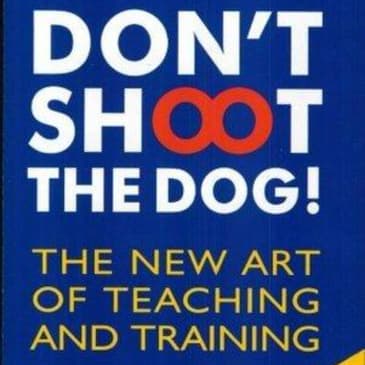
"Don't Shoot the Dog!" by Karen Pryor is a practical guide to the principles of positive reinforcement and effective behavior modification, primarily focusing on training animals but also applicable to human behavior. The book emphasizes the importance of understanding behavior dynamics and using humane methods to encourage desirable actions while discouraging undesired ones. Pryor shares insights into the science of learning, offering techniques such as clicker training, and advocating for a compassionate approach that fosters trust and communication between humans and animals. Overall, the theme revolves around the power of positive reinforcement as a vital tool for shaping behavior in both animals and people.
2 Key Concepts of Don'T Shoot The Dog!In "Don't Shoot the Dog!" by Karen Pryor, Chapter 1 introduces the theme of reinforcement as a powerful tool for behavior modification. This theme resonates throughout various chapters, particularly in Chapter 3, where Pryor discusses the principles of positive reinforcement and how it can effectively shape behavior in both humans and animals. Furthermore, Chapter 5 delves into the concept of timing and consistency in reinforcement, reinforcing the theme established in the first chapter. Ultimately, these chapters illustrate the foundational role of reinforcement in shaping positive behavior, echoing the ideas presented in the opening chapter.
3 In-Depth Chapter Analysis of Don'T Shoot The Dog! by Karen PryorIn "Don't Shoot the Dog!" Karen Pryor explores the principles of positive reinforcement and behavior modification across its chapters, emphasizing the importance of understanding behavior in both animals and humans. For instance, in the early chapters, Pryor introduces the concept of operant conditioning, illustrating how behavior can be shaped through rewards rather than punishments. This is exemplified through her anecdotes of training dogs, where she highlights how rewarding desirable behaviors leads to more effective and lasting learning. This foundational idea sets the tone for the book, underscoring that reinforcing positive actions creates a more effective and humane approach to behavior modification.
As the book progresses, Pryor expands on the application of these techniques beyond animal training into everyday interactions, including human relationships and self-improvement. Chapters like “The Importance of Timing” emphasize how critical prompt reinforcement is for both creatures and people to understand the cause-and-effect relationship of actions and consequences. Through her engaging examples, such as using clickers for training dogs, she illustrates how the principles of timing and consistency can transform chaotic situations into harmonious ones. Ultimately, each chapter builds upon the theme of promoting understanding and compassion in behavioral training, reinforcing that effective communication and encouragement lead to positive outcomes in both human and animal contexts.
Book Summary Audio Bookey https://www.bookey.app/audiobook/don't-shoot-the-dog!
Quotes https://www.bookey.app/book/don%27t-shoot-the-dog!/quote
Youtube https://www.youtube.com/watch?v=2IenGCeakZ8
Amazon https://www.amazon.com/Dont-Shoot-Dog-Teaching-Training/dp/0553380397
Goodreads https://www.goodreads.com/book/show/31052.Don_t_Shoot_the_Dog_
[00:00:00] Don't Shoot The Dog Audio Summary Unlocking the Secrets of Effective Behavior Training 1. What's Don't Shoot The Dog? Don't Shoot The Dog by Karen Pryor explores the principles of positive reinforcement and behavioral training, focusing on techniques that encourage desired behaviors while discouraging negative ones. Pryor, a prominent animal trainer and behaviorist, uses engaging anecdotes and practical examples to
[00:00:26] illustrate how these methods can be applied not only to animals but also to human interactions, including teaching, parenting, and workplace dynamics. The overarching theme emphasizes the power of understanding behavior through a rewards-based approach, promoting kindness and effective communication in training scenarios. 2. Key Concepts of Don't Shoot The Dog In Chapter 1 of Don't Shoot The Dog by Karen Pryor, the theme revolves around the importance
[00:00:54] of reinforcement and shaping behavior. Subsequent chapters, such as Chapter 2, which discusses the principles of operant conditioning, directly relate to this theme by exploring how positive reinforcement can effectively encourage desired behaviors. Additionally, Chapter 5, which focuses on the concept of timing and consistency in reinforcement, further emphasizes how these principles can be applied to shape behavior effectively. Together, these chapters reinforce the foundational ideas
[00:01:24] in Chapter 1 on the power of understanding behavioral principles to create positive change. 3. In Death Chapter Analysis of Don't Shoot The Dog by Karen Pryor In Don't Shoot The Dog by Karen Pryor, each chapter intricately weaves together the themes of positive reinforcement and effective behavior modification. For instance, in Chapter 1, the Premack Principle, Pryor introduces the concept that more probable behaviors can be used to
[00:01:53] reinforce less probable behaviors. This principle lays the foundation for understanding how reinforcement works in shaping behavior not only in animals but also in humans. By emphasizing the importance of rewarding desired actions rather than punishing undesired ones, Pryor sets a tone that resonates throughout the book, advocating for a compassionate and constructive approach to training. Subsequent chapters,
[00:02:17] such as Chapter 4, Shaping, further elaborate on these principles by discussing the method of gradually guiding an animal or an individual toward a desired behavior through successive approximations. This concept connects deeply to the overarching theme of fostering positive relationships through communication and understanding as it highlights patience and the constructive nature of learning processes.
[00:02:39] By detailing various training techniques and providing real-life examples, Pryor consistently reinforces the idea that observing, understanding, and rewarding desired behaviors cultivates a more effective and humane form of interaction, aligning with the book's core advocacy for positive reinforcement in teaching and training contexts. texts.