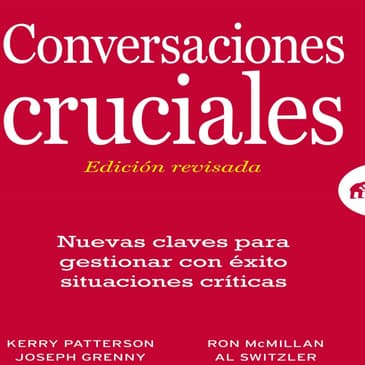
"Crucial Conversations: Tools for Talking When Stakes Are High" is a highly influential self-help book authored by Kerry Patterson, Joseph Grenny, Ron McMillan, and Al Switzler. It was first published in 2002 and has since become a cornerstone in the realm of communication and negotiation skills. The book addresses the challenges inherent in high-stakes communication, offering practical strategies to effectively navigate and resolve issues that arise in personal and professional settings.
Theme:
The central theme of "Crucial Conversations" revolves around mastering the art of dialogue in situations where opinions vary, emotions run strong, and the outcomes are consequential. The authors argue that the ability to communicate well in these pivotal moments can significantly influence the trajectory of relationships and organizational success. They present a range of techniques designed to foster open and productive conversations, even when tensions are high.
Author Background:
The authors collectively bring a wealth of expertise in leadership, organizational behavior, and communication. Kerry Patterson, Joseph Grenny, Ron McMillan, and Al Switzler are co-founders of VitalSmarts, an organization specializing in corporate training and organizational development. Their combined experience and insights into human behavior and effective communication underpin the practical advice laid out in the book. Their collaboration integrates research, real-world applications, and proven methodologies to help readers develop their conversational skills.
Background:
The impetus for "Crucial Conversations" arose from the authors' observations and research regarding communication breakdowns and their impact on both individuals and organizations. They recognized that traditional approaches to conflict resolution often fell short and identified a need for a systematic approach to handling difficult conversations. The book is grounded in social science research but also draws from the authors' extensive consulting work with various organizations, making it both evidence-based and practically relevant.
By offering structured techniques for improving dialogue, "Crucial Conversations" aims to enable individuals to handle contentious discussions more effectively, thereby enhancing their personal and professional relationships.
Chapter 2 Is Crucial Conversations recommended for reading?"Crucial Conversations: Tools for Talking When Stakes Are High" by Kerry Patterson, alongside co-authors Joseph Grenny, Ron McMillan, and Al Switzler, is widely regarded as an impactful and highly practical book in the realm of communication and personal effectiveness. Here are some unique aspects, innovations, and profound insights that make the book stand out:
Unique Aspects and Innovations:
- Focus on High-Stakes Dialogue:
- Unlike many communication books that provide general advice, "Crucial Conversations" specifically addresses situations where the outcomes are significant, emotions run high, and opinions vary. This niche focus makes the advice particularly relevant for intense or critical discussions.
- Skill-Building Framework:
- The book introduces a systematic framework for preparing and conducting crucial conversations. This includes a set of tools and strategies that readers can practice and implement, making it not just theoretical but highly actionable.
- Mastering Dialogue:
- One of the book’s core innovations is its emphasis on the concept of dialogue. While many communication strategies focus either on delivering information or persuasion, Patterson and his co-authors promote open dialogue where mutual understanding and respect are paramount.
- STATE Model:
- The STATE model (Share your facts, Tell your story, Ask for others' paths, Talk tentatively, and Encourage testing) is a structured approach provided in the book to help individuals express their viewpoints while fostering an environment where others feel safe to do the same.
- Safety Building Techniques:
- “Crucial Conversations” stresses the importance of creating a psychological safety net. Techniques like “Contrasting” (to prevent misunderstandings) and “Mutual Purpose” (to find a shared goal) help in ensuring that all parties feel respected and heard.
Profound Insights:
- The Power of Stories:
- The book emphasizes how the stories we tell ourselves about other people's actions influence our emotions and responses. By challenging these stories and understanding different perspectives, we can manage our emotional reactions and communicate more effectively.
- Spotting Crucial Conversations:
- The authors provide insight into recognizing when a conversation is crucial. This includes paying attention to physical signs (like tense muscles or a fast heartbeat) and behavioral cues (like silence or aggression), which serve as indicators that a discussion has high stakes.
- Path to Action:
- Patterson introduces the "Path to Action" model, which delineates the process from observing a situation to acting upon it. This model highlights how our interpretations (stories) about events lead to feelings, which then lead to actions, emphasizing the importance of questioning and understanding these stories.
- Mutual Respect and Mutual Purpose:
- These two concepts are cornerstone ideas in the book. Mutual Respect refers to maintaining an attitude that both parties' views are worthwhile, while Mutual Purpose is about finding a common goal for the conversation. Both are essential for effective and safe communication.
- Courage and Honesty:
- Fundamental to successful crucial conversations is the ability to balance honesty with respect. The book underscores the importance of being honest about one's viewpoints while maintaining respect for the other person's perspective, fostering a more constructive and empathetic dialogue.
Conclusion:
"Crucial Conversations" is lauded for its practical approach and deep insights into effective communication during high-stakes encounters. Its structured methodologies and focus on dialogue, safety, and mutual purpose make it a unique and invaluable guide for anyone looking to improve their interpersonal communication skills. Whether in personal relationships or professional settings, the book provides transformative tools for navigating difficult conversations with confidence and empathy.
Chapter 3 Crucial Conversations Summary"Crucial Conversations: Tools for Talking When Stakes Are High" by Kerry Patterson, Joseph Grenny, Ron McMillan, and Al Switzler is a self-help and communication skills book that provides practical advice for handling high-stakes conversations that could significantly impact one's personal and professional life. Here's a summary of the main content and core ideas:
Main Content:
- Understanding Crucial Conversations: The book starts by defining crucial conversations as discussions where the stakes are high, opinions vary, and emotions run strong. Examples include confronting a co-worker about their behavior, addressing performance issues, or discussing relationship concerns.
- The Importance of Dialogue: It emphasizes the value of open dialogue and a free flow of relevant information. Creating a safe environment where people feel comfortable sharing their honest views is crucial for productive conversations.
- Mastering One’s Emotions: One of the core ideas is to manage one's emotions before and during a crucial conversation. This involves recognizing when you’re feeling angry or defensive and choosing to stay calm and objective.
- STATE My Path: This is a crucial framework provided in the book for effectively expressing your views:
- Share your facts.
- Tell your story.
- Ask for others’ paths.
- Talk tentatively.
- Encourage testing.
- Making It Safe: The authors insist on the importance of making others feel safe during a conversation, which involves establishing mutual respect and mutual purpose. When people feel safe, they are more likely to participate openly and honestly.
- Listening Skills: Emphasizes active listening and genuinely trying to understand the other person's perspective. This involves actually hearing not just the words, but also the emotions and intent behind them.
- Exploring Others' Paths: Encourages asking questions and exploring how others have come to their conclusions, which helps to understand differing points of view and find common ground.
- Moving to Action: The final part of the book focused on how to turn crucial conversations into actions that lead to positive change. This includes making clear decisions, assigning responsibilities, and following up on commitments.
Core Ideas:
- Creating a Safe Environment: For any constructive conversation to happen, the people involved must feel safe to express their thoughts and feelings without fear of attack or disrespect.
- Managing Emotions: Self-awareness and emotional control are essential. Being able to step back from one's emotions and approaching the conversation with a clear head is crucial.
- Clarity and Directness: Communicating clearly and directly, but with respect, is key to avoiding misunderstandings and ensuring all parties feel heard and understood.
- Mutual Respect and Purpose: Establishing mutual respect and a shared goal in the conversation helps in aligning efforts towards a common resolution.
- Skill Development: The book underscores that handling crucial conversations well is a skill that can be developed with practice and mindfulness.
Overall, "Crucial Conversations" provides both the theoretical understanding and practical tools needed to handle challenging interpersonal communications effectively. It highlights the importance of preparation, patience, empathy, and active engagement in achieving positive outcomes from difficult discussions.
Chapter 4 Meet the Writer of Crucial Conversations"Crucial Conversations: Tools for Talking When Stakes Are High" is a well-known book that has been instrumental in helping individuals and organizations improve their communication skills. The book is authored by several experts in communication and organizational behavior: Kerry Patterson, Joseph Grenny, Ron McMillan, and Al Switzler.
The Authors:
- Kerry Patterson:
- Credentials and Experience: Kerry Patterson holds a bachelor's degree in English from Brigham Young University and a PhD from Stanford University. He has over three decades of experience in training and organizational behavior.
- Professional Insights: Patterson has been highly involved in developing training programs that have been used by over 300 of the Fortune 500 companies. His academic and professional background has lent significant credibility to the strategies and tools presented in "Crucial Conversations."
- Joseph Grenny:
- Credentials and Experience: Joseph Grenny is a distinguished business strategist, keynote speaker, and author. He has conducted behavioral research for over 30 years, focusing on interpersonal behavior and what drives change.
- Professional Insights: Grenny's work includes significant contributions to understanding how effective communication can influence organizational culture and performance. His expertise facilitates the translation of psychological and behavioral research into practical applications.
- Ron McMillan:
- Credentials and Experience: Ron McMillan has a background in organizational behavior and has also co-authored books and research papers on the subject. He has spent years as a consultant and speaker, providing training that emphasizes conflict resolution and effective communication practices.
- Professional Insights: McMillan's approach is rooted in actionable strategies that help individuals navigate high-stakes conversations, thereby reducing conflict and enhancing collaboration.
- Al Switzler:
- Credentials and Experience: Al Switzler has extensive experience in corporate training and communication. He has worked with numerous organizations to implement change management strategies and effective communication frameworks.
- Professional Insights: Switzler brings a wealth of knowledge from his work in various industries, explaining how the principles of "Crucial Conversations" can be applied to diverse settings for improved results.
The Subject of the Book:
"Crucial Conversations" delves into what makes communication at critical moments so difficult and offers tools to handle these interactions more effectively. High-stake situations might involve significant consequences, strong emotions, or differing viewpoints. The authors emphasize the following key principles:
- Creating a Safe Space: Ensuring that all parties feel safe to express their viewpoints without fear of confrontation or dismissal.
- Staying in Dialogue: Maintaining open lines of communication even when the conversation becomes tough.
- Mastering Your Story: Recognizing and managing the stories we tell ourselves that can influence our emotions and reactions.
- State Your Path: Clearly and respectfully articulating your opinions and feelings.
- Exploring Others' Paths: Actively listening to and understanding others' perspectives.
Each author's background in behavioral science, business strategy, and organizational development informs these principles, offering readers insightful, research-backed methodologies for managing crucial conversations.
Overall, the collective expertise of Patterson, Grenny, McMillan, and Switzler provides a comprehensive guide aimed at improving crucial conversations in both personal and professional settings, helping people to communicate more effectively and resolve conflicts when it matters most.
Chapter 5 Various Alternate ResourcesCertainly! Here's a curated list of resources related to "Crucial Conversations" by Kerry Patterson across various major information media platforms:
Books and eBooks:
- "Crucial Conversations: Tools for Talking When Stakes Are High"
- Source: Amazon, Barnes & Noble, Google Books
- Formats: Hardcover, paperback, eBook
Audiobooks:
- "Crucial Conversations" Audiobook
- Platforms: Audible, Google Play Books, Apple Books
- Formats: Digital download or CD versions
Online Courses and Workshops:
- Crucial Learning (formerly VitalSmarts)
- Platform: Crucial Learning website
- Type: Online courses, live workshops, corporate training sessions
Articles and Blog Posts:
- Harvard Business Review
- Article: “How to Handle Crucial Conversations”
- Platform: HBR website or app
- Forbes
- Article: "Mastering Crucial Conversations in the Workplace"
- Platform: Forbes website or app
Podcasts and Interviews:
- HBR IdeaCast
- Episode: "Talking When Stakes Are High with Kerry Patterson"
- Platforms: Apple Podcasts, Spotify, Google Podcasts
- The Look & Sound of Leadership Podcast
- Episode: "Leadership and Crucial Conversations"
- Platforms: Apple Podcasts, Spotify, Stitcher
Video Content:
- YouTube
- Channel: VitalSmarts
- Notable Video: "Crucial Conversations: Introduction and Overview"
Social Media Channels:
- Group: "Crucial Conversations Discussions"
- Type: Professional network group for discussing and sharing insights about the book
Discussion Forums:
- Subreddit: r/personalfinance or r/gettingahead
- Thread Example: "Practical Tips from Crucial Conversations by Kerry Patterson"
Each of these resources provides different ways to engage with the core principles and techniques outlined in "Crucial Conversations," whether you're looking to read, listen, watch, or participate in discussions and training.
Chapter 6 Quotes of Crucial ConversationsCrucial Conversations quotes as follows:
Of course! "Crucial Conversations: Tools for Talking When Stakes Are High" by Kerry Patterson, Joseph Grenny, Ron McMillan, and Al Switzler, offers various memorable quotes and insights. Here are ten quotes from the book that can provide valuable insights:
- "The mistake most of us make in our crucial conversations is we believe that we have to choose between telling the truth and keeping a friend."
- This highlights the false dichotomy people often face in difficult discussions.
- "When it matters most, we often do our worst."
- A reflection on how high-stakes situations can often trigger our least effective communication strategies.
- "You can’t talk yourself out of a problem you behaved your way into."
- Emphasizes the importance of aligning actions with words.
- "One of the best ways to persuade others is with your ears—by listening to them."
- A reminder that effective communication is as much about listening as it is about talking.
- "People who are skilled at dialogue do their best to make it safe for everyone to add their meaning to the shared pool—even ideas that at first glance appear controversial, wrong, or at odds with their own beliefs."
- Stresses the importance of creating a safe environment for open dialogue.
- "Silence kills. We’re motivated by both fear and self-interest, yet we tend to distrust one another’s motives."
- On the dangers of avoiding difficult conversations.
- "The Pool of Shared Meaning is the birthplace of synergy."
- Points to the collective understanding achieved through open dialogue.
- "Speak when the emotional and cognitive safety of both the instigators and the recipients of your comments are at their peak."
- Timing and psychological safety are crucial for effective communication.
- "You can measure the health of relationships, teams, and organizations by measuring the lag time between identifying and discussing problems."
- Highlights the importance of timely and open communication.
- "What happens within us determines our success or failure in crucial conversations."
- Emphasizes the internal factors (like mindset and emotional state) that influence our conversational effectiveness.
These quotes capture key themes from the book, regarding the importance of safety, listening, timing, and emotional intelligence in crucial conversations.
Chapter 7 Books with a Similar Theme as Crucial ConversationsCertainly! After diving into "Crucial Conversations," you might be looking for more insightful reads to further enhance your communication skills, leadership abilities, and understanding of human behavior. Here are five excellent book recommendations:
- "Thanks for the Feedback: The Science and Art of Receiving Feedback Well" by Douglas Stone and Sheila Heen
- This book delves into the nuances of receiving feedback, a crucial component of communication often overlooked. Stone and Heen provide practical strategies for understanding and using feedback to improve ourselves, whether in a professional or personal context. Understanding how to accept and utilize feedback effectively will complement the critical conversation skills you've learned.
- "Difficult Conversations: How to Discuss What Matters Most" by Douglas Stone, Bruce Patton, and Sheila Heen
- Another essential read from the authors of "Crucial Conversations," this book focuses on the framework needed to handle conversations where stakes are high and emotions run strong. It provides a deeper dive into the elements that make conversations difficult and offers tools to navigate them successfully, emphasizing empathy and constructive dialogue.
- "Nonviolent Communication: A Language of Life" by Marshall B. Rosenberg
- Rosenberg's approach to communication emphasizes empathy and understanding in resolving conflicts and improving relationships. The principles of Nonviolent Communication (NVC) can help you communicate your needs and feelings without triggering defensive reactions in others, fostering a more respectful and meaningful exchange.
- "Influence: The Psychology of Persuasion" by Robert B. Cialdini
- This classic book explores the psychology behind why people say "yes" and how to apply these understandings in ethical ways. Cialdini's principles of persuasion are invaluable for anyone looking to enhance their communication skills and apply them effectively in both personal and professional situations.
- "Radical Candor: Be a Kick-Ass Boss Without Losing Your Humanity" by Kim Scott
- Kim Scott's "Radical Candor" is a must-read for leaders and aspiring leaders. It introduces a straightforward framework for offering feedback that is both truthful and kind, fostering a culture of open communication. Scott’s insights are essential for creating environments where honest dialogue is the norm, thus improving relationships and performance.
Each of these books builds on the foundation laid by "Crucial Conversations," offering new perspectives and techniques to enrich your communication abilities, foster better relationships, and lead more effectively. Enjoy your reading journey!
Book https://www.bookey.app/book/crucial-conversations-by-kerry-patterson
Author https://www.bookey.app/quote-author/kerry-patterson
Quotes https://www.bookey.app/quote-book/crucial-conversations
YouTube https://www.youtube.com/watch?v=Aqrlb8WvSGs
[00:00:00] Hi, Welcome to Bookey. To unlock more world-class bestseller, please download our app. Just search for BOOKEY at Apple Store or Google Play. You will get 7 days free trail with more features. Today we'll unlock the book Crucial Conversations, Tools for Talking When Stakes Are High.
[00:00:21] When people first hear the term Crucial Conversation, it may conjure up images of Apple and Google's lawyers fighting a patent dispute in court, or politicians from various countries gathered at a round table in Geneva to hold an international conference.
[00:00:36] Although discussions like these indeed have a wide sweeping impact, they're not the subject of this book. The Crucial Conversations were referring to our interactions that everyone experiences.
[00:00:47] They're the day-to-day conversations that affect your life, such as the following scenarios — imagine that you are facing harassment from your boss, and if you choose to tolerate it, he will continue — if you fight back, the next day, he may fire you for walking into the office with your left foot first.
[00:01:05] Or at home, imagine that your spouse intentionally or unintentionally alienates himself or herself from you. If you choose to let the situation escalate to a cold war, then your marriage will be on the rocks. But if you fight back, it may just make your spouse withdraw even more.
[00:01:22] These situations are actually crucial moments in our lives, and the result of these conversations will have lasting positive or negative effects, leaving a huge impact on the quality of our lives. Unfortunately, most people do not handle Crucial Conversations in the right way.
[00:01:39] In this case, the book Crucial Conversations — Tools for Talking When Stakes Are High — proposes two principles — clarify what you really want and create a safe atmosphere that helps us seize every crucial moment in our lives. This book is co-authored by a team of four authors.
[00:01:58] Kerry Patterson did doctoral work in organizational behavior at Stanford University. He is a recipient of the 2004 William G. Dyer Distinguished Alumni Award from Brigham Young University's Marriott School of Management. Joseph Greeney has been a senior consultant in the field of corporate change research for more than 30 years.
[00:02:18] He is also a co-founder of a non-profit organization, which works to eradicate poverty around the world. Ron McMillan, an acclaimed speaker and senior consultant, is the co-founder of the Covey Leadership Center, where he serves as vice president of research and development.
[00:02:35] Al Switzler is on the faculty of the Executive Development Center at the University of Michigan, and has helped dozens of Fortune 500 companies.
[00:02:45] After 20 years of research involving more than 100,000 people around the world, the team selected a group of great conversationalists, analyzed their common characteristics and behaviors in crucial conversations, and narrowed down a set of effective methods, which are the basis of this book.
[00:03:03] Next, we'll introduce the book in three parts. Part 1 — The Purpose of Mastering Crucial Conversations Part 2 — The first principle of crucial conversations, focus on what you really want. Part 3 — The second principle of crucial conversations, create safe environment. First, we need to figure out what a crucial conversation is.
[00:03:28] The book gives three characteristics of crucial conversations, high stakes, opposing opinions, and strong emotions. In other words, when stakes are high, opinions vary, and emotions start to run strong, which transforms casual conversations into crucial ones. For example, you're talking with your boss about a possible promotion.
[00:03:50] You think that you should have been promoted a long time ago, but your boss thinks that you're not ready. At this time, you and your boss hold entirely different views.
[00:04:00] If this conversation ends in failure, not only will the promotion be impossible to obtain, it may also affect your career prospects. In this conversation, you probably have stronger emotions than your boss. The conversation at this moment is crucial.
[00:04:17] Based on these three characteristics, the following moments that happen quite frequently in life can involve crucial conversations, ending a relationship, giving advice to colleagues, or parenting a child going through puberty.
[00:04:31] Besides displaying the three characteristics, these conversations are crucial, because the results can have a huge impact on our quality of life. In some cases the stakes are fairly low at first, but with time and the strengthening of emotions, the relationship may eventually turn sour,
[00:04:48] thus turning conversations between the two parties into crucial ones. The ability to spot a crucial conversation, and to adopt prompt hoping strategies for it, determines the outcome of those conversations. This in turn has a lasting and profound impact on our lives.
[00:05:06] There is a strange phenomenon in life, when things matter most, we tend to do our worst. That is when conversations move from casual to crucial, we generally behave the worst. Why is this?
[00:05:19] In fact, this is caused by a chemical reaction in our brain, a survival mechanism that we inherited from our ancestors. Just like when our ancestors faced a threat to their survival, such as wild beasts, our body prepares us for a fight or flight response
[00:05:35] by producing adrenaline and diverting blood from other organs to our limbs. Unfortunately, at this time, the brain is in a state of lacking blood and oxygen and thus cannot function normally.
[00:05:47] This is why to this day, when our brain thinks that we're under attack due to opposing opinions and such, we still tend to handle crucial conversations with flying fists and quick feet, instead of with intelligent persuasion and gentle attentiveness.
[00:06:01] Moreover, crucial conversations are frequently spontaneous, and without the proper knowledge, it's hard to be resourceful enough to handle them. The good thing is that conversation skills can be learned.
[00:06:14] When faced with a critical conversation, many people are convinced that the choice is to either disagree and annoy the other person, or to remain silent and accept the unfavorable outcome. The book calls these two methods fool's choices.
[00:06:28] For example, at a company conference, the CEO proposed a plan that would most likely cause trouble. Some participants tried to dissuade the CEO from carrying it out. However, the rest saw signs that the CEO was irritated by the dissuasion and thus remained silent.
[00:06:46] What are the harmful effects of fool's choices? Head-on confrontation can ruin relationships, but silence is not a better choice. In a study of over 7000 doctors and nurses, 84% of respondents said that they had seen medical staff take shortcuts during intravenous injections, not wearing their gloves and masks as required.
[00:07:08] However, the proportion of nurses who spoke up at this crucial moment was less than 8%, and the data for doctors wasn't much better. Most people are afraid to say what they really think. Yet any deviations or infractions may affect patient safety and in severe cases cause death.
[00:07:26] The consequences of avoiding crucial conversations can be severe, because it hinders the free exchange of ideas. And if you choose to fight, it will definitely exacerbate the conflict and make the situation even more uncontrollable.
[00:07:41] The ability to master crucial conversations is of great significance for entrepreneurs who are either starting or developing their business. The winners in business are those who can handle crucial conversations very well. This is because they can deal with difficult problems, and at the same time strengthen relationships.
[00:08:00] Research shows that companies with employees who are skilled at having crucial conversations have obvious advantages. They respond five times faster to financial downturns, and make budget adjustments far more intelligently than other companies.
[00:08:15] They also handle the crises that pose the risk of financial loss or even bankruptcy 66% more efficiently than others. Mastering crucial conversations can also improve our relationships and even our personal health.
[00:08:30] A 10-year follow-up survey showed that, helping couples learn to hold crucial conversations reduced the chance of marriage failure by more than half. Another five-year study showed that, for people with a terminal illness, a slight improvement in their ability to express themselves,
[00:08:46] and communicate with others accounted for a two-thirds decrease in mortality. So we've now covered part one. First, we discussed the three characteristics of crucial conversations, high stakes, opposing opinions, and strong emotions. Second, in the face of crucial conversations, people tend to make fool's choices.
[00:09:08] They either choose to fight and ruin interpersonal relationships, or keep silent and hinder the free exchange of opinions. Finally, research shows that mastering crucial conversations can improve efficiency, as well as improving your relationships and even your personal health.
[00:09:26] This book offers two important principles for handling crucial conversations, focus on what you really want and create safe environment. Let's start with the first principle, focus on what you really want.
[00:09:39] The book tells us that in order to lead with our heart, we must begin with a serious and profound self-examination, because the only person we can directly control is ourselves. Therefore, from the very beginning, you need to dig deeper into your motives and identify your real purpose.
[00:09:57] And in the process of crucial conversations, focus on what you really want from beginning to end. Let's look at a scenario. Two children are desperate to use the toilet. The older sister says, I should go first, because I got here first.
[00:10:13] And the younger sister says, no, I should go first, because I can't hold it anymore. The two push each other around and argue for half an hour, which was long enough for them to have used the toilet several times.
[00:10:26] Both girls claimed what they wanted most was to go to the bathroom, but they did the opposite of that, completely forgetting their original purpose for the argument. Many adults are likely to make the same mistake. People tend to go astray in arguments and fail to achieve their goals.
[00:10:43] How can we ensure that we always focus on what we really want during a conversation, and that no matter what happens, we won't be distracted? One way is to ask yourself. In other words, you can get yourself back to your objective by asking yourself questions.
[00:11:00] We can ask ourselves, what am I doing? And what does it tell me about my underlying motive? What do I really want for myself? What do I really want for others? What do I really want for my relationship?
[00:11:13] Finally, ask yourself, how would I behave if I really wanted these results? These questions can remind us to focus on the goals that really matter. They can also reactivate our rational brain and help us focus on what we really want from the conversation.
[00:11:30] The other way is through contrasting. First, express clearly what results you don't want to see. Then clarify what results you want to achieve from the conversation. Finally, try to find healthy options to create this dialogue.
[00:11:45] For example, a wife wants to have a conversation with her husband, because her husband often can't fulfill his commitments. The first instinct in the wife's mind should be to ask herself, what is my purpose? I want my husband to become more dependable through this conversation.
[00:12:01] What do I want to avoid? I really want to avoid meaningless quarrels, which can be upsetting and will change nothing. Finally, she should give herself a more complex question, such as, how can I have a candid conversation with my husband about being more dependable,
[00:12:17] and avoid creating bad feelings or wasting our time? This method is called contrasting, which is often used to help fix misunderstandings. We've talked about how to focus on what we really want with the help of asking yourself and contrasting.
[00:12:33] Now, in case we've already experienced negative emotions like anger or fear, how can we stay focused? This requires emotional management. First of all, we need to clarify two points.
[00:12:47] First, no matter how eloquently you blame others, they cannot put you into an emotional state, because you and only you create your emotions. Second, if you can't manage negative emotions, you will fall hostage to them.
[00:13:01] Having said so, there is in fact an intermediate step between what others do and how we feel, which is known as subjective assumptions. We form feelings based on processed cognition, which leads to corresponding behaviors.
[00:13:16] Therefore, when we find ourselves caught in a cycle of negative emotions when speaking with others, we should consciously put aside these subjective assumptions and feelings, and return to the facts.
[00:13:27] In other words, we need to immediately pull ourselves back to our original goal when we deviate from the dialogue. Turning crucial conversations into actions also requires the guidance of clear goals. When acting on decisions, you need to consider the following four elements, who? What? When?
[00:13:47] And how will you follow up? Assign a concrete task to an actual person. Don't just say let's do this. If you don't assign a name to a responsibility, there's a good chance that nothing will be done at all.
[00:14:01] When you hand out assignments, be sure to have a specific deadline, rather than just saying deal with it later. When using vague or unspoken deadlines, everyone might be so busy with other priorities that this task will be forgotten entirely.
[00:14:16] Be sure to spell out the exact outcomes you have in mind. The fuzzier the expectations are, the higher the likelihood of disappointment becomes. To help clarify these expected outcomes, use contrasting to explain what you don't want. Give more concrete examples rather than using figurative language.
[00:14:35] Finally, always agree on how often and by what method you'll follow up on the assignment. You need to give a clear plan about whether to confirm by email or report in person, and at what stage you will check on the result.
[00:14:48] For example, call me on my cell phone when you finish your homework, then you can go play with friends, okay? Or let me know when you've completed your library research. Then we'll sit down and look at the next steps.
[00:15:02] Make sure the decisions talked about in crucial conversations are implemented effectively through clear action plans. That's all for the first principle of crucial conversations, which is to focus on what you want. In general, you need to examine yourself and dig deep to find your motives.
[00:15:20] You can determine what you really want using methods of asking yourself and contrasting. After that, you must overcome your subjective assumptions and manage your negative emotions. Give clear statements when executing decisions. The conversation and the execution of the decision should always be guided by what you really want.
[00:15:40] Today we are just sharing limited bookie. To unlock more key insights of world-class bestseller, please download our app. Just search for BOOKEY at Apple Store or Google Play. You will get 7 days free trail with more features.