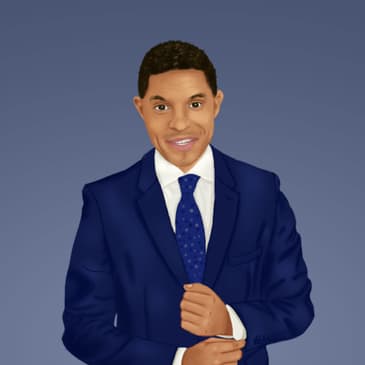
"Born a Crime" is a memoir by Trevor Noah, a South African comedian, television host, and political commentator, best known for his role as the host of "The Daily Show" on Comedy Central. The book was published in 2016 and offers a compelling and often humorous account of his life growing up in South Africa during the tail end of apartheid and the early years of democratic freedom.
Author's Background
Trevor Noah was born in 1984 in Johannesburg, South Africa. His birth was during the apartheid era, a period when racial segregation and discrimination were legally enforced by the National Party government. The title of the book, "Born a Crime," refers to the fact that his birth was literally a crime: he was born to a black Xhosa mother and a white Swiss father, and their relationship was punishable by law at the time.
Growing up as a mixed-race child in a society structured by strict racial categories meant that Noah often felt like an outsider, struggling to fit into a predetermined societal mold. This experience of growing up in a complex, post-apartheid South Africa profoundly influenced his comedy and his perspectives on race, identity, and society.
Book Context
"Born a Crime" provides insights into the complexities of South African society through Noah's personal anecdotes and experiences. The memoir is structured around different stages of his life, from his childhood to his early adulthood, and explores themes such as race, identity, family, and survival.
One of the central figures in the book is his mother, Patricia Nombuyiselo Noah, whose faith, resilience, and unconventional parenting played a significant role in shaping his character and outlook on life. His relationship with his mother is a recurring theme throughout the book, depicting her as a strong influence who taught him to navigate a world that often seemed hostile.
The book not only serves as a biographical account but also offers a social commentary on the effects of apartheid and its aftermath. The humorous and often poignant narrative style helps to illustrate the absurdities and contradictions of the societal structures around race and class in South Africa.
Reception
"Born a Crime" has been widely acclaimed for its honest and engaging storytelling. It has received praise for its vivid portrayal of life in South Africa, its deep personal reflection, and its ability to address serious topics with wit and humor. The book has helped to raise awareness about the historical and social dynamics of South Africa while also highlighting universal themes of humanity and resilience.
In addition to its literary success, "Born a Crime" has also been used in educational settings to help students understand more about the implications of apartheid and the ongoing challenges faced by societies dealing with racial and economic disparities. The book's success has cemented Trevor Noah's reputation not only as a comedian but as a thoughtful and influential cultural commentator.
Chapter 2 Analysis of Main Content- Anecdotal Narration: Trevor Noah utilizes engaging and often humorous anecdotes to convey complex themes such as apartheid, racism, and identity. Through personal stories and experiences, Noah offers an intimate view into his life in South Africa, making social and political issues more relatable and easier to understand for readers. This narrative technique enhances the reader’s connection with the author and his life’s events, enabling a deeper understanding of the societal constructs he discusses.
- Sociopolitical Contextualization: Noah effectively integrates the sociopolitical context of South Africa within his storytelling, explaining the historical and legal structures of apartheid and their impact on various racial communities. By providing context about the laws and societal norms that governed South Africa, such as the Immorality Act and the Group Areas Act, he equips readers with the necessary background to appreciate the complexities of living under and resisting apartheid. This lends analytical depth to his personal stories.
- Comparative Analysis: Throughout "Born a Crime," Noah often compares his personal experiences with broader societal norms, using his mixed-race identity to discuss issues of belonging and alienation. By juxtaposing his private life against public policies, he explores and critiques racial identity constructions within South Africa. This comparative analysis helps readers understand the absurdities and cruelties of apartheid-era classifications and the ongoing challenges faced by individuals in post-apartheid South Africa.
"Born a Crime" by Trevor Noah is a compelling autobiography that delves into his experiences growing up in South Africa during the apartheid era and the early years of post-apartheid. The book is rich in exploration of complex themes and topics that are both personal and broadly relevant. Here are some of the significant themes explored in "Born a Crime":
- Apartheid and Racism: As the foundational backdrop of the autobiography, apartheid's legal and cultural ramifications deeply affected every aspect of life in South Africa. Noah’s very existence, as the son of a black South African mother and a white European father, was a crime under the apartheid laws that prohibited interracial relationships. His navigation through these imposed racial classifications demonstrates the absurdity and cruelty of these man-made distinctions.
- Identity and Belonging: Throughout the book, Noah grapples with his mixed heritage, often feeling like an outsider in various communities. He discusses the inherent challenges of not being fully accepted by either the black or white communities, and how this affected his understanding of identity and belonging. This theme resonates particularly in his constant search for language as a means to fit in, learning multiple South African languages to try to bridge these divided groups.
- Impact of Domestic Violence: Noah candidly shares the tumultuous relationship his mother had with his stepfather, inclusive of instances of domestic violence that escalated to a near-fatal shooting. This aspect of his life sheds light on the personal trauma of domestic abuse and its enduring scars on individuals and families.
- Role of Religion: Religion plays a significant role in Noah’s upbringing. His mother, Patricia, is deeply religious, and this shapes their lives significantly. The religious framework is constantly present and influences many of the decisions and experiences in Noah's early life.
- Mother-Son Relationship: The relationship between Trevor and his mother, Patricia, forms the emotional core of the book. Patricia's character as a fiercely independent and resilient woman deeply influences Noah’s character and life philosophy. Her choices, especially her defiance of societal norms, play a critical role in shaping his worldview and personal morality.
- Education and Awareness: Throughout the book, Noah credits education, both formal and informal, as pivotal. His curious nature and constant pursuit of knowledge allow him to navigate and rise above his circumstances. Education appears as a theme of empowerment and a tool for change both personally and within broader society.
- Humor and Resilience: Despite the often grim and brutal realities described in "Born a Crime," Noah’s storytelling is infused with humor. This reflects a broader cultural characteristic within South Africa—using humor as a coping and resistance mechanism against oppression. Noah’s ability to find humor in dark times highlights the resilience of the human spirit.
- Social Injustice and Activism: Implicit in his personal narrative is a critique of societal and structural injustice. Noah's life is a microcosm of larger social dynamics, and he uses his story to advocate for awareness and change, illustrating how systemic inequalities pervade everyday life.
"Born a Crime" not only offers insight into Trevor Noah’s life but also paints a vivid portrait of South African society during a time of extreme change. It navigates the intersection of national and personal histories, making it a poignant reflection on identity, resilience, and transformation.
Book https://www.bookey.app/book/born-a-crime
Author https://www.bookey.app/quote-author/trevor-noah
Quotes https://www.bookey.app/quote-book/born-a-crime
YouTube https://www.youtube.com/watch?v=zD8op_jfOCI
Amazom https://www.amazon.com/-/zh/dp/B01IW9TM5O
[00:00:00] Hi, welcome to Bookey, which unlock big ideas from world bestsellers in audio, text and mind map.
[00:00:07] Please download Bookey at Apple Store or Google Play with more features.
[00:00:12] Get your free mind snack now.
[00:00:15] Today we'll unlock the book Born a Crime, stories from a South African childhood.
[00:00:21] How could someone be born a crime?
[00:00:23] The protagonist and author of this book Trevor Noah is one such person.
[00:00:28] He was born a crime simply because his father is white and his mother is black.
[00:00:33] Such a combination was illegal under the Immorality Act.
[00:00:36] It was a crime no less than treason.
[00:00:39] The Immorality Act enacted by the apartheid regime in South Africa aimed at denying black
[00:00:45] South Africans the same right to marry as whites.
[00:00:48] According to the Immorality Act, having sexual relations with a person of another
[00:00:53] race was a crime.
[00:00:54] The parents would be sentenced and children born to such a relationship would be sent to
[00:00:59] an orphanage.
[00:01:01] In this book, Noah uses the first person point of view to explain how he grew up in South
[00:01:06] Africa, depicting what life was like under apartheid.
[00:01:10] We can see from this book that Noah who was born a crime had a difficult childhood.
[00:01:15] He spent little time with his father, and when he did, they mostly stayed indoors.
[00:01:21] If they went outside together, his father could have only walked on the other side of
[00:01:25] the road, pretending not to know Noah and his mother.
[00:01:29] Otherwise, they would all be taken away by the police for investigation.
[00:01:34] Trevor has darker skin than his father, and he was classified as colored.
[00:01:38] In South Africa, mixed people were classified as their own separate group, neither black
[00:01:44] nor white, but colored.
[00:01:46] The government forced people to register their race, black people, white people,
[00:01:51] Indian people and colored people.
[00:01:53] As a mixed person, Noah has lighter skin than his mother, so he couldn't walk with
[00:01:58] his mother in public either.
[00:02:00] Every time they went out for a walk, his mother would invite a colored neighbor
[00:02:04] to join them, so she could pose as a maid to avoid the police's investigation.
[00:02:10] Noah grew up with his mother and has been deeply influenced by her.
[00:02:14] As a matter of fact, this memoir of Noah's is more like an epic for his mother.
[00:02:19] A strong and independent woman, his mother never succumbed to her fate because of her race.
[00:02:25] She would give her every effort to do what she wanted and eventually make it happen.
[00:02:30] Including Noah, she gave birth to him not because she wanted to be part of a
[00:02:34] man's life but to have a baby of her own.
[00:02:37] After Noah's birth, she raised him alone, keeping a reasonable and safe
[00:02:41] distance from his father, and managed to give Noah normal life in a racially
[00:02:46] discriminative environment.
[00:02:48] Though life was hard, Noah learned to confront it with optimism under his
[00:02:52] mother's protection and eventually became a world-famous talk show host.
[00:02:56] Michko Kakutani, the former chief book critic for The New York Times and a
[00:03:01] Pulitzer Prize winner praised this book as a love letter to the author's
[00:03:05] remarkable mother.
[00:03:07] And it indeed deserves such praise.
[00:03:10] Next, we'll tell Trevor Noah's bittersweet life stories through three sections.
[00:03:16] Part 1, Trevor Noah's birth.
[00:03:18] Part 2, influence from his mother.
[00:03:21] Part 3, growing up as Trevor Noah.
[00:03:25] Noah's growing-up story was closely related to the larger context of his time
[00:03:29] and the apartheid social environment.
[00:03:32] For centuries, apartheid dominated every aspect of South Africa.
[00:03:37] The institutionalization of racial segregation in South Africa made it
[00:03:42] justifiable for whites to violate the rights of other races.
[00:03:46] Under such a regime, people were forced to register their race with the government
[00:03:50] and were classified into sending order into white people, colored people,
[00:03:55] Indian people and black people.
[00:03:57] Based on those classifications, people of different races lived in strictly
[00:04:01] segregated areas.
[00:04:03] Millions of people were uprooted and relocated.
[00:04:07] Because of their different skin colors, they were not allowed to use common
[00:04:10] public resources and services.
[00:04:13] Take the land for example.
[00:04:15] Noah's mother once lived in the so-called homelands for black people.
[00:04:20] Despite the fact that black people made up over 80% of South Africa's
[00:04:24] population, the territory allocated for the homelands was about 13%
[00:04:29] of the country's land.
[00:04:30] There was no running water, no electricity.
[00:04:34] People lived in huts.
[00:04:36] By contrast, white people who were in the minority lived in lush and
[00:04:40] irrigated white neighborhoods.
[00:04:42] With such serious social inequality, protests and riots often broke out.
[00:04:48] However, almost every protest for rights ended with much more black blood
[00:04:53] than white blood being shed.
[00:04:55] Besides confrontations between black people and white people,
[00:04:58] racism also stirred up conflicts between different tribes,
[00:05:03] making them hate and even kill each other.
[00:05:05] Dozens, hundreds, or even thousands were killed each time a riot broke out.
[00:05:11] This is when so-called necklacing was common, which was when people would
[00:05:15] hold someone down and put a rubber tire over his torso, pinning his arms.
[00:05:20] Then they douse him with petrol and set him on fire and burn him alive.
[00:05:24] That was the turmoil in which little Noah lived.
[00:05:27] He remembers he once said to his mother, I think Satan burns tires in hell.
[00:05:33] Living in such a dangerous world, it was thanks to his mother that Noah could
[00:05:37] deal with this situation and life with optimism and strength.
[00:05:41] As we mentioned in the preface, this book is like Noah's love letter to his
[00:05:45] remarkable mother.
[00:05:47] His mother is his hero.
[00:05:49] She taught him how to think independently.
[00:05:52] Noah's mother is named Patricia Nambia Salonoa.
[00:05:56] She is Kosa.
[00:05:58] The Kosa is one of the two dominant tribes of Black South Africans.
[00:06:02] She's been rebellious and strong-willed since she was a kid.
[00:06:06] She left her home at an early age and learned English with a white priest.
[00:06:10] That was extremely lucky for her because there was also strict racial segregation in education.
[00:06:16] Knowing English gave her a slightly higher social status than Black people who only
[00:06:21] spoke their tribal language.
[00:06:23] It also gave her the possibility to land a relatively decent job.
[00:06:28] The South African government didn't allow Black people to take office jobs.
[00:06:33] Usually, Black women could only work in factories or as maids.
[00:06:38] But Patricia Nambia would make every effort to achieve what she wanted.
[00:06:42] She took a secretarial course and learned typewriting, so she was able to get a
[00:06:46] secretary job at a multinational pharmaceutical company when the policy loosened up a bit.
[00:06:52] However, Black workers were required to carry a pass with their ID number to work in the city,
[00:06:58] otherwise, they could be arrested and sent back to the homelands.
[00:07:02] There was also a curfew.
[00:07:04] A Black person would risk arrest if he or she was not back home and in the township after
[00:07:08] a certain hour.
[00:07:10] Because of such regulations, Patricia Nambia even hid and slept in public restrooms.
[00:07:16] Still, she sometimes got caught for not having her ID or lingering in a white area for too long.
[00:07:22] The penalty she faced was 30 days in jail or a fine of 50 rand, nearly half her monthly salary.
[00:07:29] Every time this happened, she would pay the fine and go right back to work.
[00:07:34] Her apartment was located in a neighborhood called Hillbrow where many foreign immigrants lived.
[00:07:40] Among them, there was a tall Swiss man.
[00:07:43] She would chat with him for a while every time she passed by his apartment or
[00:07:47] dance with him at underground parties.
[00:07:49] As time went by, they fell in love.
[00:07:52] However, considering their backgrounds and the social environment,
[00:07:57] it was impossible for them to be together and they knew that clearly.
[00:08:01] One day, Patricia Noah told the Swiss man she wanted a child and she needed his sperm.
[00:08:07] She said he could leave her alone after they've done it,
[00:08:09] and he wouldn't have to shoulder any responsibility of raising the child.
[00:08:14] She just wanted a child of her own.
[00:08:17] So, Trevor Noah was born to this unconventional couple.
[00:08:21] Since she couldn't tell others who the father was, Patricia Noah checked into the hospital alone
[00:08:26] for a scheduled c-section delivery.
[00:08:29] The baby looked obviously lighter skinned, so she lied to the doctor that his father
[00:08:34] is from a tiny country in the west of South Africa.
[00:08:37] In South Africa, the names people give their children always have a meaning.
[00:08:42] For example, Noah's cousin is named Mungisi, the fake father of the child.
[00:08:46] Noah's uncle was born after an unplanned pregnancy, so his name means he who popped out of nowhere.
[00:08:53] Patricia Noah gave her baby the name of Trevor because that name has no special meaning attached.
[00:08:59] It's just the name.
[00:09:00] She wanted her baby beholden to no fate.
[00:09:03] She wanted him to be free to go anywhere, do anything, be anyone.
[00:09:09] Dangers lurked around Noah when he was little.
[00:09:12] As he could be taken to the orphanage at any time, he was always kept inside and never allowed to exit.
[00:09:19] One day when he was three, he couldn't bear it anymore,
[00:09:23] so he dug a hole under the gate in the driveway,
[00:09:26] wrinkled through and ran off.
[00:09:28] Everyone panicked.
[00:09:30] If he had been noticed by a police patrol,
[00:09:33] he could have been taken to an orphanage for colored kids,
[00:09:36] his mother could have gone to prison,
[00:09:38] and the whole family could have been deported.
[00:09:41] Noah's father was not his father in legal terms,
[00:09:44] so Noah couldn't be registered as his father's son.
[00:09:48] His mother could only take him to see his father furtively and occasionally in private.
[00:09:53] When they walked along the street or in the park,
[00:09:55] they would keep a long distance apart, pretending they didn't know each other.
[00:10:00] There was one time when little Noah called dad a few times behind his father.
[00:10:04] The man was so scared that he ran away immediately.
[00:10:08] In fact, Noah couldn't take a walk with his mother in public either.
[00:10:13] Their different skin colors were a violation.
[00:10:16] So, every time they went out for a walk,
[00:10:18] his mother would invite their neighbor a colored woman,
[00:10:21] and pretend to be her maid,
[00:10:23] since colored people were only next to white people on the social ladder.
[00:10:27] If that neighbor was not available,
[00:10:29] she would risk walking him on her own.
[00:10:32] If the police showed up,
[00:10:33] she would have to pretend Noah was in hers.
[00:10:37] Noah's skin color not only put his family in danger when they were outside,
[00:10:41] but it also brought about embarrassment when at home.
[00:10:44] He was a naughty kid and his grandma often didn't know how to discipline him.
[00:10:49] She said she couldn't hit him because she didn't know how to hit a white child.
[00:10:53] A black child, you hit them and they stayed black, she said.
[00:10:57] Trevor, when you hit him, he turns blue and green and yellow and red.
[00:11:02] She was afraid that she was going to break him,
[00:11:05] and she said that she didn't want to kill a white person,
[00:11:08] so she wasn't going to touch him.
[00:11:10] And in fact, she never did.
[00:11:13] Today we are just sharing limited content.
[00:11:16] To unlock more key insights of world-class bestseller please download our app.
[00:11:22] Just search for B-O-O-K-E-Y at Apple Store or Google Play.
[00:11:27] Get your free mind snack now.