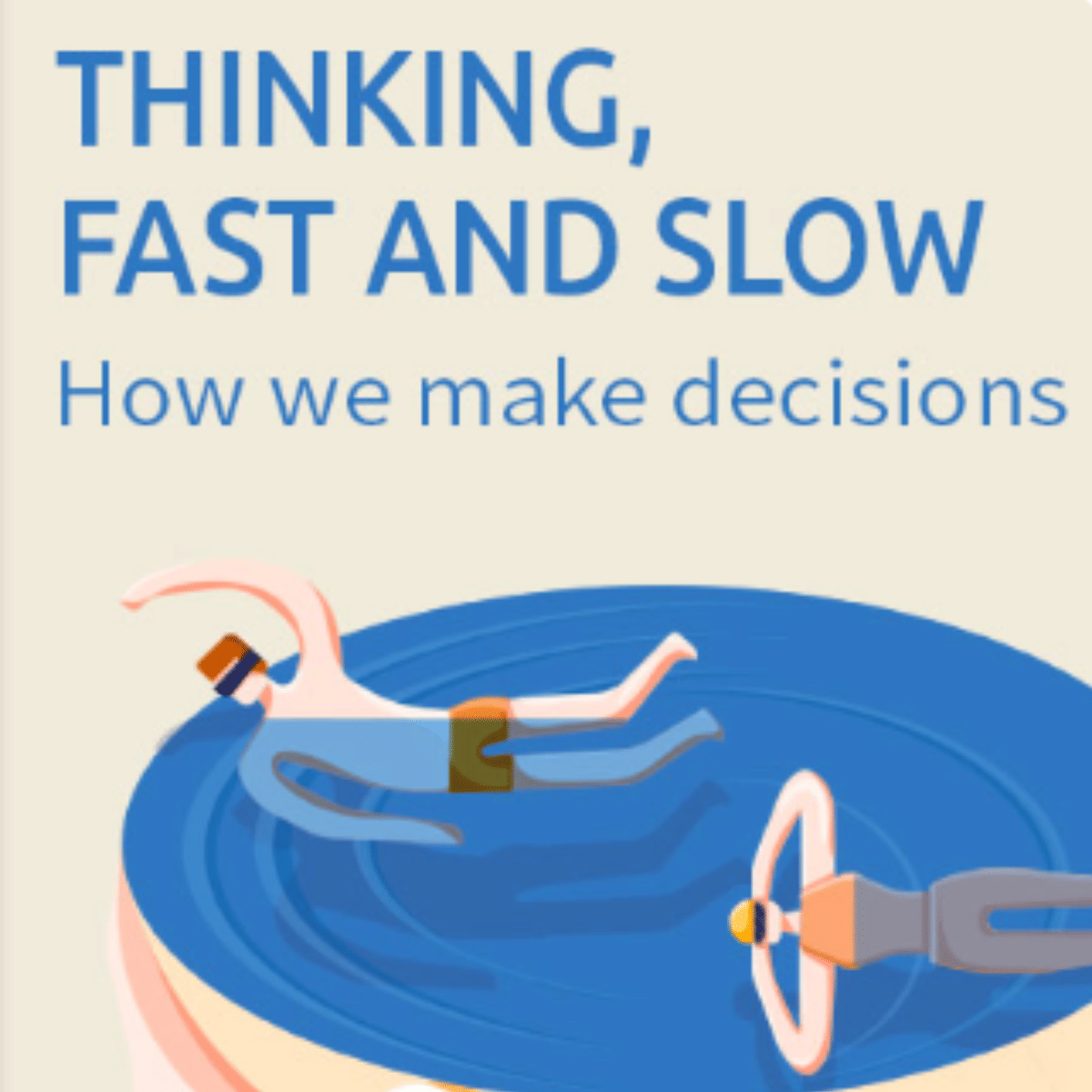
In a bustling café, two friends, Sarah and Tom, engaged in a spirited debate over a seemingly simple question: "Why did you make that choice?" Unbeknownst to them, they were dancing between two minds—System 1 and System 2, as Nobel laureate Daniel Kahneman describes in his book, Thinking, Fast and Slow.
System 1, the quick and instinctive thinker, raced through their conversation, driven by emotions and heuristics. It led Sarah to judge a stranger's smile as friendly without a second thought. Meanwhile, Tom, embodying System 2, deliberated carefully, weighing pros and cons, scrutinizing choices like a wise sage against a stormy backdrop.
Kahneman reveals how these two systems shape our decisions—one impulsive, the other analytical. In recognizing this duality, we can better navigate life’s complexities, making wiser choices instead of merely relying on gut feelings. Ultimately, understanding our minds empowers us to think smarter.
Chapter 1: What Is Thinking, Fast and Slow
"Thinking, Fast and Slow" by Daniel Kahneman Overview:
1. Depth and Accuracy of Content:
Kahneman provides an in-depth exploration of cognitive psychology through the dual-system theory, distinguishing between System 1 (fast, intuitive thinking) and System 2 (slow, deliberate reasoning). The content is thoroughly backed by decades of research and experiments, establishing a robust foundation in psychology and behavioral economics.
2. Originality:
The book presents a fresh perspective on how humans think, challenging traditional rational models of decision-making. Kahneman’s integration of psychological insights into economics was pioneering, influencing various fields beyond psychology.
3. Organization:
The book is well-structured, divided into five parts that logically lead the reader through the intricacies of thought. Each section builds on the previous one, making complex ideas more accessible.
4. Readability:
Kahneman writes in a clear and engaging style, balancing technical language with everyday examples. This approach makes complex theories relatable to a general audience.
5. Inspirational/Emotional Impact:
The book inspires readers to reflect on their own thinking processes and decision-making habits. It fosters an awareness of cognitive biases and how they influence our lives, prompting personal growth and inquiry.
6. Cultural and Social Impact:
"Thinking, Fast and Slow" has had a significant cultural impact, influencing discussions about economic behavior, public policy, and personal decision-making. It has brought cognitive biases into the public consciousness, impacting how individuals and organizations approach problems.
7. Attention to Detail:
Kahneman pays meticulous attention to detail, using precise language and illustrating concepts with numerous examples and studies. The book showcases his and his colleagues’ research diligently, enhancing its credibility.
8. Theme and Message:
The central theme revolves around the dichotomy of thought processes and how they shape our perceptions and decisions. Kahneman emphasizes the randomness and irrationality in human thinking, urging readers to be mindful of cognitive biases.
9. Critical Thinking:
Kahneman encourages critical thinking by challenging readers to reconsider their assumptions about rationality. He provides frameworks for evaluating decisions and understanding the cognitive traps we often fall into.
10. References:
The book is richly referenced, drawing from a wide range of studies and literature in psychology and behavioral economics. Kahneman’s extensive bibliography bolsters his arguments and provides avenues for further exploration.
11. Creativity and Artistry:
While "Thinking, Fast and Slow" may be more analytical than artistic, Kahneman demonstrates creativity in how he conceptualizes complex ideas, making use of analogies and thought experiments to engage the reader.
In Summary:
"Thinking, Fast and Slow" is an influential and insightful work that effectively combines depth of research with accessibility. Its broad-ranging impact on understanding human behavior makes it a valuable read for anyone interested in psychology, decision-making, or behavioral economics. The book challenges preconceived notions about rationality, suggesting that awareness of our cognitive processes can lead to better decisions.

Chapter 2: Thinking, Fast and Slow chapters
"Thinking, Fast and Slow" by Daniel Kahneman is a seminal work that explores the dual systems of thought that drive human decision-making. Here’s a brief summary of the main chapters of the book:
Part 1: Two Systems
1. The Characters of the Story:
- Introduces the two systems of thinking: System 1, which is fast, automatic, and intuitive; and System 2, which is slower, more deliberative, and more logical.
2. Attention and Effort:
- Discusses how System 2 requires effort and attention to engage, leading to the tendency to default to System 1 whenever possible.
3. The Lazy Controller:
- Explains how people often avoid engaging System 2 due to cognitive strain, resulting in numerous biases and errors.
Part 2: Heuristics and Biases
4. The Law of Small Numbers:
- Focuses on how people misinterpret information based on small sample sizes, leading to incorrect conclusions.
5. Anchors:
- Introduces the anchoring effect, where people are influenced by initial information and fail to adjust adequately from that anchor.
6. The Availability Heuristic:
- Describes how people assess the likelihood of events based on how easily similar instances come to mind.
7. Substitution:
- Explains how we often substitute complex questions with simpler ones when making judgments, leading to distorted perceptions.
Part 3: Overconfidence
8. The Illusion of Understanding:
- Discusses how hindsight bias leads people to believe they understand events after they occur.
9. The Illusion of Validity:
- Examines the overconfidence in the predictive validity of judgments despite a lack of evidence.
10. Expert Intuition: When Can We Trust It?:
- Investigates when expert intuition may be reliable and when it can lead to failure.
Part 4: Choices
11. Prospect Theory:
- Introduces Prospect Theory, which describes how people make decisions in uncertain circumstances, often exhibiting loss aversion.
12. The Endowment Effect:
- Describes how people value items more highly simply because they own them, complicating rational decision-making.
13. Risk Policies:
- Discusses how framing risks can influence choices and decisions.
Part 5: Two Selves
14. Experiencing Self vs. Remembering Self:
- Differentiates between the experiencing self, which lives in the present, and the remembering self, which reflects on experiences and forms memories.
15. The Peak-End Rule:
- Introduces the concept that people judge experiences based on their peak (intensity) moments and how they end, rather than the total sum of experiences.
16. Life as a Story:
- Explores how humans construct narratives about their lives, often leading to skewed perceptions of happiness and satisfaction.
Conclusion
Kahneman concludes by emphasizing the implications of his findings for various fields, including economics and psychology, and encourages readers to be aware of the biases inherent in their thought processes.
Overall Themes
The book encourages critical thinking about how we think, the biases we carry, and the implications of our decision-making processes. It is rooted in decades of research and offers valuable insights into human behavior and rationality.
Title: A Tale of Two Minds: The Journey through Thinking, Fast and Slow
In the quaint town of Cerebrum Falls, where rivers flowed with ideas and mountains sparkled with insights, lived two distinct personalities named Fast and Slow. They were not just any ordinary dwellers, but the embodiment of the human thought process, each with a unique way of navigating challenges and opportunities that life threw their way.
Fast was the embodiment of intuition and immediacy. He was impulsive and quick, zipping through the village with a burst of energy, relying on gut feelings to guide him. If there was a decision to be made, Fast would chime in with a confident proclamation, “Let’s go for it! Trust your instincts!” His charm lay in his ability to make snap judgments, noticing patterns where others saw chaos. He could spot a bargain at the market or dodge a kicking soccer ball in the blink of an eye. Fast had an undeniable knack for keeping life lively, yet sometimes, his haste led him astray, guiding him to overconfidence and misjudgments.
On the other hand, there was Slow. He was a contemplative soul who took his time to weigh every option, consider every angle, and ponder every possibility. With a thoughtful stride, Slow would meander through Cerebrum Falls, spending long hours at the local café, contemplating the deeper implications of his surroundings. If Fast rushed into a decision, Slow would be the voice saying, “Let’s pause and reflect. What do the numbers tell us? What is the long-term impact?” His careful nature allowed him to analyze and produce well-considered solutions, but at times, Slow’s procrastination turned opportunities into missed chances. In a world that moved at the pace of Fast, he often struggled to keep up.
One fateful day, a problem arose in Cerebrum Falls that would require both of their talents. A sudden storm threatened their town's roadways, and the townsfolk had to decide whether to reinforce their defenses with speed or to carefully analyze the best strategy.
As the skies darkened, Fast was the first to leap into action. “Let’s fill the sandbags! Grab everything we have!” he shouted. His immediate response rallied the villagers, and they sprinted to collect resources, driven by Fast's unyielding energy. However, amid the flurry, they forgot to check the meteorological reports, which indicated that the storm would pass quickly without significant damage.
Slow, observing the chaotic surge, raised a hand tentatively. “Friends, I believe we should collect data first,” he suggested, his voice calm against the backdrop of urgency. “Let’s evaluate the storm’s trajectory and impact before we act.” While some villagers were tempted to follow Fast’s exuberance, they also recognized the wisdom in Slow’s approach.
Seeing the tension between urgency and caution, the townspeople began to deliberate. They decided to take a hybrid approach. Fast led the charge, gathering supplies for emergency repairs, while Slow dispatched a small group to assess the weather technology. Drawing on Fast’s energy and Slow’s wisdom, the townsfolk swiftly collected information, reinforced their homes, and stood prepared for the worst.
When the storm finally hit, it turned out to be milder than anticipated. Thanks to Fast’s quick actions and Slow’s meticulous planning, Cerebrum Falls emerged safe and sound. The villagers celebrated not just their survival but the realization that both Fast and Slow had invaluable roles to play.
In the days that followed, the two minds united to educate the townspeople about the balance of rapid thinking and reflective reasoning. They held workshops, sharing anecdotes about when speed was imperative and when deliberation proved crucial. As the townsfolk embraced this duality of thought, the community became more resilient, equipped to tackle both trivial and profound challenges that life presented.
Fast and Slow ended up being more than just personalities in Cerebrum Falls; they became a symbol of the human psyche itself — a testament to the dual systems of thinking that shape our decisions, as eloquently articulated by Daniel Kahneman in his renowned book, Thinking, Fast and Slow.
As the seasons changed in Cerebrum Falls, so too did the understanding of its people: that while quick instincts could save the day, thoughtful reflection could illuminate the path ahead. The dance of Fast and Slow became a harmonious rhythm, reflecting the complexity of the human mind — an endless journey of learning, adapting, and thriving together.
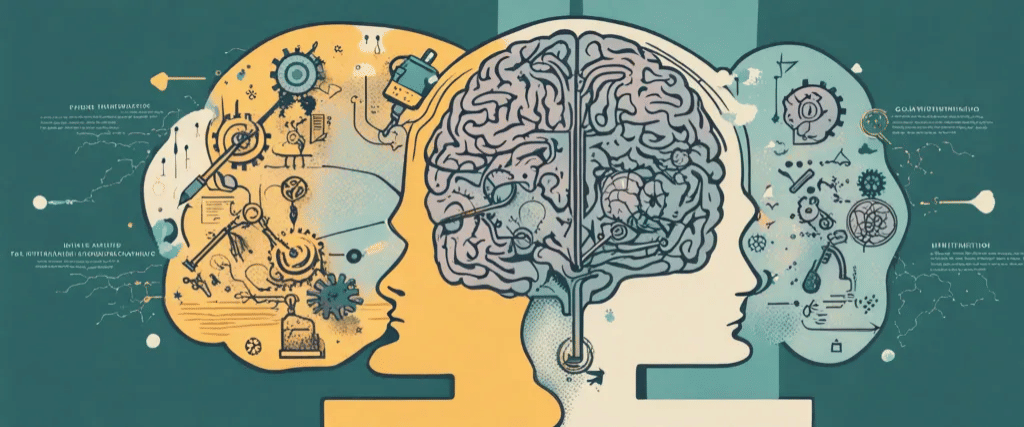
Book https://www.bookey.app/book/thinking%2C-fast-and-slow
Author https://www.bookey.app/quote-author/daniel-kahneman
Quotes https://www.bookey.app/quote-book/thinking%2C-fast-and-slow
Youtube https://www.youtube.com/watch?v=d953fegpMFE&t=3s
Amazon https://www.amazon.com/Thinking-Fast-Slow-Daniel-Kahneman/dp/0374533555
Goodreads https://www.goodreads.com/book/show/11468377-thinking-fast-and-slow