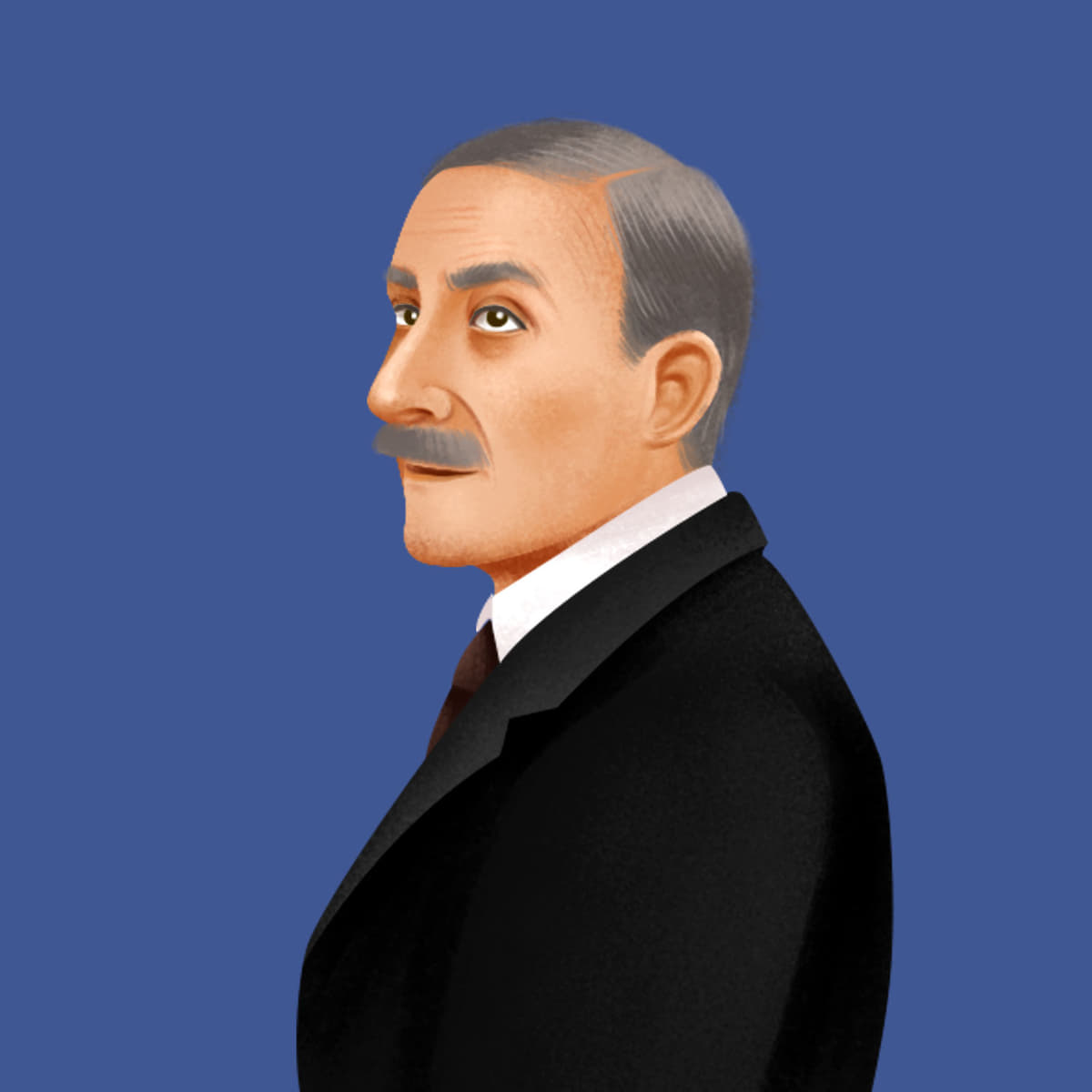
Chapter 1 What's The world of yesterday
"The World of Yesterday" is a memoir by the Austrian writer Stefan Zweig. It was published in 1942, a few months before the author's suicide. In the book, Zweig recounts his experiences growing up in Vienna and his travels throughout Europe during the first half of the 20th century. He provides a vivid and nostalgic portrait of the cultural and intellectual life in Vienna during the late 19th and early 20th centuries, describing the city as a vibrant hub of art, literature, and music.
Zweig also reflects on the political and social changes that swept across Europe during his lifetime, including the rise of nationalism, the First World War, and the subsequent collapse of the Austro-Hungarian Empire. He discusses the impact of these events on the lives of individuals and the disintegration of the cosmopolitan and tolerant society that he cherished.
"The World of Yesterday" serves as a personal testimony to the dangers of political extremism and the erosion of liberal values. Zweig's writing is characterized by its elegant prose, introspective tone, and a deep sense of loss for a world that has vanished. The memoir is often seen as a meditation on the themes of identity, memory, and the transience of human existence.
Zweig's work gained renewed attention in recent years, with many readers finding resonance in his exploration of the tumultuous political climate and the fragility of civilizations. "The World of Yesterday" continues to be regarded as a significant literary work that offers insights into European history and culture.
Chapter 2 Is The world of yesterday recommended for reading?
"The World of Yesterday" by Stefan Zweig is widely regarded as a great book. It is an autobiographical work where Zweig reflects on his life and experiences during the tumultuous events of the 20th century. The book offers insightful observations on politics, culture, and society, and it is praised for its eloquent writing style and deep introspection. It provides a unique perspective on the events of the time and offers valuable insights into the human condition.
Chapter 3 The world of yesterday Summary
"The World of Yesterday" by Stefan Zweig is an autobiographical account of the author's life and experiences in early 20th-century Europe. The book spans from Zweig's childhood in Vienna to the outbreak of World War II.
Zweig describes the cultural and intellectual atmosphere of Vienna during his youth, which he portrays as a vibrant and cosmopolitan city. He discusses his encounters with famous thinkers and artists such as Sigmund Freud, Richard Strauss, and Rainer Maria Rilke, highlighting the city's intellectual elite.
The author also reflects on the political events that shaped Europe during this time, particularly the rise of nationalism and the growing tensions that ultimately led to the outbreak of World War I. Zweig provides personal insights and anecdotes about the impact of these events on his own life and on the general mood of uncertainty and anxiety that prevailed in Europe.
Zweig's account of the war itself is harrowing, as he describes the horrors and devastation that he witnessed. He also explores the subsequent disillusionment and despair that engulfed Europe in the post-war years, as old political systems crumbled and new ideologies, such as fascism and communism, gained ground.
Throughout the book, Zweig reflects on the loss of a golden era and the decline of European civilization. He mourns the destruction of the cosmopolitan and tolerant society that he had known, as well as the loss of humanistic values and the rise of totalitarian ideologies.
"The World of Yesterday" is ultimately a plea for peace and understanding among nations, and a warning against the consequences of nationalism and intolerance. It is a personal testament to the fragility of civilization and a reminder of the need for constant vigilance in the face of political and social upheaval.
Chapter 4 Meet the Writer of The world of yesterday
The author of the book "The World of Yesterday" is Stefan Zweig. He was an Austrian writer, novelist, playwright, and journalist. Zweig was born on November 28, 1881, in Vienna, Austria-Hungary (now Austria) and died on February 22, 1942, in Petrópolis, Brazil.
Zweig released "The World of Yesterday" in 1941, a year before his death. The book is a memoir that reflects on the belle époque and the golden age of Europe before the World War I up until the rise of Nazi Germany and Zweig's exile in South America. It provides an introspective and poignant account of the author's life as well as a profound exploration of the cultural, political, and social changes that affected Europe during that time.
Apart from "The World of Yesterday," Stefan Zweig wrote numerous other works, including novels, novellas, biographies, essays, and plays. Some of his notable books are:
- "Beware of Pity" (1939): It is a psychological novel set in the years leading up to World War I and explores themes of compassion, guilt, and human nature.
- "Chess Story" (1942, published posthumously): This novella tells the story of a man who becomes obsessed with playing chess while on a ship to Buenos Aires. It explores themes of isolation, mental breakdown, and the power of the mind.
- "Twenty-Four Hours in the Life of a Woman" (1927): This novella delves into the moral dilemmas and intense emotions of a woman who becomes involved in a scandalous affair while on a holiday in Monte Carlo.
As for the best editions of Stefan Zweig's books, it is subjective and depends on personal preferences. However, many readers appreciate the editions published by Pushkin Press. They are known for their high-quality translations, elegant design, and comprehensive introductions. Penguin Classics also offers a collection of Zweig's works with thoughtful introductions and notes. Ultimately, it is recommended to explore different editions and choose the one that best suits individual preferences.
Chapter 5 The world of yesterday Meaning & Theme
The world of yesterday Meaning
"The World of Yesterday" is an autobiography written by Stefan Zweig, a prominent Austrian writer and intellectual. The book reflects on his personal experiences and observations during the tumultuous era of the early 20th century, including the devastating impact of World War I and the rise of fascism in Europe.
The main theme of the book is the loss of a bygone era, the world that Zweig grew up in and cherished. He captures the nostalgia and melancholy of a time when Europe was culturally vibrant, intellectually diverse, and socially harmonious. Zweig mourns the loss of this world, which he believes was destroyed by the forces of war and political extremism.
Through his narrative, Zweig explores the destructive consequences of nationalism, militarism, and totalitarian ideology on individual lives and society as a whole. He describes the erosion of humanistic values, the loss of faith in progress, and the rise of despair and disillusionment.
In addition to exploring the historical context, Zweig also reflects on his personal struggles with identity, belonging, and exile. He provides insights into his own journey as an Austrian Jew living in a time of increasing antisemitism, eventually leading to his decision to leave Europe and seek refuge in South America.
"The World of Yesterday" serves as a warning against the destructive forces of war and political extremism, while also highlighting the power of literature, art, and human connection as essential antidotes against the forces of darkness.
Overall, the book is a poignant reflection on the fragile nature of civilization and the enduring importance of preserving peace, tolerance, and the free exchange of ideas.
The world of yesterday Theme
The main theme in "The World of Yesterday" by Stefan Zweig is the idea of a lost world and the collapse of civilization. Zweig reflects on the vibrant and cultured society that existed in Europe prior to the outbreak of World War I and the subsequent rise of fascism and totalitarianism.
One of the key aspects explored by Zweig is the loss of individual freedom and autonomy. He mourns the disappearance of the cosmopolitan and liberal values that once characterized Europe. Zweig emphasizes how the war and the rise of extremist ideologies destroyed the intellectual and artistic elite, leading to a world dominated by conformity and narrow-mindedness.
Another important theme is nostalgia for a bygone era. Zweig reminisces about his childhood and youth, painting a picture of a Europe that was full of hope, creativity, and progress. He contrasts this with the chaos and destruction of the war and the subsequent uncertainty of the interwar period. The book serves as a warning against forgetting the lessons of the past and allowing history to repeat itself.
Furthermore, Zweig explores the theme of the fragility of civilization. He highlights how quickly a society can descend into violence and barbarity when faced with political and economic crises. The author expresses his deep concern for the future, as he witnesses the rise of fascism in Europe and the suppression of intellectual freedom.
Overall, "The World of Yesterday" reflects on the loss of a vibrant and cultured world and serves as a cautionary tale about the consequences of political extremism and the fragility of civilization.
Chapter 6 Various Alternate Resources
- Book: "The World of Yesterday" by Stefan Zweig - Available in print and e-book format, this is the original source material for anyone interested in the author's autobiographical account of the early 20th century.
- Amazon: The World of Yesterday - Amazon offers various editions of the book, including paperback, hardcover, and Kindle editions, allowing readers to purchase the book online.
- Goodreads: The World of Yesterday - Goodreads provides a platform for readers to rate and review books. Here you can find discussions, comments, and recommendations related to "The World of Yesterday".
- Wikipedia: The World of Yesterday - The Wikipedia page dedicated to "The World of Yesterday" provides a comprehensive overview of the book, including background information on Stefan Zweig, a summary of the content, critical reception, and relevant links.
- YouTube: The World of Yesterday Audiobook - Audiobooks of "The World of Yesterday" are available on YouTube, allowing users to listen to the book for free, either in its entirety or broken down into chapters.
- Project Gutenberg: The World of Yesterday - Project Gutenberg provides a free online version of "The World of Yesterday" in various e-book formats, making it easily accessible to anyone with an internet connection.
- Google Scholar: The World of Yesterday - Google Scholar can provide academic articles, analyses, and book reviews related to "The World of Yesterday" by Stefan Zweig, offering a more scholarly perspective and critical insights.
- Social Media: #TheWorldofYesterday - By searching the hashtag #TheWorldofYesterday on platforms such as Twitter and Instagram, users can find posts, discussions, and recommendations related to the book from fellow readers and enthusiasts.
- Library Catalogs: The World of Yesterday - Various library catalogs, such as WorldCat, can help locate physical copies of "The World of Yesterday" in libraries near you, allowing you to borrow the book for free.
- Online Forums and Discussion Groups - Websites like Reddit, Quora, and specialized book clubs often have dedicated forums and discussion threads related to "The World of Yesterday". These platforms provide an opportunity for readers to engage in conversations and exchange opinions about the book.
Chapter 7 Quotes of The world of yesterday
The world of yesterday quotes as follows:
- "In this world torn by war and hatred, it is necessary for each man to raise himself above the ordinary duties of his station and offer his fellow men the dignity and respect that they deserve."
- "The past is never dead. It lives on in every memory, in every scar. We must learn from it, for it is the only way to shape a better future."
- "To truly understand the present, one must immerse oneself in the past. History is a mirror reflecting our mistakes and triumphs, our flaws and virtues."
- "The world is a stage, and we are but mere actors. However, it is up to us to determine the role we play and the impact we leave behind."
- "There is no greater tragedy than the loss of hope. Let us, therefore, strive to be the beacon of hope in a world consumed by darkness."
- "In the face of adversity, it is not the strongest nor the smartest who survive, but those who possess the greatest resilience and adaptability."
- "The power of literature lies in its ability to transport us to different times and places, make us see the world through someone else's eyes, and ultimately broaden our perspective."
- "A society is judged by the way it treats its weakest members. It is our duty, as individuals and as a collective, to ensure that no one is left behind."
- "Love and art are the two wings on which humanity can soar above the limitations of reality and touch the realm of greatness."
- "In the darkest moments of human history, we must remember that there is always a glimmer of light. Our task is to find it, nurture it, and let it guide us towards a better tomorrow."
Chapter 8 Books with a Similar Theme as The world of yesterday
- "The Diary of a Young Girl" by Anne Frank: This poignant memoir offers a firsthand account of the Holocaust through the diary of Anne Frank, a young Jewish girl hiding in Amsterdam during World War II. Like Stefan Zweig's "The World of Yesterday," it explores themes of resilience, loss, and the human spirit in the face of adversity.
- "The Great Gatsby" by F. Scott Fitzgerald: This American classic explores the decadent and disillusioned Jazz Age, similar to Zweig's portrayal of the pre-war years in Europe. With its exploration of wealth, love, and the emptiness of materialism, this literary work is a must-read for those who enjoyed Zweig's examination of the human condition.
- "All the Light We Cannot See" by Anthony Doerr: Set during World War II, this riveting novel tells the intertwining stories of a young blind girl in France and a talented German orphan who becomes a soldier. With exquisite prose, Doerr explores the power of connection, the resilience of the human spirit, and the effects of war on individuals. This book captures the essence of Zweig's themes while delving into the complexities of love, fate, and the quest for redemption.
- "The Book Thief" by Markus Zusak: Set in Nazi Germany, this captivating narrative is narrated by Death himself and follows the life of a young girl named Liesel, who steals books to cope with her hardships. With the backdrop of war, Zusak creates a moving portrait of morality, love, and the power of storytelling. Just like "The World of Yesterday," this emotionally charged story reflects on the devastating consequences of violence and the enduring power of literature.
- "East of Eden" by John Steinbeck: This epic generational saga explores the human capacity for both good and evil, spanning several generations in California's Salinas Valley. Steinbeck's masterpiece delves into themes such as the struggle between morality and depravity, the search for identity, and the consequences of one's choices – all reminiscent of the introspective exploration of humanity found in Zweig's "The World of Yesterday."
These books offer a diverse collection of narratives that explore various aspects of history, human nature, and the power of storytelling – just like Stefan Zweig's evocative memoir. Whether you are compelled by tales of resilience during wartime or the examination of the human condition in different contexts, these recommendations aim to captivate and enlighten readers seeking similar literary experiences.