Chapter 1:Who is Leonardo da Vinci
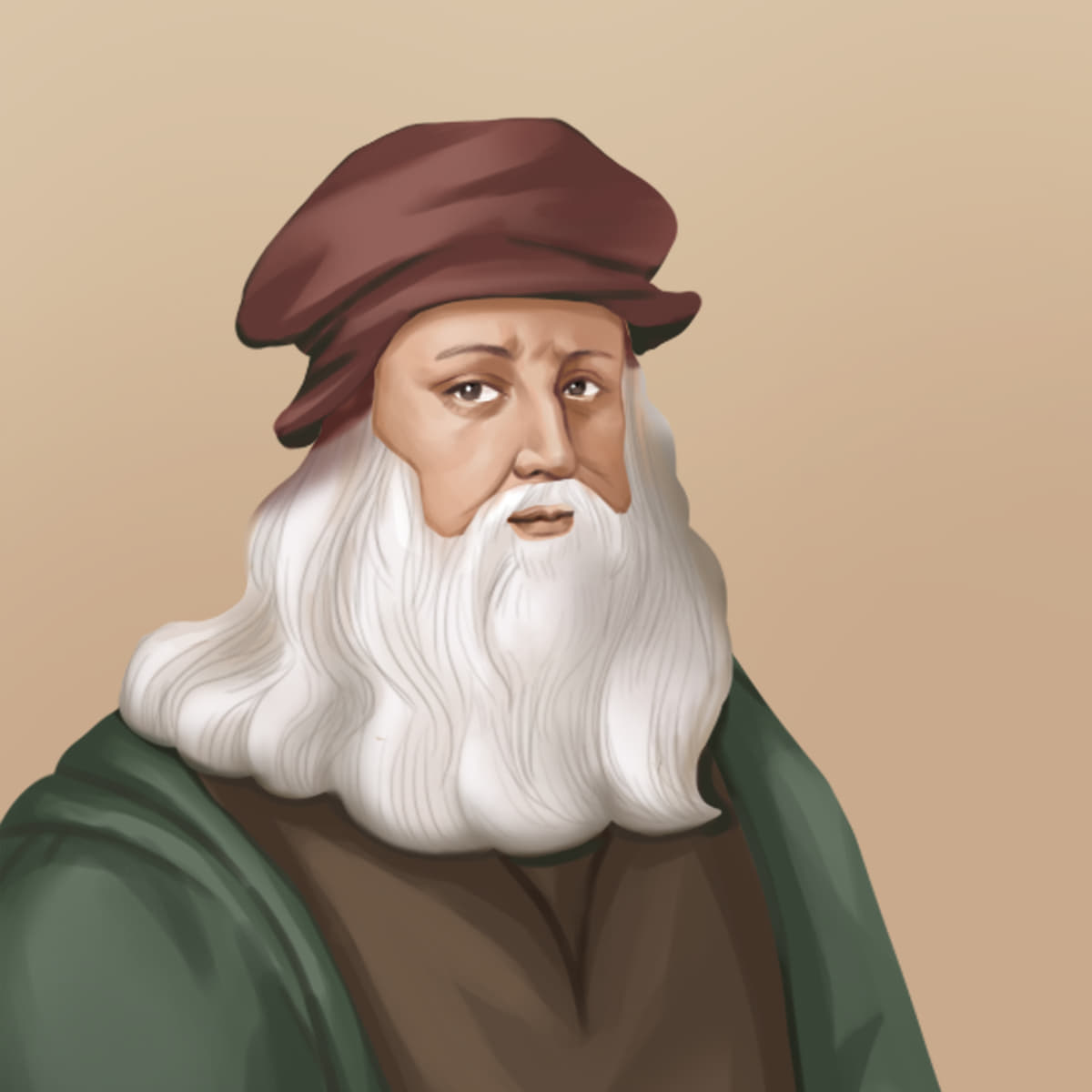
Leonardo da Vinci was an Italian polymath, considered one of the greatest minds in human history. He was born on April 15, 1452, in Vinci, Italy, and died on May 2, 1519. Da Vinci excelled in various fields, including art, science, engineering, mathematics, anatomy, and more.
As an artist, Leonardo da Vinci is renowned for his iconic paintings such as the Mona Lisa and The Last Supper. His meticulous attention to detail, use of light and shadow, and ability to capture human emotion set him apart as a masterful painter during the Renaissance period.
Apart from his artistic achievements, da Vinci made significant contributions to many scientific and technological disciplines. He conducted extensive studies in anatomy, botany, geology, and engineering, often using his observations to influence his artworks. Da Vinci also invented numerous machines and devices, designing concepts that were far ahead of his time.
Leonardo da Vinci's notebooks, containing a wealth of sketches, diagrams, and writings, provide insight into his wide-ranging interests and intellect. His insatiable curiosity and desire to understand the world around him led him to make groundbreaking discoveries and advancements in multiple fields.
Da Vinci's legacy continues to inspire and fascinate people around the world. His multidisciplinary approach and relentless pursuit of knowledge embody the spirit of creativity, innovation, and critical thinking.
Chapter 2:Who wrote the Leonardo da Vinci
"Leonardo da Vinci" is a biography written by Walter Isaacson. Walter Isaacson, born on May 20, 1952, is an American author and journalist known for his compelling biographies of notable individuals. He has written acclaimed works on figures such as Steve Jobs, Albert Einstein, Benjamin Franklin, and Leonardo da Vinci.
Isaacson is renowned for his meticulous research and engaging storytelling style. His biographies delve into the lives and minds of his subjects, exploring their accomplishments, struggles, and their impact on the world. Isaacson's writing provides readers with a comprehensive understanding of the individual's life, character, and contributions.
In "Leonardo da Vinci," Isaacson delves into the extraordinary life and genius of the renowned Italian artist, scientist, and inventor, Leonardo da Vinci. Through extensive research of da Vinci's notebooks, artworks, and historical records, Isaacson offers fascinating insights into da Vinci's creative process, scientific explorations, and his impact on various fields.
Isaacson's biography provides readers with a comprehensive and intimate portrait of Leonardo da Vinci, shedding light on the complexities of his personality, his insatiable curiosity, and his enduring legacy. Through his captivating storytelling and meticulous attention to detail, Walter Isaacson brings da Vinci's remarkable life and achievements to life, making his book an essential read for anyone interested in the genius of Leonardo da Vinci.
Chapter 3:Books like Leonardo da Vinci
"Michelangelo: A Life in Six Masterpieces" by Miles J. Unger: This biography delves into the life and works of another renowned artist of the Italian Renaissance, Michelangelo.
"The Medici: Power, Money, and Ambition in the Italian Renaissance" by Paul Strathern: This book explores the influential Medici family, who played a significant role in the patronage and shaping of the arts during the Renaissance.
"The Innovators: How a Group of Hackers, Geniuses, and Geeks Created the Digital Revolution" by Walter Isaacson: In this book, Isaacson examines the history of innovation and the individuals who have shaped the digital age, drawing parallels to Leonardo da Vinci's multidisciplinary approach to creativity and invention.
"The Age of Genius: The Seventeenth Century and the Birth of the Modern Mind" by A.C. Grayling: This book delves into the intellectual and cultural developments of the 17th century, exploring the minds of prominent figures like Descartes, Newton, and Galileo, who, like da Vinci, made profound contributions across various disciplines.
"The Code Book: The Science of Secrecy from Ancient Egypt to Quantum Cryptography" by Simon Singh: Expanding on the theme of da Vinci's curiosity and scientific investigations, this book explores the history and significance of cryptography, revealing the hidden world of secret codes and communication throughout history.