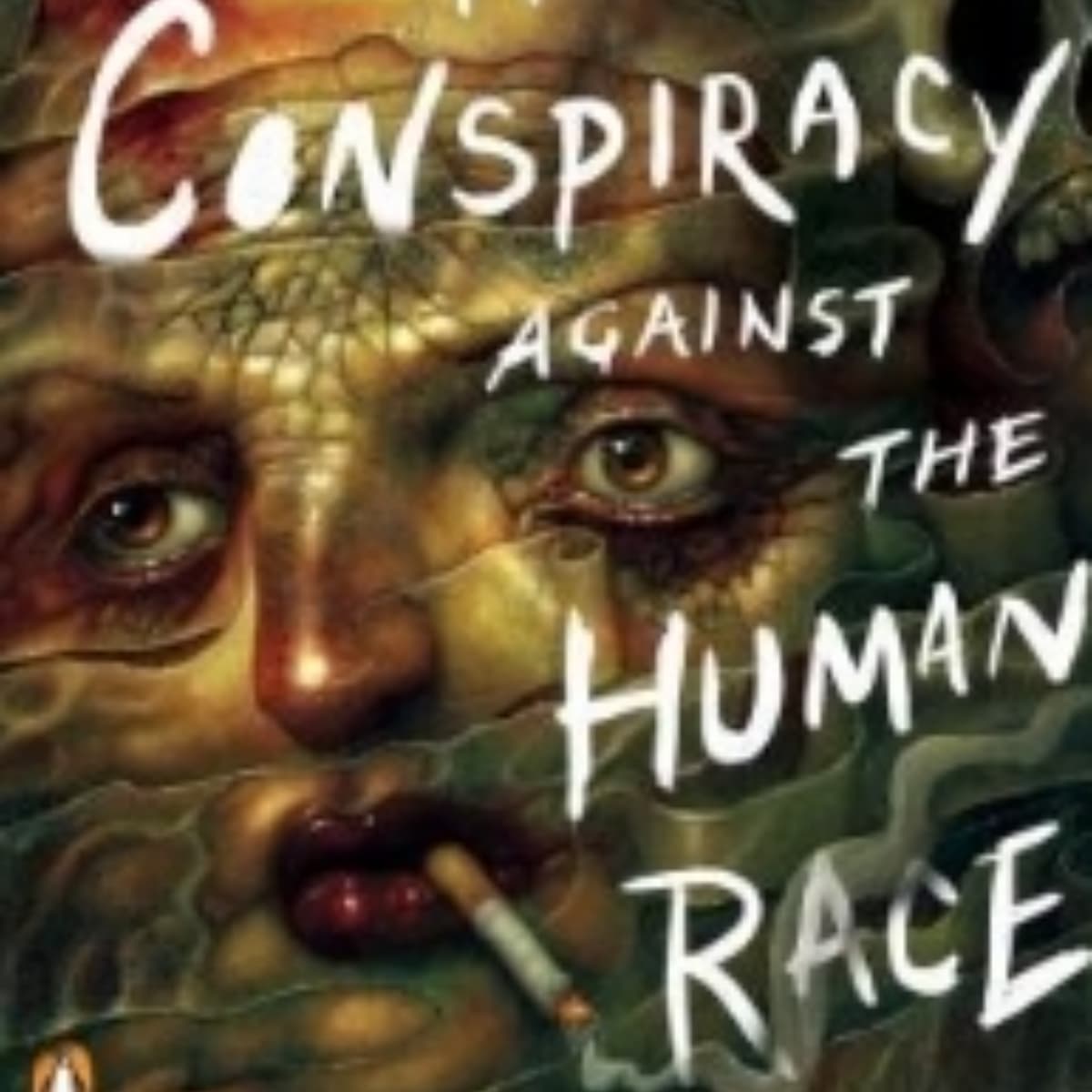
In "The Conspiracy against the Human Race," Thomas Ligotti guides readers through a dark labyrinth of existential dread, blending philosophical inquiry with horror. He posits that human consciousness is a curse—an awareness that isolates us in a nightmarish world. Ligotti crafts his narrative around the idea that life is a monumental struggle against the absurdity of existence, urging us to confront the bleakness that underpins our reality. He argues that every culture has devised myths to comfort itself, but these tales only mask the truth: that life is intrinsically tragic. By exposing this conspiracy—an unwritten pact to avoid the brutal facts of our nature—Ligotti invites us to embrace nihilism, illuminating the paradox of seeking meaning in a meaningless universe. Ultimately, his work challenges us to consider whether ignorance is truly bliss or if knowledge, however distressing, is the only path to genuine freedom.
Chapter 1:What Is The Conspiracy against the Human Race
What Is The Conspiracy against the Human Race?
"The Conspiracy Against the Human Race" by Thomas Ligotti is a philosophical treatise and a work of horror literature that explores the idea of pessimism and the inherent misery of human existence. Ligotti delves into themes of nihilism, the nature of consciousness, and the horror that accompanies the realization of the futility of life. He posits a world that is indifferent to human suffering and challenges the reader to confront the unsettling truths about existence.
Evaluation Based on Criteria:
1. Depth and Accuracy of Content:
Ligotti conducts a thorough examination of various philosophical and existential themes, drawing on sources from both literature and philosophy, including pessimism from the likes of Schopenhauer and Nietzsche. His insights are profound and well-researched, offering depth that invites serious reflection.
2. Originality:
The book stands out for its unique blend of philosophy and horror. Ligotti's choice to frame existential dread as a "conspiracy" gives a fresh perspective on pessimistic philosophy, distinguishing it from traditional philosophical texts and horror literature.
3. Organization:
The structure of the book can be somewhat disjointed, as it shifts between philosophical discussions and literary analysis. While it has a logical progression, some readers may find the organization challenging to follow.
4. Readability:
Ligotti's writing is dense and often requires careful attention. While it is rich in thought, some sections may be challenging for readers not familiar with philosophical concepts. However, for those engaged with the material, it can be rewarding.
5. Inspirational:
While not traditionally "inspirational", Ligotti’s work is thought-provoking, prompting readers to reflect deeply on existence, consciousness, and the nature of suffering. It can resonate on an intellectual level rather than providing uplifting inspiration.
6. Emotional Impact:
Ligotti's themes and depictions of human existence can evoke feelings of existential dread and discomfort. Readers may feel a profound sense of sadness or introspection as they absorb his arguments about the inherent suffering of life.
7. Cultural and Social Impact:
The book contributes to contemporary discussions on nihilism and pessimism, influencing readers and thinkers interested in existentialism and horror philosophy. It intersects with broader cultural dialogues about mental health, existential despair, and the human condition.
8. Attention to Detail:
Ligotti pays close attention to language and detail, crafting his arguments and prose with precision. His use of literary references enriches the text, demonstrating a deep engagement with both horror literature and philosophical inquiry.
9. Theme and Message:
The central theme revolves around the inherent suffering of human existence and the illusion of hope. Ligotti conveys that consciousness is a burden, making a strong case against the optimistic narratives commonly found in humanist thought.
10. Critical Thinking:
The work invites critical examination of received ideas about existence, encouraging readers to question the nature of reality, consciousness, and the promises of a meaningful life. It promotes a rigorous intellectual engagement with difficult concepts.
11. References:
Ligotti references a wide range of philosophical and literary figures, grounding his ideas in a rich historical context, which enhances the credibility of his arguments and provides pathways for further exploration.
12. Creativity and Artistry:
Ligotti's style is both poetic and philosophical, merging horror with deep existential inquiry. His use of language and imagery creates a haunting atmosphere, marking his work as a significant contribution to both philosophical literature and horror fiction.
Conclusion:
In conclusion, "The Conspiracy Against the Human Race" is a complex and challenging book that can be highly rewarding for readers interested in philosophical pessimism and the existential exploration of life's darker themes. Ligotti's originality and depth invite critical thought while also delivering a striking emotional impact that resonates with a contemporary audience grappling with similar themes. While it may not offer traditional inspiration, it compels readers to confront uncomfortable truths about the human experience.
Chapter 2:The Conspiracy against the Human Race chapters
"The Conspiracy Against the Human Race" by Thomas Ligotti is a philosophical work that explores themes of existential horror, anti-natalism, and the nature of consciousness. Below is a summary of its main ideas, structured by the key concepts of the book rather than by chapter, as it does not have conventional chapters like a typical narrative work.
Overview and Key Concepts:
1. Introduction to Horror Philosophy:
Ligotti sets the stage by discussing the horror genre and how it relates to profound philosophical ideas. He explores the idea that art (particularly horror) can provide insight into the human condition and existence itself.
2. Consciousness as a Curse:
One of the central arguments is that human consciousness is a detrimental aspect of existence. Ligotti posits that our self-awareness leads to suffering and dread, as individuals grapple with the knowledge of their mortality and the absurdity of life.
3. Anti-Natalism:
Ligotti advocates for anti-natalism, the philosophical position that argues against procreation. He presents the idea that bringing new life into the world is an act that perpetuates suffering and existential anguish. He examines the ethical implications of creating conscious beings that will inevitably face suffering.
4. The Nature of Reality:
The book delves into the unsettling nature of reality and the perception of existence as something inherently flawed. Ligotti draws on various philosophical traditions, including pessimism and nihilism, to dissect the illusory nature of hope and meaning in life.
5. Comparisons to the Ideal and the Abject:
Through various literary references, Ligotti illustrates the contrast between the human desire for meaning and the abject reality of existence. He employs horror literature to demonstrate how these themes play out in narrative form, using authors like H.P. Lovecraft to reinforce his arguments.
6. Critique of Humanism:
Ligotti critiques humanist viewpoints that celebrate human existence and potential. He argues that such perspectives ignore the inherent suffering tied to consciousness and the darker truths about the human condition.
7. The Sublime and the Terrifying:
He explores the relationship between the sublime (the awe-inspiring) and the terrifying aspects of existence. Ligotti suggests that true horror comes from confronting the abyss of reality and the ultimate futility of existence.
8. Conclusion:
In the closing sections, Ligotti emphasizes the eventual acceptance of life's futility and the embrace of horror as a form of enlightenment. He calls for a recognition of the darker aspects of consciousness and existence, advocating for a philosophical perspective that accepts life’s inherent suffering.
Themes and Influence:
Ligotti's work draws heavily on philosophical traditions, incorporating ideas from Arthur Schopenhauer, Emil Cioran, and other pessimistic thinkers. The narrative style is heavily influenced by horror literature, using vivid imagery and philosophical discourse to communicate his ideas.
Overall, "The Conspiracy Against the Human Race" serves as a deep dive into the philosophical underpinnings of horror, existential dread, and an argument for anti-natalism, challenging readers to reconsider their perceptions of life, consciousness, and existence itself.
Title: A Dark Mirror: The Philosophical Shadows of Thomas Ligotti's "The Conspiracy Against the Human Race"
Once upon a time, in a small, dimly lit library, nestled between towering stacks of dusty volumes, a curious reader named Sarah stumbled upon an unassuming black book with a silver spine that whispered the sinister allure of its title—The Conspiracy Against the Human Race by Thomas Ligotti. Drawn in by its macabre elegance, she felt an inexplicable pull to uncover the truths nestled within its pages. Little did she know, embarking on this journey would challenge the very nature of her existence.
As she cracked the cover, Sarah was greeted not with the familiar warmth of captivating narratives but with the chill of nihilism wrapped in a cloak of philosophical inquiry. Ligotti's prose unfolded like a gnarled tree branch, twisted and complex, leading readers into a dense forest of fear—fear of existence, fear of consciousness, and ultimately, the fear of human life itself.
In her first few hours with Ligotti's text, Sarah learned of the concept that seeped through every page: Life, in all its chaotic splendor, was more a curse than a gift. Ligotti didn't shy away from darkness; he embraced it, spotlighting the absurdity of human striving against an indifferent universe. From the very first chapters, he deftly dismantled the comforting illusions humans construct—those dreams of purpose and meaning that act as salves for the agonizing reality that life may be, in fact, a grand cosmic joke.
As Sarah delved deeper, she discovered Ligotti’s exploration of “antihumanism,” a philosophical stance advocating the reduction of human exceptionalism, suggesting that humanity is not the pinnacle of evolution but rather an existential blight on this planet. This uncanny proposition resonated with her like distant thunder, as she pondered on the act of creation—of art, of love, of the very narratives that weave the social fabric. Was her pursuit of beauty merely a distraction from the inevitable void? Each thought echoed ominously, reverberating in her mind.
Ligotti’s musings on horror—as both a literary genre and a reflection of reality—fueled Sarah's growing unease. He postulated that true horror lies not just in monsters lurking in the dark, but in the stark truth of existence itself: that humans are but fleeting specters, spiraling toward entropy, and that consciousness, a fleeting gift, brings with it an gnawing awareness of this tragic fate. The very act of thinking, Ligotti argued, serves only to heighten the suffering inherent in existence. It was a realization that lingered uncomfortably, lingering in the corners of her mind long after she turned each page.
In the labyrinthine prose of Ligotti, Sarah found a voice echoing the sentiments of existential philosophers like Schopenhauer and Nietzsche, yet there was something uniquely disquieting about his perspective. Unlike traditional philosophical inquiries that often ended on a note of defiance or resilience, Ligotti's work felt more like a funeral dirge—an acceptance of the bleakness of reality, a quiet resignation to life’s endgame. Rather than rallying the reader to rise against despair, he invited them to embrace the beauty in the grotesque and the liberating acceptance of life’s futility.
As she approached the conclusion of the book, Sarah faced a strange transformation. What began as dread morphed into an odd sense of clarity. Ligotti's confrontations with the human condition ignited in her an inkling of freedom. The acknowledgment of life’s absurdity, rather than immobilizing her, empowered her to redefine her own narratives. She came to understand that whether one viewed human existence as a curse or a chance, the choice of how to engage with the world still lay in her hands.
With the final page turned, Sarah closed the tome, feeling both heavier and lighter. Thomas Ligotti had not simply offered a bleak manifesto but a profound commentary on the human psyche. While the conspiracy he elaborated upon may indeed be against humanity, it also sparked within her a liberating urge to explore, to create, and to embrace her own existence—even against the void.
In her heart, Sarah understood now that perhaps the real conspiracy was not against humanity, but a challenge for individuals to confront and ultimately find meaning within the abyss. As she slid the book back onto the shelf, she knew she would carry its shadows with her—the unwavering reminder that searching for light was worth the treacherous journey through darkness.
Book https://www.bookey.app/book/the-conspiracy-against-the-human-race
Author https://www.bookey.app/quote-author/thomas-ligotti
Quotes https://www.bookey.app/book/the-conspiracy-against-the-human-race/quote
Infinite Jest https://www.bookey.app/book/infinite-jest
Youtube https://www.youtube.com/watch?v=FDlZD9m-3QI
Amazon https://www.amazon.com/Conspiracy-against-Human-Race-Contrivance/dp/0143133144
Goodreads https://www.goodreads.com/book/show/8524528-the-conspiracy-against-the-human-race?from_search=true&from_srp=true&qid=G8GEYsDxfR&rank=1