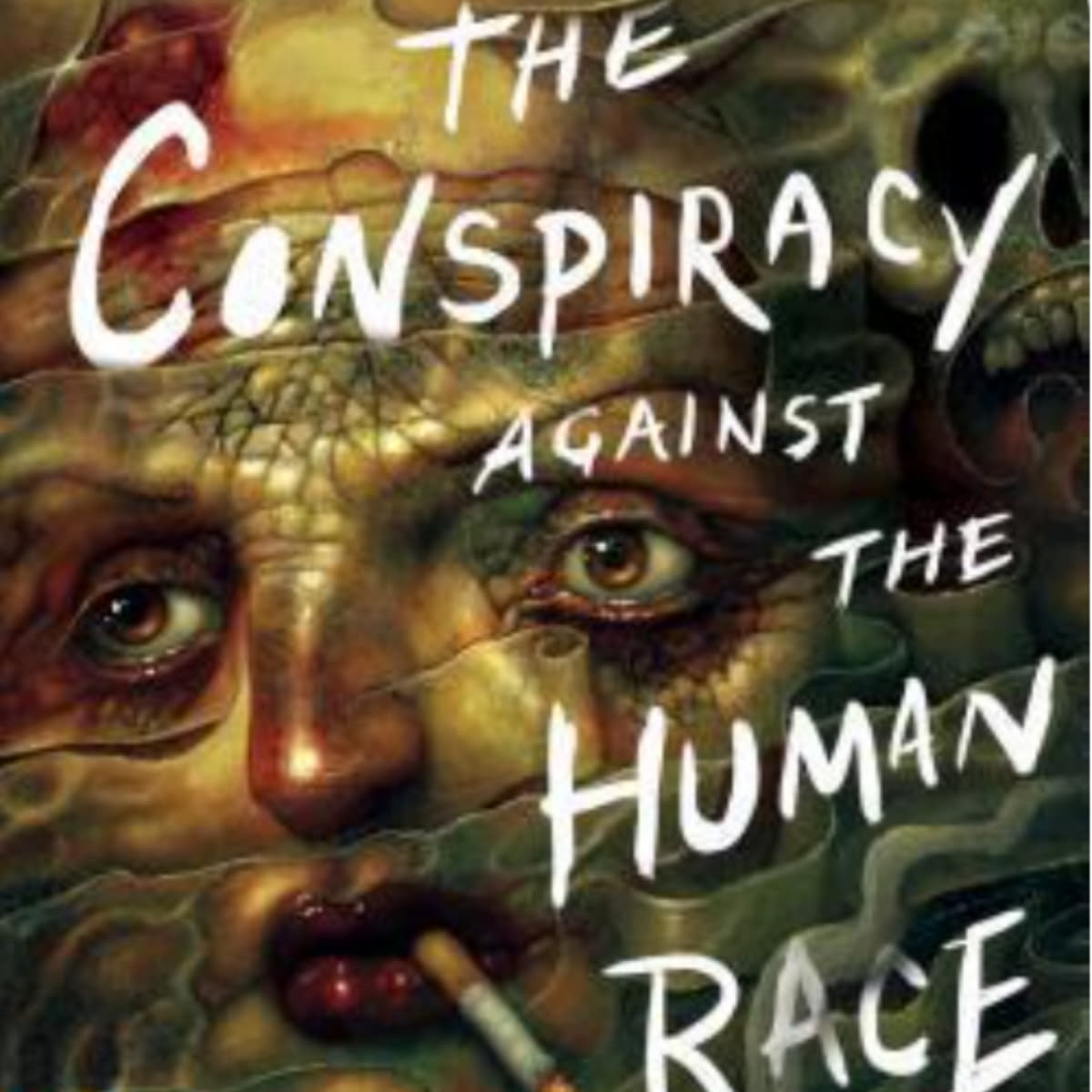
In "The Conspiracy Against the Human Race," Thomas Ligotti weaves a haunting narrative that challenges the very fabric of human existence. The book explores the unsettling idea that consciousness itself is a curse, a malignancy that sets us apart from the blissful oblivion of non-existence. Through a tapestry of philosophy, horror, and nihilism, Ligotti presents a chilling viewpoint: the human experience is a cosmic folly, drenched in suffering and despair. He draws on the works of philosophers and horror writers, suggesting that our self-awareness only amplifies the absurdity of life. The conspiratorial theme echoes throughout, positing that the universe itself conspires to keep us shackled in fragile states of being, forever longing for release. Ligotti’s prose invites readers to confront the disquieting truth that perhaps, in a world devoid of meaning, ignorance might truly be bliss.
Chapter 1: What Is The Conspiracy against the Human Race
What Is The Conspiracy against the Human Race?
"The Conspiracy against the Human Race" by Thomas Ligotti presents a philosophical exploration of horror and pessimism about human existence. Ligotti posits that consciousness and awareness of life inevitably lead to suffering and despair, arguing that the act of being human is fundamentally flawed because of our ability to perceive and contemplate the world. This work intertwines themes of existential dread with a critique of human nature, suggesting that the very qualities that define humanity – our consciousness, our desires, and our creativity – also serve as the source of our greatest suffering.
Evaluation of the Book
Depth and Accuracy of Content:
Ligotti dives deep into philosophical and psychological themes, drawing from a variety of influences, including existential philosophy and horror literature. His arguments are well-articulated and thought-provoking, although some may argue that his pessimistic perspective lacks balance.
Originality:
The book stands out for its unique combination of horror literature and philosophical inquiry. Ligotti’s approach is unconventional in its existential focus and bleak outlook, making it a distinctive voice in contemporary thought.
Organization:
The organization of the content can be somewhat nonlinear, reflecting the philosophical nature of the arguments. This may challenge some readers but enhances the thematic exploration.
Readability:
Ligotti's writing is lyrical yet dense, requiring careful attention. While some readers may find the prose challenging, others appreciate the depth and richness of his language.
Inspirational Emotional Impact:
The book elicits strong emotional responses through its themes of despair and dread. It is not typically inspirational in the conventional sense, but it provokes thought and self-reflection.
Cultural and Social Impact:
Ligotti’s work resonates with contemporary anxieties about existence, technology, and the human condition. It contributes to discussions around nihilism and pessimism, particularly in a modern context filled with existential threats.
Attention to Detail:
Ligotti demonstrates acute attention to detail in his philosophical reasoning and literary references, weaving a complex tapestry of ideas that invite deep analysis.
Theme and Message:
The central theme revolves around the intrinsic suffering of consciousness. Ligotti's message challenges readers to confront uncomfortable truths about existence, making it a rich ground for philosophical debate.
Critical Thinking:
The book demands critical engagement and reflection, encouraging readers to question their beliefs about life, existence, and human nature. It fosters a deeper understanding of pessimism and its implications.
References:
Ligotti draws from a wide array of philosophical and literary sources, enriching his arguments with references that anchor his ideas in a broader intellectual context.
Creativity and Artistry:
His writing exhibits a high level of creativity, particularly in its poetic and evocative descriptions. Ligotti’s artistry shines through in his ability to articulate complex ideas about horror, existence, and human consciousness compellingly.
Conclusion
Overall, "The Conspiracy against the Human Race" is a deeply philosophical and challenging book that offers a unique perspective on the human condition. It may not appeal to everyone due to its bleak outlook and dense prose, but for those willing to engage with its themes, it provides a profound exploration of existential dread and the nature of humanity.

Chapter 2: The Conspiracy against the Human Race chapters
"The Conspiracy against the Human Race" by Thomas Ligotti is a philosophical exploration of horror and existentialism, addressing themes such as pessimism, consciousness, and the nature of reality. The book is structured more as a continuous essay than as a standard narrative divided into conventional chapters. Below is a summary of its key themes and ideas rather than chapter-specific summaries:
1. Pessimistic Philosophy: Ligotti examines philosophical pessimism, arguing that human consciousness and existence are fundamentally tragic. He explores the idea that awareness of one's existence brings suffering, and he draws on the works of other pessimistic philosophers, such as Schopenhauer and the idea of antinatalism.
2. Horror and the Uncanny: Ligotti connects horror literature and the uncanny with the hidden darkness of existence. He discusses how horror fiction reflects deeper truths about reality and our understanding of suffering and fear. He argues that the genre can reveal the absurdity and dread inherent in the human condition.
3. Conspiracy Against Humanity: The title implies a conspiracy not in a typical sense, but rather a metaphysical one where reality itself is fundamentally against human beings. This "conspiracy" suggests that existence is structured in such a way that human life is marked by pain and disillusionment.
4. The Nature of Consciousness: Ligotti explores consciousness as a curse rather than a gift. He questions the evolutionary advantages of being self-aware and suggests that consciousness is more of a burden that amplifies suffering. The discussion delves into the surreal quality of existence and the fear of the void.
5. Death and Existential Dread: The book reflects on death as an escape from existence, but also on the fear it invokes. Ligotti discusses the inevitability of death and how this realization can lead to existential dread, influencing how we perceive our lives and actions.
6. Anti-Natalism: Ligotti expresses sentiments consistent with anti-natalist philosophy, which argues against procreation due to the suffering that life inherently brings. He discusses the morality of bringing new life into a world filled with pain and suffering.
7. The Role of Art: Throughout the book, Ligotti posits that art, particularly horror fiction, serves as a means to confront and articulate the darker aspects of reality. He explores how creators can express profound truths through the lens of fear and the uncanny.
Overall, "The Conspiracy against the Human Race" presents a bleak view of existence rooted in philosophical pessimism, using horror as a lens to examine deep existential concerns. It challenges readers to confront uncomfortable truths about life, consciousness, and the nature of suffering.
Title: The Veil of Shadows: Unpacking the Themes of Ligotti's Conspiracy
In a dimly lit corner of an old bookstore, while the relentless rain tapped rhythmically against the windowpanes, I stumbled upon an unassuming tome nestled between an anthology of poetry and a dog-eared copy of an existentialist classic. Its title caught my eye: The Conspiracy Against the Human Race by Thomas Ligotti. Intrigued, I pulled it from the shelf, unaware that it would lead me down a path of macabre contemplation, spiraling deep into the abyss of existential dread and philosophical inquiry.
As I settled into a worn leather armchair, the scent of musty pages swirling around me like a ghostly whisper, I turned the first pages of Ligotti's work. This wasn’t just a book—it was an invitation to the haunting exploration of some of humanity’s darkest truths. Ligotti's themes danced before me like specters, revealing themselves gradually with each turning page.
At its core, The Conspiracy Against the Human Race presents a chilling proposition: that existence itself is a kind of malevolent joke. Ligotti argues that life, with all its beauty and laughter, is overshadowed by an insidious reality—our consciousness is a burden, a trap that makes us acutely aware of our own mortality and the suffering that pervades existence. This theme, fearlessly presented, echoes like the tolling of a funeral bell, challenging the comforting narratives we construct to mask our most primal fears.
Ligotti delves into the philosophical underpinnings of pessimism, inviting readers to confront the notion that life is an illusion steeped in tragedy. In his view, the human race is not merely troubled; it is ensnared in a cosmic joke played by an indifferent universe. He illustrates this through a tapestry woven with literary references, philosophical musings, and metaphysical dread. The chapters unfold like a dark fairy tale, revealing the malevolent forces at play in a universe indifferent to our struggles and aspirations.
As I read, I began recalling the moments in my own life when I felt the weight of existence pressing against my chest—those sleepless nights grappling with the futility of ambitions. Ligotti’s words echoed in my mind, stitching my experiences into a broader narrative: the shared human experience of alienation and despair. The fear of the void, the overwhelming silence that follows the last echo of laughter—each resonated deeply with the central theme of Ligotti's work, that we are all participants in a grand, tragic spectacle.
Yet, within this bleak tapestry, Ligotti offers a counterpoint: the power of artistic expression. He suggests that through literature, art, and philosophy, we can glimpse the shadows lurking just beyond our perception. Art becomes an act of defiance against the abyss. Ligotti’s own prose is a testament to this, filled with haunting imagery that invites readers to gaze into the chaos whilst discovering an unexpected revelry in the act of creation.
With each page, I felt that Ligotti's philosophy was not merely a lamentation but an invitation—an encouragement to confront the ugly truths about our existence rather than shrink away in fear. He wanted us to know that while the universe may be a conspirator against our happiness, the act of self-awareness is both a curse and a liberating force.
As I closed the book, the rain had lessened to a gentle drizzle, and the atmosphere in the shop felt thick with contemplation. I learned that Ligotti's work is not just about despair; it's a call to engage with the human condition in all its sinister complexity. It challenges us to strip away the comforting cloaks of denial and face the eerie, unpredictable nature of consciousness itself.
In the end, The Conspiracy Against the Human Race became not just a book that darkened my thoughts, but one that illuminated the beauty found in honest engagement with suffering. It urged me to embrace the shadows, to dance with them, acknowledging that within the conspiracy against us—or even perhaps through it—lies a deeper understanding of what it means to be human.
As I left the bookstore, the rain had ceased, leaving droplets like diamonds on the pavement. With Ligotti's words echoing in my mind, I felt a curious blend of dread and clarity, a poignant reminder that the journey through the dark is not a solitary one but a shared path we traverse in search of meaning amidst the chaos.

Book https://www.bookey.app/book/the-conspiracy-against-the-human-race
Author https://www.bookey.app/quote-author/thomas-ligotti
Quotes https://www.bookey.app/quote-book/the-conspiracy-against-the-human-race
Youtube https://www.youtube.com/watch?v=7_3haMD1pVs
Amazon https://www.amazon.com/Conspiracy-against-Human-Race-Contrivance/dp/0143133144
Goodreads https://www.goodreads.com/book/show/8524528-the-conspiracy-against-the-human-race?from_search=true&from_srp=true&qid=0hjTBUGJYo&rank=1