
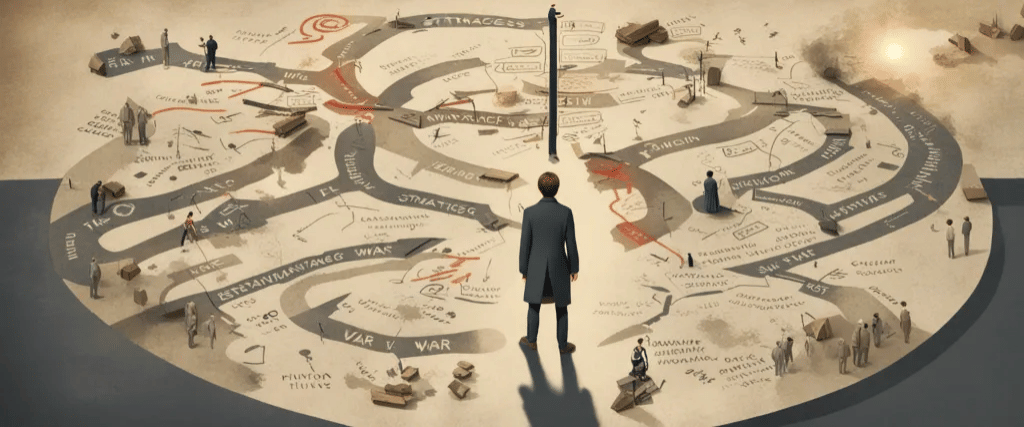
In the dimly lit chambers of history, where the echoes of conquerors linger, Robert Greene weaves a tapestry of wisdom in "The 33 Strategies of War." Each strategy, a carefully honed lesson from the battlefields of the past, invites readers to embrace the art of conflict—both in war and in the intricate dance of life.
Imagine the cunning of Sun Tzu, who teaches us to know our enemy and ourselves, or the audacity of Napoleon, who reminds us that timing can turn the tide of fate. Greene’s narrative reveals that warfare isn’t limited to the battlefield; it permeates relationships, business, and personal growth. By mastering these strategies—like the deceptive feigned retreat or the powerful alliance—one can navigate obstacles with agility and foresight. Ultimately, "The 33 Strategies of War" arms us with an arsenal of insights, transforming our struggles into victories, both grand and intimate.
Chapter 1:What Is The 33 Strategies of War
"The 33 Strategies of War" by Robert Greene offers a comprehensive exploration of strategies drawn from historical military conflicts, psychology, and various cultural references. Here’s a brief analysis based on the specified aspects:
Depth and Accuracy of Content:
Depth: The book delves into historical examples and military strategies, providing a wealth of information.
Accuracy: Greene meticulously cites examples and integrates historical facts, though some critics argue that interpretations can be subjective.
Originality:
Greene’s synthesis of military strategy with self-help advice is unique, making the book stand out within both genres. While the ideas themselves can be traced to historical sources, his framing gives them a fresh perspective.
Organization:
The book is well-structured, with each strategy clearly delineated and supplemented by historical anecdotes. The progression of strategies also reflects a logical flow, guiding the reader through concepts effectively.
Readability:
Greene's writing style is accessible and engaging, with a narrative that balances scholarly references and practical advice, making it appealing to a broad audience.
Inspirational Emotional Impact:
The book often draws upon themes of resilience and cleverness in challenges, which can be motivational. However, its realpolitik tone may not resonate with everyone.
Cultural and Social Impact:
Greene's work has influenced various fields beyond military theory, including business, politics, and personal development. It has sparked discussions about ethics and competition in these domains.
Attention to Detail:
Greene showcases a keen eye for details in historical narratives and strategies, illustrating the complexities of human behavior and decision-making.
Theme and Message:
The overarching theme emphasizes strategic thinking and adaptability in conflict and competition, encouraging readers to view challenges as opportunities for growth.
Critical Thinking:
The book prompts readers to think critically about their own life strategies and the morality of using tactics discussed, fostering self-reflection about personal and professional conduct.
References:
Greene supports his arguments with extensive historical references, drawing from various periods and cultures, which enriches the content. However, some may question the breadth and selection of these references.
Creativity and Artistry:
Greene’s narrative style is compelling and artistic; he weaves together stories and historical references with a flair that captivates readers. His multifaceted approach displays a creative imagination in presenting age-old concepts in a contemporary context.
In summary, "The 33 Strategies of War" is a multifaceted book that appeals to readers interested in strategy, personal development, and historical analysis. While it has its strengths, particularly in conceptual originality and narrative style, its more ruthless interpretations of human behavior may not appeal universally.

Chapter 2:The 33 Strategies of War chapters
"The 33 Strategies of War" by Robert Greene is a guide that applies military strategy to the challenges of everyday life, including personal, social, and business situations. Below is a brief summary of the chapters, grouped into five main parts correspondingly to the book's structure.
Part One: Self-Directed Warfare
1. The Polarity Strategy: Understand your inner strengths and weaknesses, and align your actions with your true nature.
2. The Counterbalance Strategy: Balance your emotions and maintain a level head to make rational decisions.
3. The Strategic Withdrawal: Knowing when to retreat or disengage can be just as important as knowing when to attack.
Part Two: Organizational (Team) Warfare
4. The Principle of the Lure: Use bait to attract your enemy or adversary, drawing them into a situation where you have the advantage.
5. The Center of Gravity: Identify your primary advantage or focal point in any conflict and protect it fiercely.
6. The Siege Strategy: Slowly wear down your opponents through persistent pressure rather than direct confrontation.
Part Three: Defensive Warfare
7. The Flanking Maneuver: Use indirect strategies to gain the advantage, often surprising your opponent.
8. The Ambush Strategy: Create situations that catch your opponent off guard, allowing you to exploit their weaknesses.
9. The Fortress Strategy: Build a stronghold that protects your core assets and positions you strongly against any attacks.
Part Four: Offensive Warfare
10. The Direct Approach: When possible, face your opponents head-on with overwhelming force.
11. The Blitzkrieg Strategy: Combine speed with boldness, striking before your opponent has a chance to react.
12. The Feigned Retreat: Pretend to withdraw to lure opponents into traps, then exploit their vulnerabilities.
Part Five: Unpredictable Warfare
13. The Strategy of the Psyche: Influence and manipulate your enemies' perceptions and beliefs to your advantage.
14. The Decoy: Use false fronts or misleading signals to distract and confuse your opponents.
15. The War of Attrition: Wear down your opponent's resources and morale over time, leading them to fatigue.
Conclusion: The Perfect Warrior
Greene concludes the book by emphasizing that a great strategist must remain flexible, adaptable, and insightful, embodying the qualities of a perfect warrior.
Additional Themes:
Throughout the book, Greene emphasizes principles such as adaptability, cunning, deception, and psychological warfare. He draws on historical examples and employs aphorisms and wisdom from various military leaders and philosophers to illustrate each strategy.
These summaries encapsulate the essence of each chapter while reflecting on the overall themes of strategy, conflict, and personal development inherent in Greene's work.
Title: The Art of War: Life Lessons from Robert Greene’s 33 Strategies
In the heart of a bustling metropolis, where the hum of ambition filled the air, lived a young strategist named Elena. She had a sharp mind and an insatiable thirst for knowledge. From the chronicles of history to the philosophies of great thinkers, every piece of wisdom was a thread she wove into her tapestry of life. But on this fine morning, something unusual caught her attention—a book tucked away in a small, forgotten corner of a dusty bookstore, its spine cracked with age: The 33 Strategies of War by Robert Greene.
As she opened the book, she felt an electric thrill, as if she had just discovered a treasure chest. With each chapter, Elena was transported to the battlefields of history and the minds of great tacticians, learning that war was not merely a physical contest but a complex game of strategy and psychology, played in life’s everyday arenas.
Greene divided his strategies into distinct categories, each different yet intricately connected, like the pieces of a grand chessboard where one move could lead to triumph or tragedy.
Elena turned to the first strategy, “The Polarity Strategy.” It spoke of the importance of understanding one’s own strengths and weaknesses while recognizing the same in others. Just as the sun rises and sets, so too does the ebb and flow of confrontation. In her own life, she noted how often misunderstandings festered when strong words laced with emotion overshadowed clarity. This chapter inspired her to pause, assess, and then engage in discussions with a renewed sense of awareness and empathy.
Next, her eyes caught the gleam of wisdom in “The Flanking Strategy.” Here, Greene illustrated the power of unconventional tactics, drawing from historical battles where victory was snatched from the jaws of defeat not through brute force, but rather through unexpected maneuvers. Elena found herself reflecting on her college years when she had been overlooked for a project. Instead of directly confronting her peers, she quietly transformed her own project into something exceptional, earning the respect she had sought without confrontation—a lesson in elegance over aggression.
With each page, she absorbed the essence of collaboration and cunning. In “The Divide and Conquer Strategy,” Greene discussed the art of sowing discord among opponents. Elena smiled as she remembered a workplace rivalry that had stewed for months. It hadn’t been her doing, but she realized how easy it can be to allow distractions to disrupt harmony. The lesson here? Healthy communication could be the key to maintaining a united front, ultimately leading to synergy rather than division.
Then came the chapter titled “The Decoy Strategy," where Greene narrated stories of feints and misdirection. A flood of ideas cascaded in her mind as she envisioned all the times she could have led a conversation away from conflict or confusion—turning a potentially explosive moment into something enlightening instead. It illuminated the notion that sometimes, the wisest move is not to directly engage but to guide the conversation toward calmer waters.
As the sun dipped lower, painting the room in golden hues, Elena marveled at how much wisdom this book held—not just for the proverbial battlefield, but for the daily skirmishes of personal and professional relationships. With each chapter, she wasn’t merely reading about war—she was delving into the very fabric of human interaction, understanding the strategies that could help navigate the complexities of life with grace and foresight.
In the final pages of the book, Greene emphasized the importance of adaptability. The world is a battlefield, and flexibility can often mean the difference between success and failure. Just as ancient warriors adapted their tactics to new threats, so too must she adapt her approach to the various challenges life threw her way.
With a newfound understanding and determination, Elena closed the book and tucked it under her arm, ready to step back into the world not just as a participant but as a strategist. She had unlocked the treasure of knowledge that Greene shared—strategies to harness in life’s conflicts, big or small. The essence of The 33 Strategies of War resided not in glorifying battle but in revealing the profound power of the human mind—the ability to foresee, to adapt, to conquer challenges not with force, but with wisdom, patience, and insight.
And so, with every encounter that awaited her, she moved forward with the heart of a warrior, thankful for her little adventure into the pages that transformed her perspective toward every ‘battle’ she faced.
Book https://www.bookey.app/book/the-33-strategies-of-war
Author https://www.bookey.app/quote-author/robert-greene
Quotes https://www.bookey.app/book/the-33-strategies-of-war/quote
The Art of War https://www.bookey.app/book/the-art-of-war
Youtube https://www.youtube.com/watch?v=wu5soeP52no
Amazon https://www.amazon.com/Strategies-War-Joost-Elffers-Books/dp/0143112783
Goodreads https://www.goodreads.com/book/show/35289.The_33_Strategies_of_War