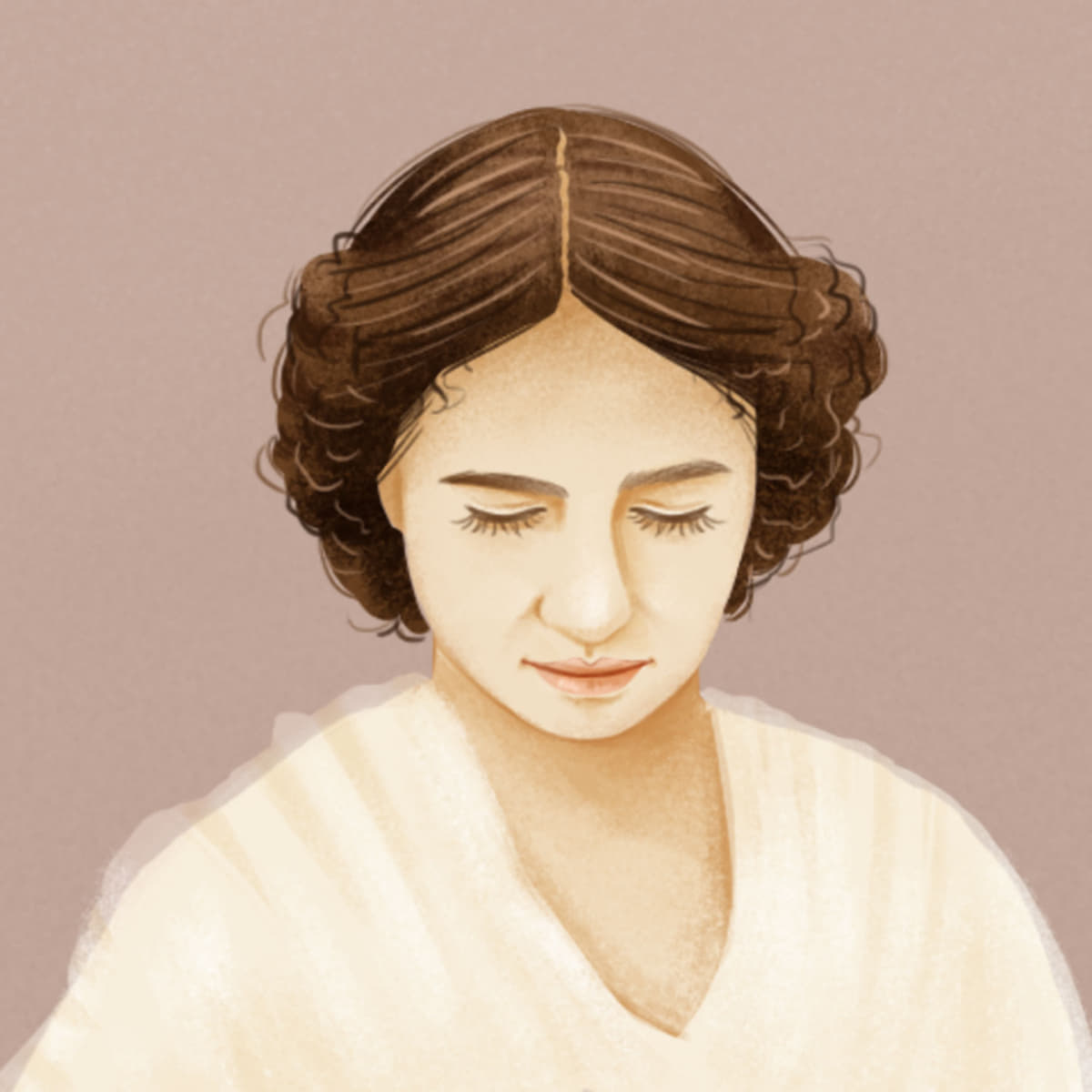
Chapter 1:Summary of The Story Of My Life
The Story of My Life is an autobiography written by Helen Keller, a woman who became deaf and blind at a young age due to an illness. It depicts her remarkable journey from a dark and isolated world to a life filled with learning, achievement, and activism.
Keller begins the narrative with her early years as a happy and healthy child, until a severe illness leaves her unable to see or hear. She describes the frustration and confusion she faced, as her inability to communicate effectively left her isolated from the world around her. However, the arrival of her teacher, Anne Sullivan, marked a turning point in her life.
Sullivan, a determined and compassionate teacher, entered Keller's life at age seven. Through a series of patient and innovative teaching methods, such as finger spelling and tactile sign language, Sullivan helps Keller overcome her limitations and opens up a world of learning to her. In a groundbreaking moment, Keller connects the sign for water Sullivan spells into her hand with the water she feels flowing over her other hand, making the breakthrough realization that everything has a name.
As Keller continues her education, she becomes an accomplished student, mastering various subjects including language, literature, and math. She goes on to attend college, becoming the first deaf-blind person to earn a bachelor's degree in the United States.
Throughout her journey, Keller faces challenges, both personal and societal. She shares her experience with prejudice and discrimination, as people often underestimate her abilities due to her disabilities. Nevertheless, Keller remains determined and advocates for the rights and inclusion of people with disabilities, becoming a renowned lecturer and writer.
The Story of My Life is a testament to the indomitable human spirit. It offers readers a glimpse into the inner world of someone who has triumphed over incredible odds and shows how perseverance, dedication, and the support of others can transform lives. Keller's story serves as an inspiration to all, reminding us of the power of education, empathy, and tenacity in overcoming life's challenges.
Chapter 2:the meaning of The Story Of My Life
"The Story of My Life" is an autobiography written by Helen Keller, an American author, activist, and advocate for the blind and deaf. The book chronicles Keller's own experiences as a person who became deaf and blind after a severe illness at the age of 19 months, and her heroic efforts to overcome these challenges and lead a fulfilling life.
In the book, Keller portrays her early struggles to communicate and understand the world, and the turning point that came when she met her teacher, Anne Sullivan. Sullivan's methods, particularly the use of finger spelling, opened up a whole new world to Keller, enabling her to learn to read, write, and eventually speak. Keller's account highlights her determination and the tremendous impact that education, perseverance, and love can have on transforming an individual's life.
The autobiography also delves into Keller's passion for social activism and her belief in the power of education, as she became an advocate for the rights of people with disabilities. She writes about her journey of learning and personal growth, ultimately emphasizing the importance of empathy, compassion, and human connection.
"The Story of My Life" is an inspirational narrative that serves as a testament to the indomitable power of the human spirit, and it continues to be read and admired for its extraordinary story of triumph over adversity.
Chapter 3:The Story Of My Life chapters
- Chapter 1: Introduction
In the opening chapter, Helen Keller gives a brief introduction to her family background and talks about her earliest memories as a young child before her illness.
- Chapter 2: Illness and Darkness
Helen describes the sickness that struck her at the age of 19 months, which robbed her of her sight and hearing. She explains the impact it had on her daily life and communication.
- Chapter 3: Learning Sign Language
After her parents hire Anne Sullivan as her teacher, Helen starts to learn signs for objects and develops a basic understanding of language. She explains the challenges she faced in comprehending the concept of language.
- Chapter 4: Learning to Read Braille
In this chapter, Helen talks about how she learned to read and write using the Braille system. She details the difficulties she encountered and the breakthroughs she made while learning this tactile language.
- Chapter 5: Discovering the World
Helen describes the joy she experiences when she starts to grasp the concept of language and the world around her. She explains the excitement of finding out the names of objects and the newfound ability to communicate her desires and thoughts.
- Chapter 6: College Years
Helen talks about her journey through college, where she faced several challenges due to her disabilities. She discusses her academic achievements, her love for literature and philosophy, and the support she receives from her friends and teachers.
- Chapter 7: Traveling and Speaking Engagements
Helen shares her experiences of traveling across the United States and Europe, where she delivers speeches on various topics including women's rights, disability rights, and education. She talks about the impact her speeches had on audiences and her growing popularity as an advocate.
- Chapter 8: Writing Career
In this chapter, Helen discusses her career as a writer, which includes producing articles, essays, and books. She talks about the inspiration behind her work and the satisfaction she derives from sharing her thoughts and experiences.
- Chapter 9: Personal Relationships
Helen reflects on her relationships with family, friends, and mentors, including her lifelong friendship with Anne Sullivan. She details the support she receives from her loved ones and the impact they have on her personal growth.
- Chapter 10: Legacy and Reflection
Helen concludes by reflecting on her life's work and the legacy she hopes to leave behind. She emphasizes the importance of perseverance, determination, and belief in oneself, and encourages others to overcome obstacles in their own lives.
Chapter 4: Quotes of The Story Of My Life
- "We long to return to that time when the world was our own, when we were not old enough to have learned to live in the world without a comforter and a guide."
- "I do not remember a time when I was not in love with books – you can hardly understand how I am able to contain myself studying so much."
- "I am of the opinion that, when normal people speak of my blindness, they think only of my inability to see with the physical eye."
- "The most important day I remember in all my life is the one on which my teacher, Anne Mansfield Sullivan, came to me."
- "My little world had suddenly grown much larger, and a wonderful light had been kindled within me."
- "I am not dumb now."
- "When I learned to spell cat, dog, and table, I had no idea what the spelling meant; but I am sure I felt murmurings within me that meant satisfaction and joy."
- "The beautiful myths and legends of the gods and heroes, so true in every lesson, so magical and weird, so beautiful in form and feeling, so strong and imperious in their commands and rewards, taught me no lessons like the stories I have learned from my own experience."
- "Knowledge comes to us, if we have written records, not by chance, but because we want to know and seek to know."
- "Optimism is the faith that leads to achievement; nothing can be done without hope."