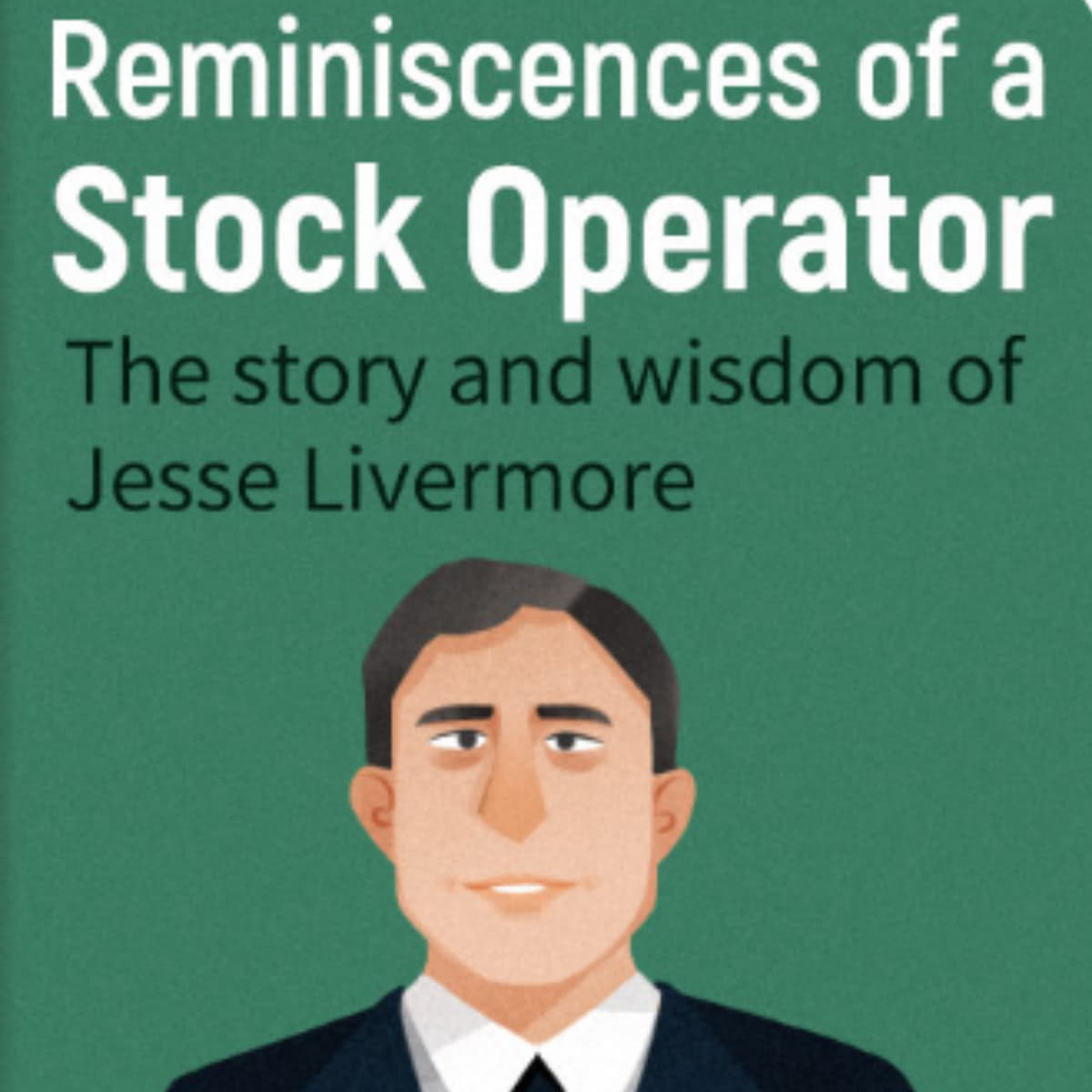
In the bustling world of early 20th-century finance, Reminiscences of a Stock Operator tells the captivating story of Larry Livingston, a pseudonym for the legendary trader Jesse Livermore. Through his eyes, readers journey into the stock market's adrenaline-fueled frenzy, where intuition, strategy, and emotion interweave. The book illustrates timeless lessons on market psychology, emphasizing that true success hinges on understanding human behavior rather than mere numbers. Livingston’s trials and triumphs reveal the volatile nature of speculation, as he grapples with greed, fear, and the allure of fortune. Lefèvre’s narrative serves as a cautionary tale about the perils and promises of trading, showcasing that wisdom often emerges from failure. Ultimately, the essence of Livingston's journey highlights the importance of patience, discipline, and adaptive thinking—lessons that resonate in today’s ever-evolving financial landscape.
Chapter 1: What Is Reminiscences of a Stock Operator
"Reminiscences of a Stock Operator" is a classic book written by Edwin Lefèvre, published in 1923. It is a fictionalized biography of Jesse Livermore, one of the most famous stock traders of the early 20th century. The book offers insights into stock market psychology, trading strategies, and the emotional challenges faced by traders.
Depth and Accuracy of Content
The book provides a deep understanding of stock trading and market mechanics based on Livermore's experiences. While it is fictionalized, it accurately captures the essence of trading in that era, making it still relevant today.
Originality
The narrative style and the way Livermore's life and thoughts are presented in a novel format was quite original for its time. It artfully blends storytelling with practical trading lessons.
Organization
The book is well-structured, following a chronological progression through Livermore's life and trading experiences. This makes it easy for readers to follow his development as a trader.
Readability
Lefèvre's writing is accessible and engaging. The conversational tone allows even readers unfamiliar with finance to grasp the concepts presented.
Inspirational Emotional Impact
The book has a strong inspirational quality as it delves into the psychological aspects of trading, discussing both the highs and lows of the stock market experience. Livermore's struggles and triumphs resonate with readers on an emotional level.
Cultural and Social Impact
"Reminiscences of a Stock Operator" has had a significant impact on both trading culture and literature in finance. It is widely regarded as a foundational text for traders and has influenced generations of market participants.
Attention to Detail
Lefèvre pays close attention to the details of Livermore's trading strategies, market conditions, and psychological aspects. This detail lends authenticity and depth to the narrative.
Theme and Message
The central themes include the psychology of trading, the inevitability of risk, and the importance of discipline and reflection. The message encourages readers to understand their own emotions and tendencies in trading.
Critical Thinking
The book encourages critical thinking regarding market strategies and the nature of speculation. It challenges readers to reflect on their own experiences and decisions in trading.
References
While the book does not contain explicit academic references, it draws upon Livermore's experiences and general market knowledge, which are invaluable for understanding trading.
Creativity and Artistry
The skillful blend of fiction and biography showcases Lefèvre's creativity. The narrative flows smoothly while remaining educational, illustrating the artistry in capturing the nuances of trading.
Conclusion
Overall, "Reminiscences of a Stock Operator" is a highly regarded book that remains relevant and influential. Its depth, readability, and emotional impact make it an essential read for anyone interested in trading, investment psychology, or financial literature.

Chapter 2: Reminiscences of a Stock Operator chapters
"Reminiscences of a Stock Operator" by Edwin Lefèvre offers a fictionalized account of the life of legendary stock trader Jesse Livermore, emphasizing his insights into trading, psychology, and market behavior. While the book is not structured in conventional chapters, it can be summarized thematically based on key concepts and events. Here’s a brief overview of the main themes and ideas:
Summary of Key Themes
1. The Life of a Trader:
- The narrative follows the protagonist, Larry Livingstone, who represents Jesse Livermore's experiences and reflections as a trader. The book explores his early days in the stock market, highlighting his evolution from a small-time trader to a major player in Wall Street.
2. Market Psychology:
- Lefèvre emphasizes the psychological aspect of trading, illustrating how emotions like greed and fear affect decision-making. The book showcases the importance of discipline and mental resilience in trading success.
3. Speculation vs. Investment:
- The distinction between speculation and investment is a major theme. Livermore's strategy revolves around speculating on price movements rather than holding stocks for the long term, focusing on market timing and momentum.
4. Lessons Learned:
- Throughout the narrative, Livingstone shares valuable lessons from his trading successes and failures, emphasizing the need for continuous learning, adaptability, and the significance of figuring out one’s trading style.
5. Market Trends and Timing:
- The book outlines the importance of recognizing market trends and the timing of trades. Livermore discusses how he analyzed market conditions and used price movements to inform his trades.
6. Risk Management:
- Risk management is a critical focus, where Livingstone illustrates the necessity of protecting capital, cutting losses, and knowing when to take profits.
7. Influence of Others:
- The interactions with other traders and the influence of market sentiment on stock prices highlight the social dynamics at play in trading.
8. The Downfall:
- The narrative also details periods of hardship and the consequences of poor decisions, showing that even successful traders can face significant losses and challenges.
Notable Insights
- "It is not whether you are right or wrong that is important, but how much money you make when you are right and how much you lose when you are wrong." This quote encapsulates the focus on profitability and risk management over simply being correct in analysis.
- "The stock market is never obvious. It is designed to fool most of the people, most of the time." This reflects the unpredictability and complexity of market dynamics.
Conclusion
"Reminiscences of a Stock Operator" is not just a narrative about trading but a profound psychological exploration of the mind of a trader. It offers timeless wisdom applicable to anyone interested in finance, trading, or investing, making it a classic in the literature of financial markets. The themes and lessons resonate with both novice and experienced traders, emphasizing the critical importance of mindset, strategy, and emotional control in the world of trading.
The Lessons of a Market Maestro: Insights from "Reminiscences of a Stock Operator"
On a crisp autumn morning in 1923, a young man named Jesse Livermore sat alone in a bustling New York café, a newspaper spread across the table before him. With each flick of the page, his heart raced, not from the caffeine in his coffee, but from the fluctuating tides of the stock market — a world he had come to both fear and adore.
His story, chronicled by Edwin Lefèvre in "Reminiscences of a Stock Operator," is not merely a memoir of trades and tickers, but an intricate dance through the psychology of trading. As the mist of nostalgia draped over him like the morning fog outside, Jesse's mind wandered back to the essence of his journey: the battle of human emotions against cold, hard numbers.
The Folly of Human Nature
From his early days as a boy in a small Massachusetts town, Jesse was driven by a curiosity that would soon morph into a profound understanding of human behavior. As he meticulously charted stock prices, he began to uncover something far more potent than mere statistics: the irrationality that often governed the masses. "The market is always wrong; it’s the participants who are foolhardy," he mused, sipping his coffee, his eyes scanning the faces of fellow patrons, each a unique reflection of aspirations and anxieties.
The book reveals a critical lesson: success in the markets is often about mastering oneself. In a series of high-stakes trades, Jesse navigated emotional highs and desperate lows. When he lost a chunk of his fortune, he didn’t blame the stock ticker; rather, he looked within. "It’s never the market that’s at fault," he often advised younger traders. "It’s your own shortcomings that trip you up."
The Art of Timing
As the days turned into months, Jesse honed his skill of timing. He learned that it wasn’t merely the numbers that announced a rise or fall; it was the whispers of the market, the subtle movements that often went unnoticed. “You’ve got to feel the pulse of the market,” he told his colleagues, drawing them closer with the intensity of his conviction.
His journeys took him through years of volatility, and with each fluctuation, he gathered wisdom. One key lesson was the understanding of trends — a principle that continues to resonate with today’s traders. "The trend is your friend," he often proclaimed, a mantra that encapsulated the rhythm of market movements. Recognizing when to enter and exit was the art, while discipline became his unwavering canvas.
Hope and Despair: The Duality of the Market
Through triumphs and turmoil, Jesse learned that the market was as much a theater of hope as it was a stage for despair. One day, while reflecting on a monumental loss, he encountered an elderly gentleman at the stock exchange, who lamented about missed opportunities. "I never invest emotions in numbers," the man told him, a gleam of wisdom in his eyes. Jesse realized that both despair and hope were not just reactions to losses and gains; they were the twin forces that drove the marketplace.
In the throes of speculation, one must wade through the fog of financial mania, where excitement can cloud judgment. Jesse's story teaches us that one must cultivate patience and discernment, to recognize that like seasons, markets too have cycles — and in those cycles lie not just risk, but opportunity.
The Final Chapters: Wisdom Passed Down
As the afternoon sun dipped below the skyline, Jesse pondered the ways of the market — each revelation seeping into his soul like the rich aroma of his brew. "Reminiscences of a Stock Operator" transcended its pages, becoming a testament not just to Jesse’s career, but a guide for generations of traders who would follow.
It was a book that spoke to the core of the human experience, encapsulating the delicate balance of fear and greed. The wisdom shared within was a reminder — that trading is not merely about numbers, but a profound exploration of self.
Through Jesse Livermore’s extraordinary journey, we learn that in the vast, unpredictable ocean of the stock market, the greatest gamble often lies not in the stakes we take, but in the understanding of who we are when the tide rises and falls. So, as you embark on your own journey through trading, remember Jesse’s enduring lesson: the market may be a labyrinth filled with uncertainties, but let your own heart be the compass guiding you towards the light of wisdom.

Book https://www.bookey.app/book/reminiscences-of-a-stock-operator
Quotes https://www.bookey.app/quote-book/reminiscences-of-a-stock-operator
Youtube https://www.youtube.com/watch?v=-PkfwoYgimU
Amazon https://www.amazon.com/Reminiscences-Stock-Operator-Edwin-Lef%C3%A8vre/dp/0471770884
Goodreads https://www.goodreads.com/book/show/100779.Reminiscences_of_a_Stock_Operator