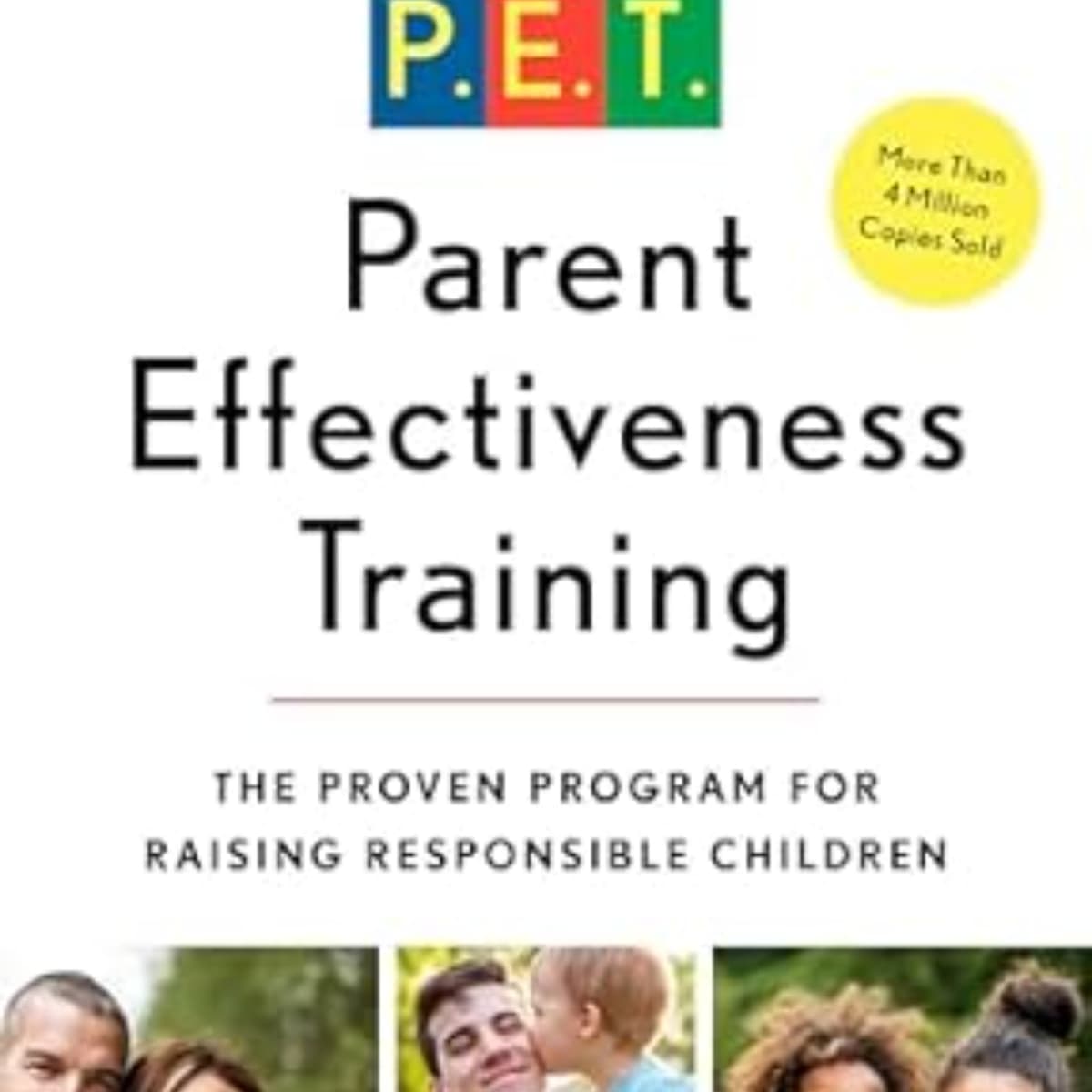
In a quaint town where communication often eroded relationships, a transformative book emerged: "Parent Effectiveness Training" by Thomas Gordon. Through the eyes of a weary parent named Lisa, readers embark on a journey of discovery. Frustrated with her children’s defiance, she stumbles upon Gordon's insightful methods. The heart of his teachings lies in empathy and active listening, which open a door to genuine connection.
Instead of shouting over dinner tables, Lisa learns to express her feelings without resorting to blame. She embraces the art of ‘I’ statements, fostering understanding rather than conflict. As her family begins to share openly, not only do her children feel heard, but they also develop their own problem-solving skills.
In this tale, Gordon’s techniques illuminate the power of respectful dialogue, teaching that effective parenting weaves a fabric of trust and cooperation that nurtures both parents and children alike.
Chapter 1:What Is Parent Effectiveness Training
Parent Effectiveness Training (PET) is a parenting program developed by psychologist Thomas Gordon in the 1960s. It emphasizes the importance of effective communication and conflict resolution between parents and children, providing tools to foster understanding and cooperation rather than using authoritarian discipline. The program promotes the idea that parents can teach children self-discipline and problem-solving skills through respectful dialogue.
Evaluation of "Parent Effectiveness Training" by Thomas Gordon
1. Depth and Accuracy of Content: Gordon's work is well-researched and based on psychological principles, providing depth in its examination of communication strategies, child development, and emotional intelligence. The content is accurate and reflects an understanding of the dynamics between parents and children.
2. Originality: The concepts introduced by Gordon were relatively novel at the time of publication, particularly the non-punitive approach to discipline. His focus on communication and mutual respect set it apart from more traditional parenting methods.
3. Organization: The book is well-structured, with clear sections that guide readers through core concepts, practical exercises, and real-life scenarios that illustrate the principles being discussed.
4. Readability: Gordon’s writing is accessible and straightforward, making complex concepts understandable for a wide audience, including those who may not have a background in psychology.
5. Inspirational/Educational Impact: The book offers practical strategies that many parents find empowering and transformative. Readers often report feeling inspired to change their parenting strategies and improve their relationships with their children.
6. Cultural and Social Impact: The principles outlined in PET have had a significant impact on parenting practices, influencing generations of parents and educators. Its emphasis on empathy and effective communication reflects broader social trends towards valuing emotional intelligence in upbringing.
7. Attention to Detail: The book contains numerous examples, scenarios, and personalized stories that illustrate the concepts in practice. The detailed approach allows readers to envision how to apply the principles in their own lives.
8. Theme and Message: A central theme of PET is that effective parenting is about fostering communication and understanding rather than control and dominance. The emphasis on respect and cooperation is a progressive message that resonates with contemporary parenting ideals.
9. Critical Thinking: Gordon encourages parents to think critically about their own strategies and assumptions regarding discipline and authority. By providing tools to analyze interactions, the book prompts readers to assess their effectiveness as parents.
10. References: PET is grounded in psychological theories and practices, and though it may not include exhaustive academic references, it builds on established research within the fields of psychology and education.
11. Creativity and Artistry: While the book is more instructional than artistic, its creativity lies in the practical exercises and role-playing scenarios that encourage parents to engage with the material actively.
Conclusion
Overall, "Parent Effectiveness Training" by Thomas Gordon is regarded as a valuable resource for parents seeking to improve their communication skills and foster positive relationships with their children. It combines depth, originality, and accessibility, making it an influential work in the field of parenting and education.

Chapter 2:Parent Effectiveness Training chapters
"Parent Effectiveness Training" (often abbreviated as PET) by Thomas Gordon is a renowned manual aimed at empowering parents to raise their children more effectively by improving their communication skills. The book emphasizes the importance of understanding and respecting children's needs while maintaining a healthy parent-child relationship. Below is a brief summary of the key chapters and concepts within the book.
Chapter Summaries
1. Introduction to PET:
- Gordon introduces the concept of Parent Effectiveness Training and its goals, emphasizing the benefits of effective communication in parenting and the importance of understanding children's feelings and needs.
2. The Parent-Child Relationship:
- This chapter explores the dynamics of the parent-child relationship, outlining how power struggles often occur and how to avoid them. It discusses the importance of mutual respect.
3. Understanding Children’s Needs:
- Gordon explains the psychological needs of children, including the need for love, security, and respect, and how these needs influence behavior.
4. Communication Skills:
- A significant portion of the book focuses on communication. This chapter covers key communication techniques such as active listening, "I-messages," and the importance of clarifying and reflecting children's feelings.
5. Resolving Conflicts:
- Gordon introduces the notion of conflict resolution between parents and children. He details strategies for addressing conflicts without resorting to punishment or coercion.
6. Discipline Without Punishment:
- The book emphasizes discipline as a teaching tool rather than punishment. It provides guidelines for helping children learn from their mistakes responsibly.
7. Problem Ownership:
- This chapter discusses the concept of who "owns" a problem. It highlights the importance of differentiating between problems that parents own and those that children own, leading to more effective solutions.
8. Effective Parenting Models:
- Gordon presents various models of effective parenting, showcasing techniques that promote mutual understanding and respect rather than authoritative approaches.
9. Applications of PET:
- The chapter illustrates how to apply PET principles in different scenarios, such as dealing with challenging behaviors and fostering independence in children.
10. Long-Term Outcomes:
- Gordon concludes with a discussion on the long-term effects of effective parenting techniques on children's development and the quality of family relationships.
Key Principles
- I-Messages: Communicating feelings without blaming or criticizing (e.g., "I feel upset when you...").
- Active Listening: Truly listening to children's concerns and feelings, which promotes understanding.
- Problem-Solving: Encouraging a collaborative approach to solving issues and conflicts, promoting cooperation between parent and child.
- Respect and Empathy: Treating children as valuable individuals with their own feelings and perspectives.
Conclusion
"Parent Effectiveness Training" is centered on teaching parents to communicate effectively and to foster an environment of mutual respect and understanding. Thomas Gordon's approach helps to cultivate healthier relationships between parents and children, ultimately leading to more responsible and emotionally intelligent children. The techniques proposed in the book can transform parenting practices and contribute to a positive family dynamic.
In a quaint little town nestled between rolling hills and shimmering streams, there lived a wise elder named Thomas. Revered by parents across generations, he had a knack for unraveling the complexities of family life, making relationships flourish like the vibrant flora that adorned the town.
One sunny afternoon, as children played in the meadows and laughter danced on the breeze, Thomas gathered the townsfolk in the heart of the village. Knowing that parenting often felt like navigating a labyrinth, he shared a treasure trove of wisdom from his timeless tome, “Parent Effectiveness Training.”
“Imagine,” he began, his voice warm like the afternoon sun, “that parenting is less about wielding authority and more about nurturing connection. When you think of the ideal relationship between a parent and child, what comes to mind? Is it one built on respect and understanding or one dictated by rules and fear?” The crowd fell silent, pondering the depth of his question.
“Let me take you on a journey through my teachings,” he continued, “which revolve around three pillars: effective communication, understanding feelings, and fostering responsibility.”
First, Thomas illustrated the power of effective communication with a vivid tale. “There was once a boy named Leo, who felt lost amid his family’s expectations. Every day after school, his parents bombarded him with questions about his grades and sports. What Leo craved was not interrogation, but the chance to express himself. When he finally gathered the courage to share his feelings, his parents learned to listen, really listen, without interrupting or correcting. In this new dialogue, they found not only better grades but a bond that flourished with trust and openness.”
Seeing the light in the eyes of his listeners, Thomas shifted to the second pillar: understanding feelings. He recounted a touching story of a mother, Clara, who struggled with her daughter, Mia, during adolescence. “In a moment of frustration, Clara confronted Mia about her withdrawn nature, unaware that Mia felt overwhelmed by changes in her life. Once Clara learned to empathize and validate Mia’s feelings—acknowledging her struggles—walls crumbled. Their relationship transformed, allowing Mia to share her fears rather than retreat into silence.”
The villagers nodded, realizing that feelings were not just nuisances but powerful indicators of each other’s needs. The path to understanding and connection lay in empathy, and the power of recognition.
Finally, Thomas delved into the concept of fostering responsibility. “One day, an inspiring tale emerged from this very town,” he said, his eyes twinkling. “It was about the Garcia family, who decided to let their son, Mateo, manage his own allowance funds. They didn’t scold him when he overspent; instead, they guided him in reflection, asking what could be learned from his choices. Consequently, Mateo developed not only financial acumen but also a sense of ownership over his actions—a key lesson he would carry into adulthood.”
As the sun dipped low in the sky, casting a golden hue over the gathering, Thomas concluded, “Parenting is not about being authoritarian but about being effective partners. When we communicate sincerely, respect feelings, and encourage responsibility, we empower our children to become resilient, confident individuals.”
The townsfolk were spellbound. In that moment, they understood that the heart of Parent Effectiveness Training was not merely a set of rules for discipline; it was a gentle guide to nurturing harmony and understanding within families. They left the gathering with a renewed sense of purpose—ready to embrace their roles not as enforcers, but as allies in the wondrous adventure of parenthood.
And so, under the watchful eye of the stars that night, they returned to their homes, carrying with them the seeds of effective parenting that Thomas had sown—a legacy that would bloom in the bright tomorrows of their beloved community.

Book https://www.bookey.app/book/parent-effectiveness-training
Author https://www.bookey.app/quote-author/thomas-gordon
Quotes https://www.bookey.app/book/parent-effectiveness-training/quote
Suggested
Youtube https://www.youtube.com/watch?v=_X2Gp_7naP4
Amazon https://www.amazon.com/Parent-Effectiveness-Training-Responsible-Children/dp/0609806939
Goodreads https://www.goodreads.com/book/show/165548.Parent_Effectiveness_Training