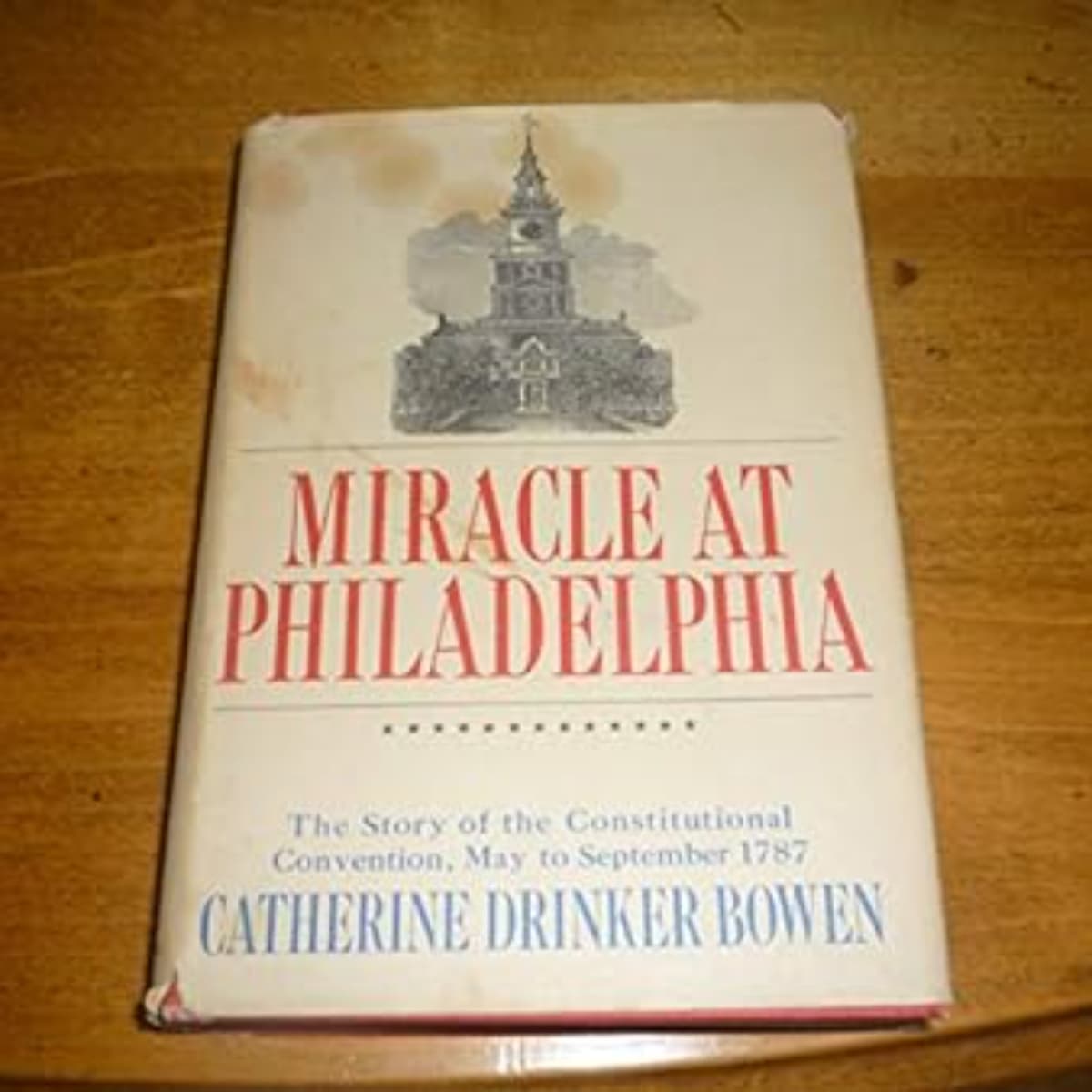
In "Miracle at Philadelphia," Catherine Drinker Bowen unveils the dramatic summer of 1787, when a group of visionary men gathered to reshape a nation. As the scent of liberty hung in the air, the Constitutional Convention became a battleground of ideas. Delegates like George Washington, Benjamin Franklin, and James Madison clashed and conspired, their debates echoing through the dimly lit halls.
Tensions soared, yet amid discontent, a miracle unfolded; they forged a document that would become the backbone of American democracy. Ultimately, the theme of resilience rises, illustrating that progress often emerges from discord. Through compromise and foresight, these founders crafted unity from diversity, demonstrating that even in times of strife, hope is a powerful force. Bowen's narrative not only chronicles a pivotal moment in history but serves as a timeless reminder of the strength found in collaboration and the bold pursuit of ideals.
Chapter 1:What Is Miracle At Philadelphia
"Miracle at Philadelphia" by Catherine Drinker Bowen is a historical account of the Constitutional Convention of 1787, where the U.S. Constitution was crafted. Here's a brief evaluation of the book based on the specified points:
1. Depth and Accuracy of Content: Bowen provides a thorough and well-researched narrative that captures the intricacies of the debates and discussions among the Founding Fathers. Her portrayal is generally accurate, making the historical events accessible to readers.
2. Originality: While the topic of the Constitutional Convention has been covered by other authors, Bowen's approach combines narrative storytelling with detailed historical analysis, giving her account a unique perspective.
3. Organization: The book is well-organized, leading readers through the events of the convention in a coherent manner. Bowen's chronological structure helps maintain clarity and facilitates comprehension of complex ideas.
4. Readability: Bowen writes in a clear and engaging style, making the book accessible to a wide range of readers, including those without a background in American history.
5. Inspirational Emotional Impact: The book evokes a sense of reverence for the founding principles of the United States, often portraying the delegates’ struggles and aspirations in a way that inspires a sense of patriotism and appreciation for democracy.
6. Cultural and Social Impact: "Miracle at Philadelphia" effectively illustrates the social and political contexts of the time, contributing to a better understanding of the foundations of American governance and its relevance today.
7. Attention to Detail: Bowen displays meticulous attention to historical details, including the personalities of the delegates and the legislative nuances of their debates, which enriches the narrative.
8. Theme and Message: Central themes include the balance between liberty and order, the importance of compromise in governance, and the visionary aspirations of the founders. Bowen's message highlights the fragility of democracy and the enduring relevance of the Constitution.
9. Critical Thinking: The book encourages readers to reflect on the ideological conflicts of the time and consider how those debates resonate with contemporary political issues, fostering critical engagement with historical content.
10. References: Bowen’s scholarship includes references to primary sources and historical documents, which enhances the credibility of her writing, though some may desire more extensive footnotes or bibliographic detail.
11. Creativity and Artistry: Bowen’s ability to weave history into a compelling narrative showcases her creativity. Her storytelling brings to life the personalities and drama of the convention, making it not just a historical account but also a captivating read.
In summary, "Miracle at Philadelphia" is regarded as an excellent work for its balance of depth, readability, and engaging storytelling. It remains a valuable resource for anyone interested in the founding of the United States and the principles that guide its governance.
Chapter 2:Miracle At Philadelphia chapters
"Miracle at Philadelphia" by Catherine Drinker Bowen is a historical account of the Constitutional Convention of 1787 and offers insights into the key events, debates, and figures that shaped the drafting of the United States Constitution. Below is a brief summary of the key chapters and themes in the book:
Chapter 1: The Background and Need for Change
The opening chapter discusses the state of America post-Revolution and the inefficacies of the Articles of Confederation. It highlights the necessity for a stronger federal government to maintain order and unity among the states.
Chapter 2: The Convention is Convened
This chapter details the convening of the Philadelphia Convention, including the delegates who attended and the challenges they faced regarding representation and state sovereignty. Key figures like George Washington, James Madison, and Benjamin Franklin are introduced.
Chapter 3: The Virginia Plan
The Virginia Plan is presented as a proposal for a new government, advocating for a bicameral legislature. This section focuses on the debates surrounding representation based on population and the power of the federal government.
Chapter 4: The New Jersey Plan
In contrast to the Virginia Plan, the New Jersey Plan suggests equal representation for each state regardless of size. Tensions rise as delegates disagree on the best approach to representation.
Chapter 5: Compromises and Agreements
The chapter elaborates on the Great Compromise (or Connecticut Compromise), which merges elements from both plans to create a bicameral legislature with proportional representation in the House and equal representation in the Senate.
Chapter 6: Slavery and Representation
This section addresses the contentious issue of slavery, particularly how slaves would be counted in terms of representation. The infamous Three-Fifths Compromise is discussed, showcasing the moral and political complexities of the time.
Chapter 7: The Executive Branch
The debates around creating a strong executive branch are highlighted. The chapter showcases the arguments for and against a singular presidency and the powers that should be vested in the executive.
Chapter 8: Ratification Debates
With the Constitution drafted, the chapter shifts to the ratification process. It covers the arguments from both Federalists and Anti-Federalists, and the intense discussions surrounding the need for a Bill of Rights.
Chapter 9: Legacy and Impact
The final chapter reflects on the legacy of the Constitutional Convention and the impact of the newly ratified Constitution on the United States. It considers the foresight of the founding fathers and the ongoing evolution of American democracy.
Themes
Throughout "Miracle at Philadelphia," key themes include compromise, the tension between state and federal power, and the struggle for balance between liberty and order. Bowen brings to life the personalities and ideologies that influenced the Constitution, painting a vivid picture of this pivotal moment in American history.
This summary encapsulates the essential elements of the book, highlighting its focus on the foundation of American government and the dynamic process that led to the creation of the Constitution. If you would like more detailed summaries of specific chapters or themes, feel free to ask!
The Miracle at Philadelphia: Crafting the Constitution
In the sweltering summer of 1787, as the cicadas buzzed and the air hung heavy with the scent of impending rain, a disparate group of men gathered in the heart of Philadelphia. What was once a bustling colonial city would become the cradle of a new nation, but only if they could navigate the choppy waters of disagreement and tumultuous debate. This was no ordinary assembly; it was a gathering of the Founding Fathers, men who would, in a few short months, lay the groundwork for the Constitution of the United States.
Catherine Drinker Bowen, in her gripping narrative "Miracle at Philadelphia," invites readers into this pivotal moment in history, painting vivid portraits of the delegates—each one a character in a dramatic story filled with tension, insight, and dedication to the founding principles of liberty and governance. Imagine Young James Madison, often dubbed the "Father of the Constitution," with his delicate features, peering over his spectacles as he jots down notes in the stuffy room. Opposite him, a robust George Washington, embodying experience and leadership, looks over the assembly with a commanding presence, his role as the unifying figure ever apparent.
The delegates brought with them not just their regional allegiances or individual ambitions, but a spectrum of ideas born from years of conflict, reflection, and fervent debate. South Carolina's fiery John Rutledge clashed with Massachusetts’ thoughtful Elbridge Gerry. The northern and southern states appeared poised on the brink of an ideological chasm, each convinced that their vision of governance—the balance of power, rights of the states, representation—was the key to a thriving republic.
As Bowen cleverly illustrates, the stakes could not have been higher. The Articles of Confederation, the flimsy framework that had held the fledgling nation together, was failing—states were bickering, commerce was stifled, and the threat of tyranny loomed large. The conveners understood that to realize the American dream, they needed a robust Constitution that could endure the test of time, yet their path was obscured by a fog of conflicting interests and political philosophies.
Bowen focuses on the intricate dance of compromise—an act of grace that transformed fervent disagreement into a unified doctrine. The Great Compromise, as it came to be known, was a turning point, where divergent ideas merged to form a bicameral legislature, balancing the interests of both populous and less-populous states. It was a moment of triumph when the delegates embraced the wisdom of negotiation and mutual respect, crafting agreements that resonated with the ideals of equity and representation.
"Ponder for a moment," she implores, "how fragile a miracle can be." It was more than just the drafting of laws; it was an act of faith—a belief in a rare alchemy of human cooperation, where history's most volatile ideas became the bedrock of a nation.
Throughout the deliberations, an unexpected warmth began to cloak the contentious atmosphere. As the days turned into long nights, and voices rose and fell, friendships emerged, underpinned by a shared commitment to a greater cause. It was here, in the heart of debates and disputes, that the essence of democracy itself was birthed—a tapestry woven from the threads of compromise, dialogue, and an unyielding pursuit of a more perfect union.
As the summer waned, on a fateful September day, the draft of the Constitution was finally completed. With quills poised and hearts racing, the delegates signed, realizing that their signatures would not merely ink a document; they would inscribe the future of a nation. In that moment, history transformed into legacy.
Bowen’s account of the Convention reminds us that the establishment of the Constitution was not simply a bureaucratic task but a miracle—a collaborative act of visionaries who dared to believe that a diverse collection of ideas could somehow converge into a shared identity.
“The Miracle at Philadelphia” serves not just as a captivating retelling of those events but also a poignant reminder of the power of dialogue and compromise. In a world that often feels fragmented, it invites readers to reflect upon the enduring relevance of those foundational principles, urging us to rediscover that spirit of collaboration in our own lives and communities.
So as you turn the final pages of this masterpiece, you are left not only with knowledge but with hope, ignited by the understanding that though paths to unity are riddled with obstacles, they are indeed possible—and may, at unexpected times, feel like a miracle.