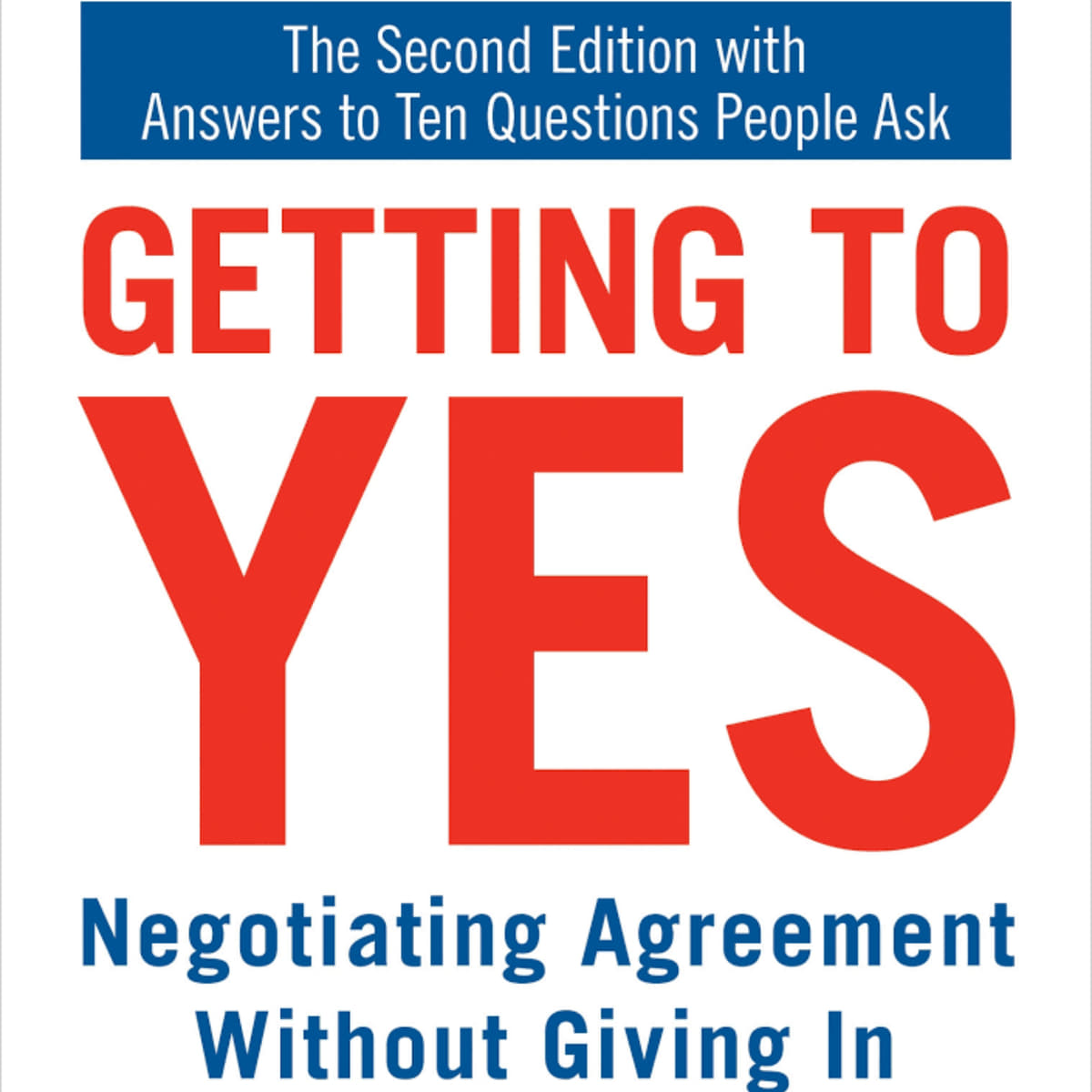
In the heart of a bustling city, two neighbors, Sarah and Tom, faced a dilemma: a towering fence divided their yards, creating tension instead of harmony. Inspired by Roger Fisher’s Getting to Yes, they sought a solution. Instead of engaging in a bitter battle, they learned to separate people from the problem. Sarah voiced her need for sunlight in her garden, while Tom shared his desire for privacy. They listened deeply, uncovering shared interests instead of rigid positions.
Through open communication, they brainstormed alternatives and finally settled on a beautiful lattice fence that provided both shade and serenity. This transformation highlighted the essence of principled negotiation: focusing on interests, generating options, and insisting on objective criteria. By turning conflict into collaboration, Sarah and Tom didn’t just mend their yards—they built a lasting friendship, illuminating the true power of finding common ground.
Chapter 1:What Is Getting To Yes
"Getting to Yes: Negotiating Agreement Without Giving In" by Roger Fisher and William Ury is a seminal book on negotiation techniques that emphasizes principled negotiation, which focuses on mutual gains rather than adversarial positioning. Here's an evaluation based on the specified aspects:
1. Depth and Accuracy of Content: The book provides a thorough exploration of negotiation principles backed by psychological insights and real-world application. Its core concepts are well-researched and applicable in various scenarios, making it both deep and accurate.
2. Originality: At the time of its publication, the principles cultivated a new approach to negotiation, moving beyond win-lose paradigms to focus on collaborative strategies. This original framework is still influential in negotiation literature today.
3. Organization: The book is well-structured, beginning with essential concepts and progressively delving into techniques and case studies. Each chapter builds on the previous one, making it easy to follow.
4. Readability: "Getting to Yes" is written in a clear and accessible style, making complex ideas understandable for a wide audience, including those without prior negotiation experience.
5. Inspirational Emotional Impact: The book inspires readers to adopt a more constructive view of negotiation, emphasizing cooperation over conflict. It empowers individuals by providing tools and mindset shifts that can improve personal and professional interactions.
6. Cultural and Social Impact: The book has had a significant influence across cultures, impacting how negotiations are approached in business, politics, and personal conflicts around the world. Its principles promote a more collaborative and less confrontational style of interaction.
7. Attention to Detail: The authors pay meticulous attention to illustrating each principle with examples, anecdotes, and practical tips, which enhances the application of the concepts presented.
8. Theme and Message: The central theme of the book is that successful negotiation involves seeking mutual benefit and maintaining relationships. The message advocates for problem-solving and understanding differing perspectives rather than competing.
9. Critical Thinking: The techniques outlined encourage critical thinking by pushing negotiators to analyze their interests and those of others. The "principled" approach fosters problem-solving rather than positional bargaining.
10. References: The book draws on various disciplines, including psychology, economics, and conflict resolution, and cites empirical studies and theoretical frameworks, lending credibility to its recommendations.
11. Creativity and Artistry: While not a work of artistic literature, Fisher and Ury creatively present negotiation principles through relatable stories and scenarios, making the theoretical concepts engaging and memorable.
In summary, "Getting to Yes" is widely regarded as a classic in the field of negotiation. It excels in depth, organization, readability, and its social impact, making it a valuable resource for anyone interested in improving their negotiation skills.

Chapter 2:Getting To Yes chapters
"Getting to Yes: Negotiating Agreement Without Giving In" is a seminal book on negotiation written by Roger Fisher, William Ury, and Bruce Patton. The book emphasizes a principled negotiation strategy that focuses on interests rather than positions. Here’s a brief summary of the key concepts from each chapter:
Chapter 1: Don't Bargain Over Positions
The authors argue against traditional positional bargaining, where each party takes a stance and negotiates back and forth. They suggest this method often leads to ineffective disputes and poor outcomes. Instead, they advocate for principled negotiation.
Chapter 2: Separate the People from the Problem
This chapter advises negotiators to focus on the issue at hand rather than the personalities involved. It emphasizes effective communication and addressing emotional factors, ensuring that personal relationships do not affect the negotiation process.
Chapter 3: Focus on Interests, Not Positions
The authors highlight the importance of identifying and addressing the underlying interests of each party rather than sticking to their stated positions. By exploring needs, desires, and concerns, parties can find mutually beneficial solutions that could satisfy both sides.
Chapter 4: Generate Options for Mutual Gain
In this chapter, Fisher and Ury encourage brainstorming various solutions before trying to reach an agreement. They suggest creating a wide range of options that could satisfy the interests of both parties, rather than settling for the first solution.
Chapter 5: Use Objective Criteria
The authors recommend relying on objective standards to resolve disputes. This involves using fair and impartial criteria to judge the merits of a solution, which helps both sides feel that the outcome is just and reasonable.
Chapter 6: What If They Are More Powerful?
This chapter addresses the dynamics of power in negotiations, emphasizing the importance of focusing on interests rather than becoming entrenched in positions. The authors provide strategies for dealing with more powerful negotiators without compromising on fairness.
Chapter 7: What If They Won't Play?
Fisher and Ury discuss tactics for dealing with uncooperative negotiators. They suggest maintaining a principled approach, exploring alternatives, and preparing for the possibility of walking away from the negotiation if it does not meet interests.
Chapter 8: What If They Use Dirty Tricks?
The authors provide guidance on how to identify and counteract dishonest or manipulative tactics used by other negotiators. They advocate for staying calm, addressing the behavior directly, and focusing on interests and standards.
Conclusion: A Better Way to Negotiate
In the concluding section, the authors summarize the principles of effective negotiation and stress the importance of collaboration for achieving satisfactory agreements. They encourage readers to practice these techniques in personal and professional contexts.
Overall, "Getting to Yes" presents a framework for negotiations that emphasizes collaboration, mutual respect, and problem-solving, promoting a strategy that seeks win-win outcomes rather than adversarial tactics.
Title: The Détente of the Mind: Negotiating Life with "Getting to Yes"
In a bustling city where dreams collided like skyscrapers in a storm, lived a young woman named Clara. Clara was ambitious and filled with ideas about changing the world, but there was one nagging problem: she was terrified of negotiating. Each encounter—be it with her landlord, her friends, or even the barista at her favorite café—felt like entering a minefield.
Then one windy Tuesday afternoon, Clara stumbled upon a quaint little bookstore. It was a treasure trove of stories, all waiting to be discovered. As she browsed through the aisles, one book caught her eye: "Getting to Yes: Negotiating Agreement without Giving In" by Roger Fisher and William Ury. With its bright blue cover and promises of negotiation empowerment, it seemed to leap off the shelf and into her hands.
As she devoured the book on her sunlit balcony, she found herself transported into a world of negotiation wisdom. Fisher and Ury introduced her to fundamental questions that shifted her entire perspective. Instead of seeing negotiation as a battle where one party emerges victorious while the other stands diminished, she learned that it could be a collaborative journey—a pathway to finding mutual gains.
“Separate the people from the problem,” one chapter declared, ringing in Clara’s ears. She imagined her previous conversations: the awkwardness with her landlord about rent increases, her hesitance in making plans with her friends. Flashes of frustration and misunderstandings bubbled to the surface. Fisher’s advice urged her to view the other party as an ally with their own interests, rather than an adversary determined to sabotage her.
With newfound understanding, Clara decided to test her skills. The next evening, she agreed to meet with her landlord to discuss the looming rent hike. Armed with her “Getting to Yes” knowledge, she approached the conversation differently. Instead of merely voicing her discomfort, Clara opened with empathy, saying, “I understand that costs are rising for everyone. Can we explore an arrangement that works for both of us?”
As the dialogue unfolded, Clara was surprised by the landlord's willingness to share his perspective. They discussed not just numbers but also his challenges as a property owner. This open communication allowed them to brainstorm solutions, and Clara left the meeting feeling empowered, having negotiated a reasonable compromise.
With each small success, her confidence blossomed. Clara began applying the principles of interest-based negotiation to other aspects of her life. While planning a road trip with friends, she encouraged everyone to voice their preferences openly, leading to a collaborative decision that left no one feeling sidelined. At work, she approached a colleague about sharing responsibilities on a project, framing it as an opportunity for both to shine rather than a power struggle over workload.
The more Clara practiced these skills, the more she realized the underlying truth of Fisher’s teachings: life’s myriad exchanges—whether with friends, family, or colleagues—did not have to be adversarial. She discovered the joy in finding win-win solutions where everyone’s interests were considered.
Becoming a negotiator in her own right, Clara even found herself initiating discussions for charitable endeavors in her community, rallying others around shared goals. Where once she saw negotiations as daunting, they now felt like an invitation to collaborate and connect.
One evening, Clara stood on her balcony, the setting sun painting the sky in hues of orange and purple, and reflected on her transformation. She had learned that the essence of reaching agreements wasn't just about the outcomes, but about nurturing relationships along the way. As Roger Fisher had so deftly illustrated, it was about principled negotiation—a process grounded in interests, not positions, that allowed her to face conflicts with clarity and compassion.
And thus, in the heart of the city, Clara had become not just a negotiator but a bridge-builder—a testament to the timeless wisdom gleaned from “Getting to Yes.” In a world brimming with potential conflicts, she had found a path that turned confrontation into connection, frustration into friendship, and negotiation into a celebration of shared humanity.
So, dear reader, as you navigate your own minefields, remember Clara’s journey. Embrace negotiation not as a battleground, but as an unfolding story waiting for your voice and vision—

Book https://www.bookey.app/book/getting-to-yes
Author https://www.bookey.app/book/getting-to-yes#Author
Quotes https://www.bookey.app/book/getting-to-yes/quote
The Art of Negotiating the Best Deal https://www.bookey.app/book/the-art-of-negotiating-the-best-deal
Youtube https://www.youtube.com/watch?v=_eH8zrwTSgk
Amazon https://www.amazon.com/Getting-Yes-Negotiating-Agreement-Without/dp/0143118757
Goodreads https://www.goodreads.com/book/show/313605.Getting_to_Yes