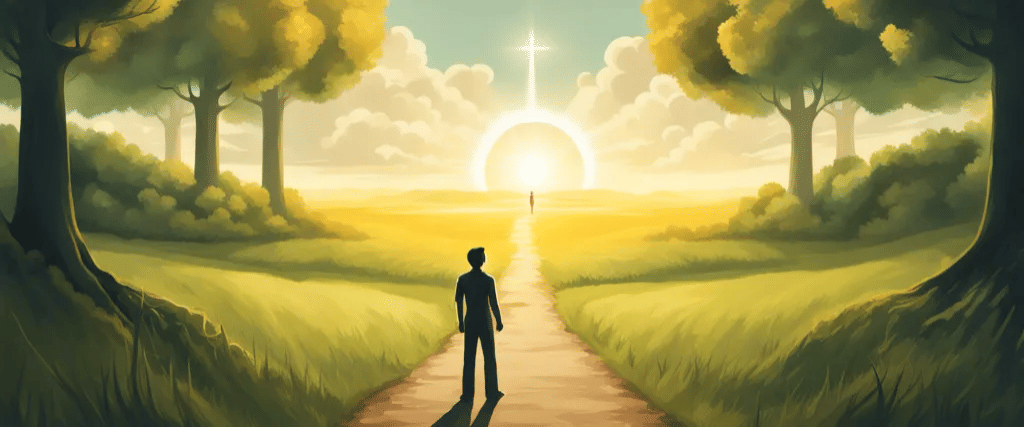
In a world divided between two types of games, James P. Carse invites us on a journey of revelation. Imagine life as a grand arena: on one side, finite games—competitive, structured, with winners and losers. Here, the goal is to win, and every move is calculated, often leaving relationships frayed in the pursuit of victory. But then, enter infinite games—where the objective is not to win, but to keep the game alive. In this realm, players collaborate, innovate, and embrace change. They understand that true fulfillment lies in the journey, not merely the destination. As Carse unfolds this compelling narrative, he challenges us to reflect: are we players in finite games, or will we choose the boundless possibilities of the infinite? Ultimately, it’s a dance of perspective, inviting us to redefine our roles in life and play. Embrace the infinite, and discover how to create a legacy that transcends mere winning.
Chapter 1:What Is Finite and Infinite Games
"Finite and Infinite Games" by James P. Carse: An Overview Based on Selected Criteria
1. Depth and Accuracy of Content: Carse's exploration of finite and infinite games delves deeply into philosophical concepts about life and human interaction. He raises critical questions about the nature of competition, purpose, and human relationships, providing a thoughtful framework that invites readers to reflect on their motivations. While some may argue that it lacks a rigorous philosophical pedigree, the depth of themes covered is significant.
2. Originality: The concept of finite and infinite games is a novel way to categorize human activities and motivations. Carse presents a unique lens through which to view everything from sports to relationships, encouraging readers to consider how their actions align with either finite (competitive and goal-oriented) or infinite (purpose-driven and expansive) perspectives. This originality has influenced various fields, from education to personal development.
3. Organization: The book is structured in a series of concise, digestible chapters that each tackle different aspects of the finite and infinite game framework. This organization aids clarity, although some readers may find the non-linear progression of ideas somewhat challenging.
4. Readability: Carse's writing is clear and accessible, with a poetic quality that makes complex ideas approachable. This readability contributes to the book's appeal, allowing a broad audience to engage with its concepts, though some philosophical jargon may require careful consideration.
5. Inspirational Emotional Impact: The book has inspired many readers to rethink their approaches to life, work, and relationships. By presenting life as a series of games—some meant to be won and others to be played for the joy of playing—Carse evokes a sense of possibility and purpose, encouraging individuals to seek deeper meaning.
6. Cultural and Social Impact: "Finite and Infinite Games" has resonated across various sectors, influencing business, education, and personal development. Its ideas have sparked discussions about collaboration versus competition and the importance of perspective in social interactions, promoting more holistic and constructive approaches to challenges.
7. Attention to Detail: Carse's arguments are often nuanced, with careful attention to the implications of finite versus infinite approaches. While the book may not include extensive empirical data or references, the details he provides in his illustrative examples reinforce his points effectively.
8. Theme and Message: The central theme revolves around the contrast between finite games, which are played for the sake of winning, and infinite games, which are played for the sake of continuing the play. This distinction invites readers to question their life choices and engage in more meaningful, expansive pursuits.
9. Critical Thinking: The book challenges readers to engage in critical self-reflection about their values and purposes. By presenting two contrasting outlooks, Carse encourages a more expansive view of life that transcends mere achievement and competition, stoking the reader’s intellectual curiosity.
10. References: While the book is more philosophical and anecdotal than academic, it does not heavily cite traditional sources. Instead, it relies on the richness of its concepts to convey its messages, which may be a drawback for those seeking a more rigorously referenced argument.
11. Creativity and Artistry: Carse’s use of metaphor and narration reflects a creative approach to philosophical discourse. He invites readers into a more imaginative interpretation of life, using games as a metaphor for human experience, which enhances its engaging nature.
Conclusion: Overall, "Finite and Infinite Games" by James P. Carse is a thought-provoking and original work that encourages introspection and reevaluation of one’s life approach. It draws readers in with its clarity, creativity, and emotional resonance, encouraging profound conversations about purpose and meaning in the human experience.
Chapter 2:Finite and Infinite Games chapters
"Finite and Infinite Games" by James P. Carse explores two types of games that represent different approaches to life, relationships, and interaction. Here’s a brief summary of the main concepts in the book, sectioned by the thematic divisions rather than chapter-by-chapter due to the book's philosophical nature:
Overview of Key Concepts:
1. Finite Games:
- Definition: Finite games are played for the purpose of winning. They have fixed rules, start and end points, and clear winners and losers. Examples include sports, board games, and competitions.
- Characteristics:
- Participants engage with the objective of ending the game with a victory.
- The strategies and tactics are often competitive and involve a sense of rivalry.
- The focus is on outcomes and achievements.
2. Infinite Games:
- Definition: Infinite games are played for the purpose of continuing the play. Their aim is not to win but to perpetuate the game. These games can evolve and adapt, transcending time and specific outcomes.
- Characteristics:
- Emphasis is placed on growth, collaboration, and the enhancement of human experience.
- There are no fixed rules; instead, the participants create and modify the rules as they go along.
- The focus is on the journey, relationships, and long-term engagement.
3. Comparison and Contrast:
- Carse delves into the philosophical implications of both types of games. Finite games can often lead to conflict, domination, and rigid frameworks, while infinite games encourage creativity, flexibility, and communal growth.
- The idea of purpose plays a significant role—finite games have a defined endpoint, whereas infinite games focus on a continual process of development and engagement.
4. Life Applications:
- Carse extends his ideas into various aspects of life including business, education, relationships, and spirituality. He suggests that adopting an infinite mindset can lead to more meaningful interactions and experiences.
- The book urges readers to reflect on their own predispositions towards finite or infinite games and invites a shift toward an infinite game mentality to foster deeper connections and holistic success.
5. Philosophical Implications:
- Carse integrates elements of existential thought, stressing that the meanings we create in life are shaped by our choices in how we choose to 'play our games.'
- The importance of intention and perspective in shaping our experience of the world is a thread throughout the text.
Conclusion:
"Finite and Infinite Games" encourages readers to reconsider their approaches to challenges and interactions in life. By distinguishing between finite competition and infinite collaboration, Carse invites us to embrace a larger perspective that values processes over outcomes and relationships over rivalry. This shift has the potential to transform personal, professional, and societal dynamics in profound ways.
Title: The Game of Life: Choosing Between Finite and Infinite Play
Once upon a time in the heart of a sprawling city, there lived two young friends, Maya and Asher. They were not just companions but seasoned players in the grand game of life—a game that unfolded differently depending on the perspective one chose to embrace. One sunny afternoon, as they lounged on the scratchy grass of their favorite park, the wind played a gentle tune, rustling the leaves overhead. It was the perfect moment for a deep conversation.
Maya had recently picked up a fascinating book titled Finite and Infinite Games by James P. Carse, and she couldn’t contain her excitement. "Asher, have you ever thought about how life itself is like a game?" she asked, her eyes sparkling with curiosity.
Asher, intrigued, tilted his head. "What do you mean? Is it like sports?”
“Not just sports,” Maya replied, leaning forward. “Carse argues that there are two types of games in life: finite games and infinite games. Let me explain.”
In the world of finite games, Maya continued, the rules are strict, the players defined, and there is always a clear winner and loser. She likened it to a soccer match, where two teams battle it out on the field, fighting for a single goal—the championship trophy. "Finite players want to win," she said, "and once the game ends, it’s over. The victors celebrate while the defeated lick their wounds, waiting for another chance to compete.”
Asher nodded, but a hint of confusion creased his brow. “And what’s the alternative? An infinite game?”
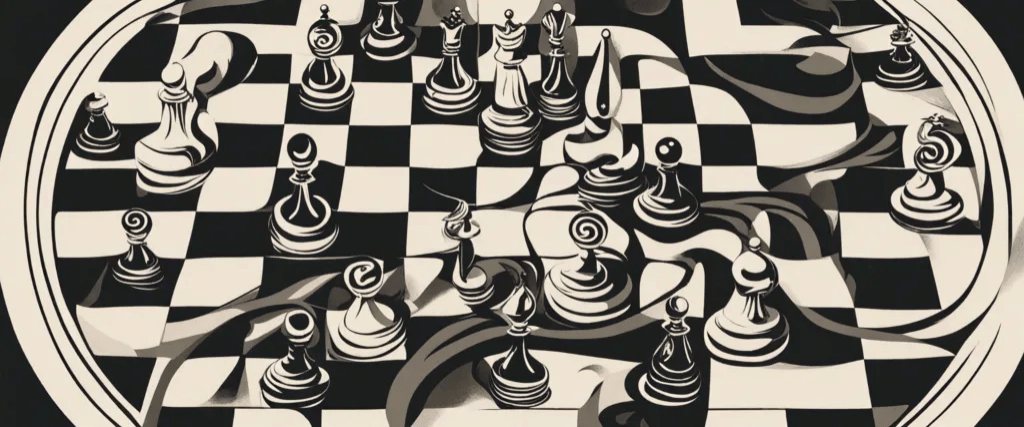
Maya’s face lit up. “That’s where it gets really interesting! In infinite games, the objective isn’t to win but to keep playing. It’s about growth, connection, and evolving. Imagine a beloved game of chess: even if one player wins, both players learn something new. They develop strategies, improve their skills, and strengthen their bond over the board.”
As the sun dipped lower in the sky, casting a warm golden light over them, Maya saw a reflection of acknowledgment in Asher’s eyes. “So, it’s not just about winning or losing; it’s about continuing the journey and sharing experiences, right?”
“Exactly!” Maya exclaimed. “Finite players are fixed in their mindset, focusing solely on conquering the moment. But infinite players embrace the journey, welcoming challenges and cherishing relationships. Think of it this way: in a finite game, you might be the best at something, but in an infinite game, you strive to be the best version of yourself.”
Asher leaned back, absorbing the weight of Maya's words. “Does that mean in our lives, we face both types of games? Sometimes we play to win, and sometimes we play just to grow?”
Maya smiled, sensing the epiphany dawning upon her friend. “Precisely! In our careers, we might engage in finite games, competing for promotions and accolades. But in other areas—like friendships, family, and passions—we ought to embrace the infinite. It challenges us to reframe our perspectives, shifting from a mindset of scarcity, where we fear failure, to one of abundance, where we celebrate every moment.”
As the shadows lengthened and the sun began its descent, Asher pondered. “What about conflicts and competition? Can’t those exist in an infinite game?”
Maya nodded thoughtfully. “Absolutely. Conflicts are part of the infinite play. However, they shouldn't be seen as roadblocks but as opportunities for dialogue, understanding, and growth. Winning a disagreement might feel good momentarily, but resolving it can lead to deeper connections, fostering an environment where creativity thrives.”
As the sun finally kissed the horizon, casting brilliant shades of orange and pink across the sky, Maya and Asher stood up, ready to leave the park. “So,” Asher said, a smile tugging at his lips, “what kind of games do you want to play from now on?”
Maya’s laughter rang like a bell through the evening air. “The infinite kind, of course! Every day is a new chance to explore, learn, and build meaningful connections with others.”
Hand in hand, they walked away from the park, not as mere players seeking victory, but as adventurers fully engaged in the infinite game of life—celebrating every step of the journey together.
And that, dear reader, is the pulse of Finite and Infinite Games: a gentle reminder that life is a beautiful tapestry of experiences, woven with threads of both victory and growth. Choose wisely how you play, and remember that the ultimate prize lies not in winning, but in the joy of playing.
Book https://www.bookey.app/book/finite-and-infinite-games
Author https://www.bookey.app/quote-author/james-p.-carse
Quotes https://www.bookey.app/book/finite-and-infinite-games/quote
Suggested
Youtube https://www.youtube.com/watch?v=I5vvnV1JdkY
Amazon https://www.amazon.com/Finite-Infinite-Games-James-Carse/dp/1476731713
Goodreads https://www.goodreads.com/work/quotes/658469-finite-and-infinite-games