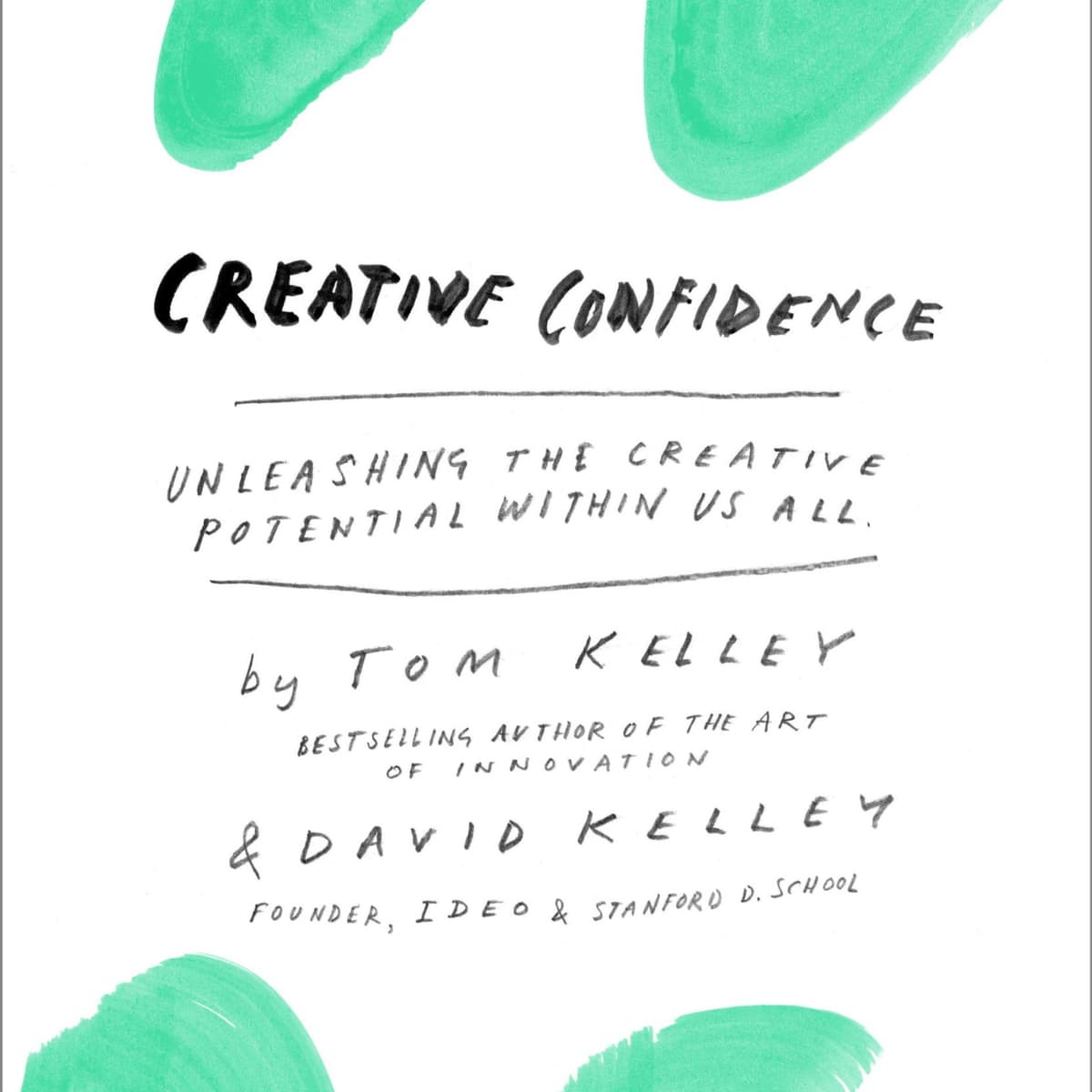
In the heart of Silicon Valley, two brothers, Tom and David Kelley, discovered a secret: creativity isn’t just for artists or innovators—it's a birthright. In "Creative Confidence," they unveil the enchanting journey of transforming doubt into daring. Through inspiring tales of brave thinkers and bold makers, they reveal that everyone possesses the spark of creativity, waiting to ignite. They challenge the fear of failure, urging us to embrace exploration, experimentation, and play. The Kelleys share practical strategies to cultivate a creative mindset, showing that confidence breeds innovation. As you turn each page, you’re invited to unlock your potential, reminding you that ideas are not just dreams but possibilities waiting to flourish. So, take a leap, let your imagination soar, and remember: with a sprinkle of confidence, you can create wonders beyond your wildest visions.
Chapter 1:What Is Creative Confidence
Creative Confidence refers to the belief in one’s ability to generate innovative ideas, solve problems creatively, and take risks in the creative process. It emphasizes the notion that everyone has the potential to be creative and that this confidence can be cultivated and developed.
Evaluation of "Creative Confidence" by Tom Kelley and David Kelley
1. Depth and Accuracy of Content: The book offers in-depth insights into the principles of design thinking and creativity, drawing from real-world experiences and case studies. It accurately reflects the importance of fostering creativity not just in professions associated with design but in everyday life.
2. Originality: "Creative Confidence" presents original ideas about creativity being a skill that can be developed rather than an innate talent. It challenges conventional wisdom about creativity and redefines it through practical applications.
3. Organization: The book is well-structured, with clear chapters that logically flow from one concept to another. Each section builds upon the previous ones, helping the reader understand how to apply the ideas in various contexts.
4. Readability: The writing style is accessible and engaging, making complex ideas straightforward. The use of anecdotes and relatable examples enhances understanding and keeps readers engaged.
5. Inspirational Emotional Impact: The book is motivational and encourages readers to embrace their creative potential. It shares uplifting stories of individuals and organizations that have successfully harnessed creativity, inspiring readers to take action.
6. Cultural and Social Impact: The concepts discussed in the book have broad cultural implications, emphasizing the importance of creativity in addressing social issues and improving life quality. It encourages a shift in mindset about how creativity is valued in educational and workplace settings.
7. Attention to Detail: The authors pay careful attention to the details of design thinking processes and how they can be implemented. They provide actionable strategies, which are detailed enough for practical application without being overwhelming.
8. Theme and Message: The central theme of the book revolves around unlocking creative potential in everyone. It conveys a positive and empowering message, reinforcing that creativity is not limited to artistic fields but is essential in all areas of life.
9. Critical Thinking: The book prompts readers to think critically about their own creative blocks and encourages questioning assumptions that inhibit creativity. It provides frameworks for evaluating and improving one’s creative processes.
10. References: While not heavily academic, the book does reference various studies, examples, and real-life applications of creative thinking, grounding its points in observed evidence.
11. Creativity and Artistry: The writing style and illustrative examples embody creativity, showcasing the authors’ understanding of artistic expression as a tool for innovation. The use of engaging visuals and stories adds an artistic touch to the content.
Conclusion
Overall, "Creative Confidence" by Tom and David Kelley is a highly regarded book that explores the essence of creativity in a comprehensive and accessible manner. It inspires readers to nurture their creative abilities, making it an influential resource for anyone looking to enhance their creative skills and confidence.

Chapter 2:Creative Confidence chapters
"Creative Confidence: Unleashing the Creative Potential Within Us All" by Tom Kelley and David Kelley explores the idea that everyone has creative potential and provides insights and strategies to cultivate and harness that creativity. Below is a summary of some of the key themes and concepts from the book's chapters:
Introduction
- Creativity is universal: The authors emphasize that creativity is not limited to artists or designers; it exists within everyone.
- Creative confidence: The notion that believing in one's own creative abilities is crucial to unlocking potential and innovating effectively.
Chapter 1: The Creative Mindset
- Defining creativity: Creativity isn't just about being artistic; it's about problem-solving and finding innovative solutions.
- Fear of failure: Discusses how fear can stifle creativity and the importance of embracing change and taking risks.
Chapter 2: The Power of Believing in Yourself
- Self-efficacy: The belief in one’s capabilities can significantly impact one’s ability to create. Personal stories and research highlight how confidence fuels creativity.
- Encouragement and support: The role of environment, mentors, and support systems in strengthening creative confidence.
Chapter 3: Building Creative Confidence
- Iterative process: Emphasizes experimentation and iteration as essential parts of the creative process.
- Mindset shifts: Techniques for shifting from a fixed mindset to a growth mindset, fostering an openness to learning and creativity.
Chapter 4: Creative Collaboration
- Team dynamics: The benefits of collaboration in sparking creativity and innovation.
- Diverse perspectives: How bringing together a diverse range of ideas and experiences can lead to more innovative solutions.
Chapter 5: Inspiration and Ideation
- Sources of inspiration: Identifying where ideas come from and how to cultivate an environment where innovation can thrive.
- Techniques for ideation: Practical methods such as brainstorming and design thinking that encourage creative thinking and problem-solving.
Chapter 6: Overcoming Barriers to Creativity
- Identifying obstacles: Discusses common obstacles to creativity, such as organizational culture, fear of judgment, and mental blocks.
- Strategies to overcome fears: Techniques for pushing past these barriers to unleash creative potential.
Chapter 7: Taking Action
- Prototyping and experimenting: Encourages readers to take tangible steps toward fulfilling their creative ideas, using prototyping as a way to bring concepts to life.
- Real-world applications: Examples from companies and individuals who have successfully implemented creative solutions.
Conclusion: Becoming a Creative Leader
- Encouraging creativity in others: The role of leaders and mentors in fostering a culture of creativity.
- Continuous improvement: The journey of creativity is ongoing, requiring consistent effort and openness to new ideas.
Throughout the book, the Kelleys share anecdotes, research findings, and practical exercises to help readers understand and unlock their creative potential, reinforcing that creativity can be developed and harnessed both personally and professionally. The overarching message is that anyone can cultivate "creative confidence" and make a difference through innovation and creativity.
Embracing the Spark: A Journey into Creative Confidence
Once upon a time, in a bustling town filled with the hum of ambition and dreams, there lived a young woman named Lila. Lila worked in a small design firm, surrounded by colleagues who constantly churned out innovative ideas and remarkable designs. Yet, in the shadow of her brilliant peers, Lila found herself caught in a web of self-doubt. She saw creativity as a rare gift bestowed upon a select few—an elusive spark that flickered in others but seemed extinguished within her.
One gray afternoon, as the clouds hung heavy outside, Lila stumbled upon a small book nestled in the corner of the local library—a book that bore the intriguing title Creative Confidence by Tom Kelley and his brother David Kelley. Drawn by an unexplainable force, she decided to borrow it, not knowing that it would become a catalyst for her transformation.
As she turned the pages, Lila was immersed in a world that challenged her perception of creativity. The Kelley brothers told stories of innovators, designers, and everyday people who had dared to embrace their creative instincts. One story, in particular, struck a chord with her: it was about a group of engineers who had turned a mundane office space into a vibrant playground of ideas. They built prototypes from discarded materials, experimented with outlandish concepts, and learned to celebrate failure as a steppingstone rather than a stumbling block.
It dawned on Lila then, like the first rays of sunlight piercing through the clouds. She realized she had been limiting herself, confined by the belief that creativity was a luxury rather than a fundamental human tool. The Kelleys encouraged readers to view the world through a different lens—one where everyone holds the potential for creative problem-solving.
Fuelled by this newfound inspiration, Lila set out on her own journey to cultivate her creative confidence. She began to embrace her ideas, no matter how unconventional they seemed. At first, it felt daunting; after all, the fear of judgment loomed like a dark cloud. But slowly, she learned to share her thoughts with her colleagues, trying to create a safe space for collaboration. Like seeds planted in spring, her ideas began to grow—budding into projects that sparked excitement and enthusiasm.
The book continually emphasized a crucial principle: "fail fast, succeed sooner." Lila took this mantra to heart, understanding that failure was not the end of the line, but rather, part of the creative process. She started a project called "Idea Jams" in her firm, where every week her colleagues would gather to brainstorm. Ideas overflowed like a fountain, and to her amazement, each so-called ‘bad’ idea often led to unexpected breakthroughs.
One stormy evening, inspired by the book’s lessons, Lila tackled a project that had long plagued her team—a user interface design for a client whose requirements seemed impossible to meet. With her creativity unfettered, she initiated a brainstorming session, employing ideation techniques the Kelleys had described. Amid laughter and bold sketches, her colleagues became energized, and together, they crafted a solution that was not only functional but delightfully engaging.
The client loved it, and as Lila basked in the glow of their praise, she realized something profound: her journey into creative confidence had not just transformed her perspective; it had also inspired the people around her. They began to embrace their creative sides too—exploring, experimenting, and innovating in ways they had never imagined before.
As weeks turned into months, Lila’s transformation became a beacon of hope for her colleagues. The design firm blossomed into a thriving environment where every voice mattered, and creativity reigned supreme. It had become a place where fear of failure was replaced with a zest for exploration—an embodiment of the creative confidence that the Kelleys championed.
And so, in a town bustling with ambition, Lila became a storyteller of her own. She shared her journey, echoing the Kelleys' wisdom to many others who felt stifled by doubt. Under her influence, a community emerged—a community that cherished the belief that creativity lies not within a select few but within everyone, waiting to be ignited.
In the very heart of that town, the Kelleys’ message resonated—a timeless reminder that creativity is not just the domain of artists and designers; it is the lifeblood of innovation, compassion, and resilience. With creative confidence, the world is not just seen through a lens of possibility; it is painted in vibrant colors for everyone to explore.
The End
Lila’s story teaches us that sparking our creative confidence can lead to remarkable outcomes—not just in our work, but also in our daily lives. When we embrace our creativity, we invite collaboration, celebrate our failures, and ultimately transform ourselves and our communities, igniting a flow of ideas that can change the world. Would you embark on your own journey to unlock your creative potential? The adventure awaits.

Book https://www.bookey.app/book/creative-confidence
Author https://www.bookey.app/quote-author/tom-kelly
Quotes https://www.bookey.app/book/creative-confidence/quote
Suggested
Youtube https://www.youtube.com/watch?v=KEkbk-M5o8Q
Amazon https://www.amazon.com/Creative-Confidence-Unleashing-Potential-Within/dp/038534936X
Goodreads https://www.goodreads.com/book/show/17288649-creative-confidence