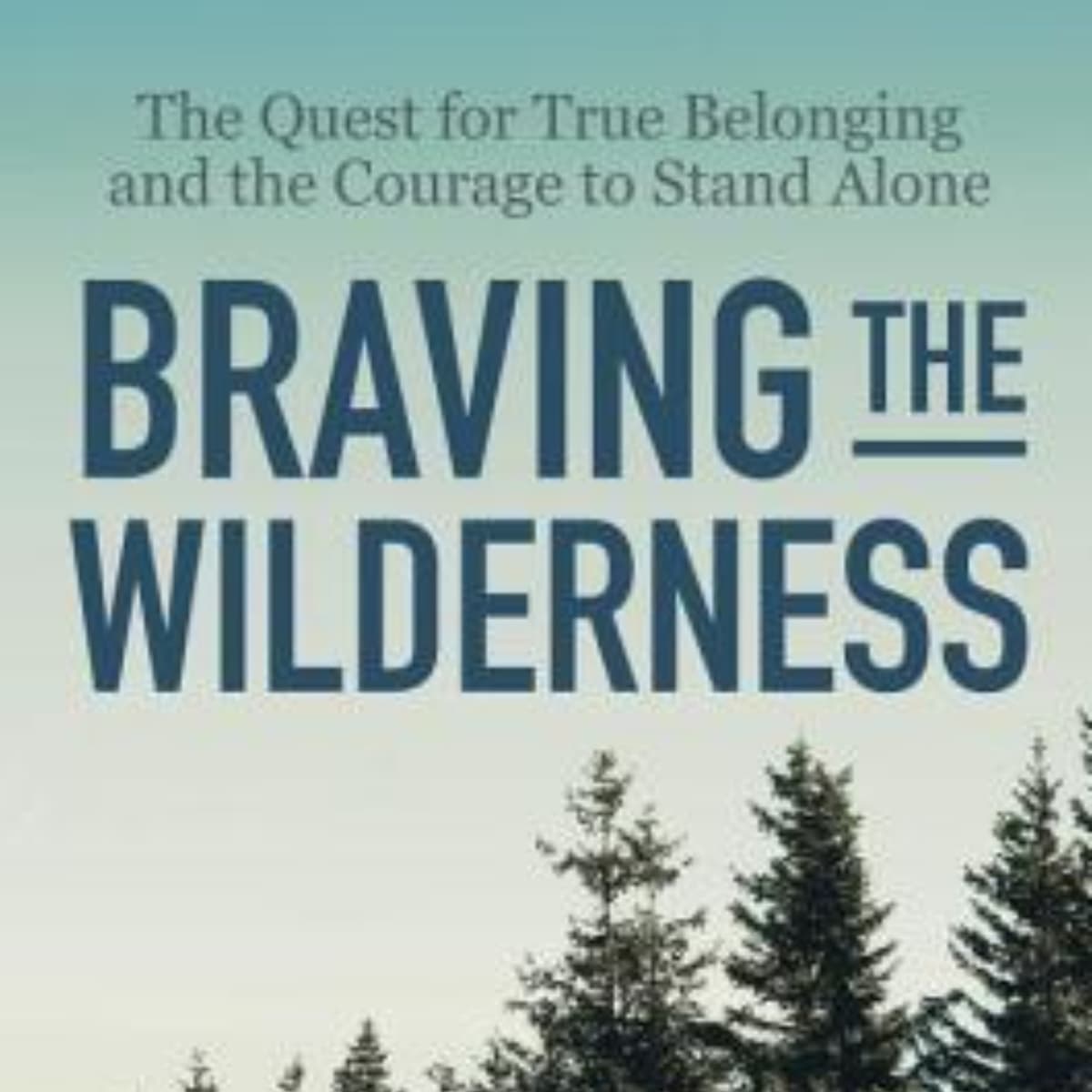
In "Braving the Wilderness," Brené Brown invites us on a journey of self-discovery and connection in a world that often feels divided. Imagine standing at the edge of a vast wilderness, unsure and vulnerable; this is where true belonging begins. Brown teaches us that to belong authentically, we must first belong to ourselves, embracing our uniqueness and embracing our fears. She emphasizes the courage it takes to step into the unknown, where societal pressures fade and genuine connection thrives. With stories of resilience and heartfelt wisdom, Brown illustrates that the wilderness is not a lonely place, but a realm where we find our voice and build community. Ultimately, it’s about daring to be seen and standing firm in our values, igniting the flame of true belonging both within ourselves and with others. Embrace the wilderness; it’s where the heart finds its home.
Chapter 1:What Is Braving the Wilderness
"Braving the Wilderness" by Brené Brown: A Brief Evaluation
1. Depth and Accuracy of Content : Brené Brown draws on her extensive research in sociology and psychology to explore themes of belonging, courage, and vulnerability. The content is rich in insights and supported by evidence, providing readers with both depth and contextual understanding.
2. Originality : The book uniquely addresses the concept of true belonging as a practice rather than a destination. Brown’s perspective on solitude and community is fresh, pushing readers to rethink their relationships and societal engagement.
3. Organization : Brown structures the book in a way that flows logically, guiding the reader through her ideas with clear sections and chapters that build on one another. The organization allows for easy navigation of complex concepts.
4. Readability : The writing style is accessible and conversational, making complex ideas more relatable. Brown employs anecdotes and storytelling, which enhance readability and engagement.
5. Inspirational Emotional Impact : Brown’s work resonates emotionally, encouraging readers to embrace vulnerability and seek authentic connections. Many find her personal stories and insights empowering.
6. Cultural and Social Impact : The book prompts important discussions about belonging in various social contexts, influencing how individuals perceive community, leadership, and inclusivity in modern society.
7. Attention to Detail : Brown’s attention to detail in presenting research findings, personal anecdotes, and societal observations adds credibility and richness to her arguments, though some argue that further empirical backing could enhance her points.
8. Theme and Message : The central theme revolves around the idea of belonging, courage, and self-acceptance. Brown’s message encourages individuals to navigate their own vulnerabilities and embrace unique identities.
9. Critical Thinking : While the book invites reflection on personal beliefs and behaviors regarding belonging, its reliance on personal narrative may lead some readers to prefer a more academically rigorous approach. However, it successfully prompts critical self-reflection.
10. References : Brown cites relevant research and personal experiences throughout, establishing a foundation for her claims. However, some readers might desire more extensive formal references to academic studies.
11. Creativity and Artistry : Brown exhibits creativity in her narrative style, using relatable metaphors and engaging language. Her storytelling prowess elevates her messaging, making academic content more approachable.
Conclusion : Overall, "Braving the Wilderness" is a thoughtful and emotionally impactful work that combines personal narrative with research, fostering discussion on belonging and self-acceptance. Its strengths include accessibility and relatable content, though its reliance on personal experience over rigorous academic references may appeal differently to various audiences.

Chapter 2:Braving the Wilderness chapters
"Braving the Wilderness: The Quest for True Belonging" by Brené Brown explores the concept of belonging and the importance of authenticity, courage, and vulnerability in our lives. Here's a summary of the key themes and concepts presented in each chapter:
Introduction
Brown introduces the idea of "true belonging," emphasizing that it requires us to be brave and authentic. It's not about fitting in, but about being who we truly are and connecting with others on a deeper level.
Chapter 1: The Quest for True Belonging
Brown discusses how cultural norms and societal pressures can make us feel isolated. She emphasizes the importance of belonging and encourages readers to embrace their individuality and vulnerability.
Chapter 2: The Courage to Stand Alone
Here, Brown explores the idea of standing alone in one’s beliefs, even when it's uncomfortable. She advocates for courage and self-acceptance and discusses the importance of having a strong sense of self in order to foster genuine connections.
Chapter 3: The Perils of Fitting In
This chapter delves into the risks associated with trying to fit in at the expense of our true selves. Brown points out that fitting in often leads to disconnection and loneliness, while true belonging requires honesty and authenticity.
Chapter 4: Braving the Wilderness
Brown introduces the concept of "the wilderness" as a metaphor for the difficult journey toward true belonging. She discusses what it means to "brave the wilderness" by embracing discomfort, facing fear, and expressing oneself fully.
Chapter 5: The Four Elements of True Belonging
Brown identifies four elements essential to achieving true belonging: People Are Hard to Hate Close Up , Speak Truth to Bullshit , Hold Hands with Strangers , and Strong Back, Soft Front, Wild Heart . Each element provides insights into fostering genuine connections.
Chapter 6: Daring to Belong
Brown encourages readers to take risks in their relationships and communities. She urges individuals to cultivate their courage and vulnerability to forge deeper connections and create a sense of belonging.
Chapter 7: Belonging Beyond the Border
In the final chapter, Brown reflects on the idea of inclusion across diverse communities and encourages embracing differences to build a more connected world. She emphasizes that true belonging involves understanding and valuing each other’s perspectives.
Conclusion
Brown concludes by highlighting the importance of being authentic and brave in our journey for belonging. She emphasizes that stepping into our vulnerability is essential for forging meaningful connections and discovering our own sense of belonging.
Overall, "Braving the Wilderness" encourages readers to embrace vulnerability, practice authenticity, and take brave steps toward creating true belonging in their lives and communities.
In a world pulsating with noise—where the chatter of social media can drown out the sound of our own thoughts—there sows a yearning, a longing to belong. Brené Brown, a researcher and pioneer in the study of vulnerability, challenges us to explore this theme in her transformative book, Braving the Wilderness . It is a journey not to fit in, but to truly belong, and to embrace the courage required to stand alone.
Imagine a vast, sunlit wilderness—a place vibrant with colors, sounds, and the scent of pine. This wilderness is not just an outer landscape, but an inner terrain where each of us grapples with our true selves in moments of solitude. As we step into this wild expanse, we find ourselves at a crucial crossroads: the path of conformity that leads to a crowded, comfortable conformity, or the uncharted path of authenticity that beckons us into the unknown.
Brown sets the stage with a powerful story, one she experienced during her own quest for connection. Picture her as a lone traveler, standing at the edge of a forest, grappling with feelings of loneliness and doubt. She shares her fears of vulnerability and the echo of uncertainty that lingered. Yet, amidst the shadows of doubt, she discovered a flicker of strength within—a call to dare to be seen, to engage honestly with the world around her.
The wilderness is both a metaphor and a reality. It is a call for us to strip away the layers of pretense that society drapes over us, leaving us burdened and lost. Brown illustrates how true belonging requires us to be brave enough to show up and be who we are, even when it feels uncomfortable. It is here, in the vulnerable space between isolation and acceptance, that we discover the beauty of being ourselves—flaws and all.
As we stroll through the pages of Braving the Wilderness , we stumble upon key points that resonate deeply. One pivotal lesson is the importance of self-acceptance, a gift we often forget to give ourselves. Brown reveals the life-changing realization that belonging starts from within. Much like a tree rooted in rich soil, it is through our connection to ourselves that we can grow stronger and authentically connect with others.
Moreover, Brown emphasizes the significance of courage—the audacity to stand alone, to speak our truth, and to embrace the wilderness of our lives. She insists that we will inevitably face discomfort along the way, but it is through these moments of tribulation that we cultivate resilience. Each time we choose sincerity over safety, we break the shackles of fear that keep us confined.
The wilderness also beckons us to confront a tough but liberating question: what do we really value? Brown encourages us to define our values as our compass, guiding us through the tumultuous terrains of life. By anchoring ourselves in these core beliefs, we can gracefully navigate relationships, setting boundaries that allow us to honor our authenticity.
In her closing chapters, Brown brings forth a powerful vision of what it means to create a sense of belonging within communities. Here lies an invitation for readers to become ‘brave leaders’ who champion inclusivity and compassion. When we gather in fellowship—held by the ties of shared values and mutual respect—the wilderness transforms into a place of vibrant connection and deep understanding.
As you turn the final pages of Braving the Wilderness , you feel a familiarity with the spirit of the journey. It whispers that while the wilderness may feel daunting at times, it is also a sanctuary for growth, where belonging is not just an aspiration but a heartfelt truth. By embracing the wilderness within us and around us, we find that the courage to be ourselves paves the way for genuine connection and belonging—not just for ourselves, but for others navigating their own wild paths.

Book https://www.bookey.app/book/braving-the-wilderness
Arthor https://www.bookey.app/quote-author/bren%C3%A9-brown
Quotes https://www.bookey.app/quote-book/braving-the-wilderness
YouTuBe https://m.youtube.com/watch?v=A9FopgKyAfI&t=0s
Amazon https://www.amazon.com/Braving-Wilderness-Quest-Belonging-Courage/dp/0812995848
Goodreads https://www.goodreads.com/book/show/34565022-braving-the-wilderness