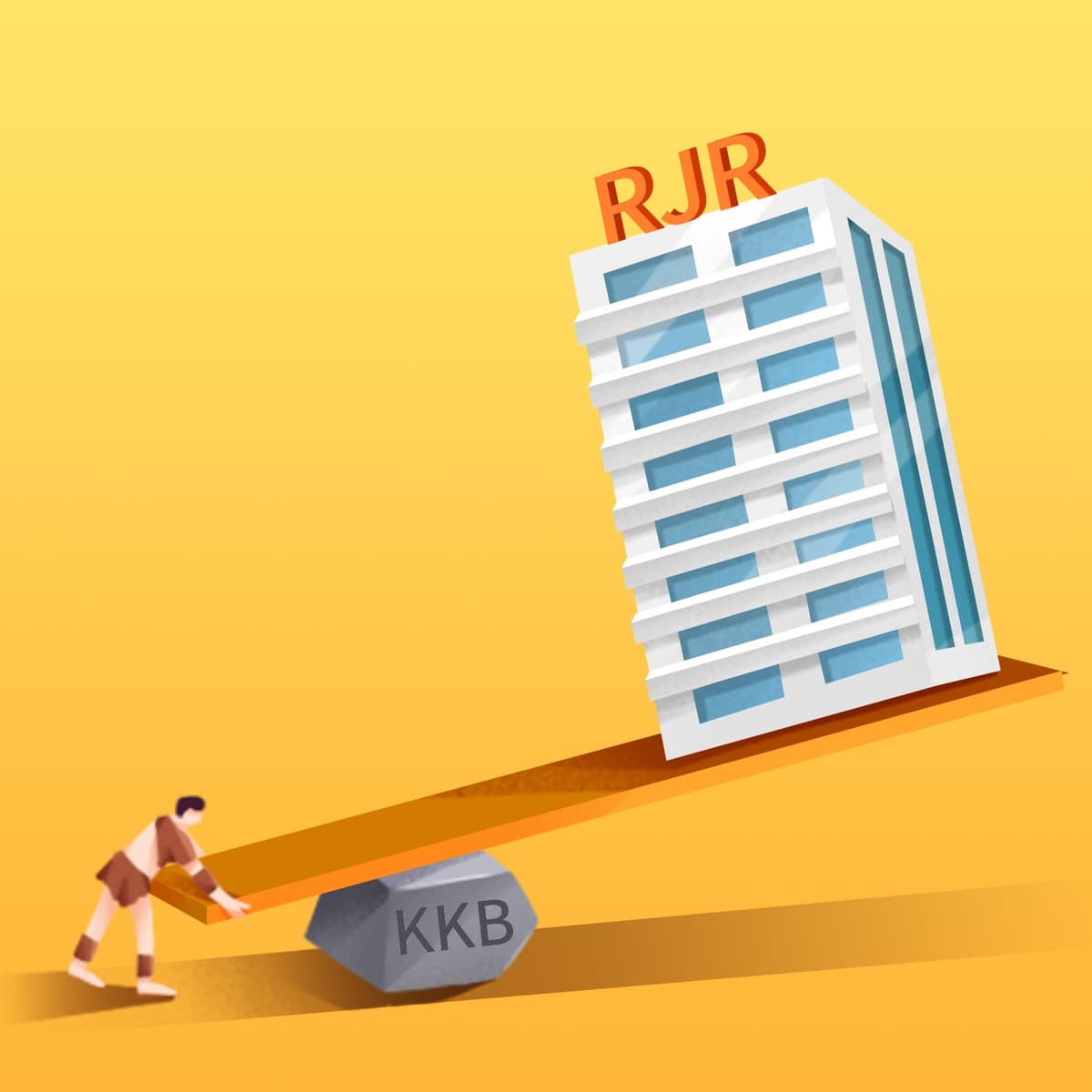
Chapter 1:Summary of the Barbarians At The Gate
"Barbarians At The Gate" by Bryan Burrough is a nonfiction book that delves into the high-stakes takeover battle for RJR Nabisco in the late 1980s. It tells the story of how the company's CEO F. Ross Johnson, along with a group of Wall Street financiers, orchestrated a leveraged buyout (LBO) of RJR Nabisco, which was then the largest LBO in history.
The book provides a comprehensive account of the events leading up to the takeover, the intense negotiations and bidding war between various groups, and the final outcome. Burrough interviews key players involved in the deal, providing insights into their motivations, strategies, and the complex financial mechanisms used to finance the buyout.
Throughout the book, Burrough sheds light on the greed, ego, and corporate excesses prevalent in the 1980s, as well as the power dynamics within the financial sector. He exposes the questionable tactics employed by Johnson and his team to inflate the company's stock price, increase their own wealth, and ultimately sell off RJR Nabisco for a substantial profit.
The narrative also delves into the personal lives of the major characters, highlighting the pressures and stress they faced amid the intense deal-making process. Burrough also explores the larger societal and economic implications of leveraged buyouts, including the impact on workers, communities, and the American economy.
Overall, "Barbarians At The Gate" provides a gripping and detailed account of one of Wall Street's most notorious takeovers, revealing the ruthless nature of corporate mergers and acquisitions, the excesses of the 1980s, and the dramatic human stories behind the scenes.
Chapter 2:the meaning of the Barbarians At The Gate
"Barbarians At The Gate" is a non-fiction book written by Bryan Burrough and John Helyar. It was published in 1989 and tells the story of the leveraged buyout (LBO) of RJR Nabisco, one of America's largest and most well-known companies at the time.
The book chronicles the events surrounding the bidding war between various Wall Street firms and corporate raiders to take over RJR Nabisco in the late 1980s. The main characters in the book are Henry Kravis and his firm, KKR (Kohlberg Kravis Roberts), and Ross Johnson, the CEO of RJR Nabisco.
The title "Barbarians At The Gate" refers to the image of these aggressive and ambitious corporate raiders who were willing to tear down the gates of RJR Nabisco to take control of the company. The book explores the intense competition and high-stakes maneuvers that characterized the leveraged buyout, which involved huge amounts of debt and complex financial strategies. It delves into the personal and professional lives of the key players, as well as the political and economic climate of the time.
The book became a bestseller and received critical acclaim for its detailed portrayal of the bidding war and the financial world of the 1980s. It also highlighted the excesses and ethics of Wall Street practices during that era. The story of the RJR Nabisco leveraged buyout was also adapted into a highly acclaimed television movie in 1993.
Chapter 3:the Barbarians At The Gate chapters
Chapter 1: The Deal Begins
This chapter introduces the main characters involved in the RJR Nabisco deal: F. Ross Johnson, the CEO of RJR Nabisco, and Henry Kravis, one of the leaders of the leveraged buyout firm, Kohlberg Kravis Roberts (KKR). It also provides a background of the tobacco industry.
Chapter 2: The Harvest Year
This chapter focuses on the year leading up to the deal, during which Johnson becomes increasingly concerned about the direction of the company. He discusses the idea of a leveraged buyout with several executives and financial advisors.
Chapter 3: Old Boys
The chapter delves into the history of RJR Nabisco and its executives who operate within a close-knit, elite network. It describes the internal power struggle between Johnson and other executives, as well as the corporate culture of excess.
Chapter 4: Clean Sweep
Johnson decides to proceed with the LBO and notifies the board of directors. He starts assembling a team of advisors, including Shearson Lehman Hutton as a potential source of financing.
Chapter 5: Step Two
Johnson's team begins the process of selecting a financial advisor to help with the LBO. Various investment banks pitch their services, but ultimately KKR, backed by respected Wall Street firm Bear Stearns, is chosen.
Chapter 6: Forward Pass
KKR conducts its due diligence and proposes a buyout price of $75 per share. The board is skeptical and concerned about potential conflicts of interest, but Johnson tries to persuade them of the benefits.
Chapter 7: Deal Day
The RJR Nabisco board meets to vote on the LBO proposal. Johnson sensationally retracts his recommendation and instead suggests a management buyout. The board members are confused and divided, and a vote is postponed.
Chapter 8: Game Time
The chapter describes the intense negotiations between KKR and RJR Nabisco's management team to finalize the terms of the LBO. KKR raises its offer to $90 per share, and Johnson reluctantly accepts.
Chapter 9: The Coup
This chapter examines the mechanics of the LBO, with KKR and its team of lawyers working to secure the necessary financing and negotiate with regulators. They also deal with the aftermath of Johnson's sudden resignation.
Chapter 10: Chaos
Johnson's resignation causes a stir, and the media frenzy surrounding the RJR Nabisco deal intensifies. Shareholders also begin to voice their concerns about the huge debt being taken on by the company.
Chapter 11: Panther Suits and Rural Chic
KKR successfully completes the LBO, officially taking control of RJR Nabisco. The chapter explores the cultural clash between the blue-collar workers of RJR and the elite Wall Street investors of KKR.
Chapter 12: Black Friday
This chapter recounts the infamous "Black Friday" stock market crash of October 19, 1987. It explains how the crash had a significant impact on the RJR Nabisco deal and KKR's plans to sell parts of the company to pay off debt.
Chapter 13: The Exorcist
KKR faces difficulties in restructuring and improving the profitability of RJR Nabisco. The chapter also explores the strained relationship between KKR and RJR management.
Chapter 14: Designated Victim
KKR decides to sell off parts of RJR Nabisco to reduce its debt. The chapter describes the process and the controversies surrounding the sales.
Chapter 15: The Final Showdown
KKR prepares to take RJR Nabisco public through an initial public offering (IPO), while facing legal challenges from disgruntled shareholders. The chapter concludes with the IPO, which successfully raises significant capital.
Chapter 16: Aftermath
The final chapter provides an overview of the aftermath of the RJR Nabisco deal. It discusses the impact on the individuals involved, the lessons learned from the deal, and the ongoing debate about the ethics and implications of leveraged buyouts.
Chapter 4: Quotes of the Barbarians At The Gate
- "Greed, for lack of a better word, is good. Greed is right. Greed works. Greed clarifies, cuts through, and captures the essence of the evolutionary spirit."
- "The deal was the culmination of a decade-long Wall Street takeover boom that had turned the captains of the leveraged buyout business into folk heroes."
- "Ultimately, Johnson was a victim of his own success, cheerleading for deals that became bigger and bigger until they couldn't be sustained."
- "Wall Street became intoxicated on its own hubris, gambling with other people's money while convincing themselves they were making the world a better place."
- "A sense of urgency pervaded the deal. Investment bankers scurried around the office, barking orders and triple-checking their calculations."
- "The battle for control of RJR Nabisco became a symbol of the excesses of the 1980s, with billions of dollars at stake and egos on the line."
- "The bidding war escalated into a high-stakes game of poker, with the players bluffing and calling each other's bluffs, all in the pursuit of victory and profit."
- "The dealmakers danced on a knife's edge, balancing millions and billions as if they were playing a high-stakes game of Jenga."
- "Corporate raiders and Wall Street titans vied for control, turning RJR Nabisco into a battleground where the only winners were the ones who could walk away with the most money."
- "In the end, the hostile takeover of RJR Nabisco was a pyrrhic victory, leaving a trail of shattered careers and shattered dreams in its wake."